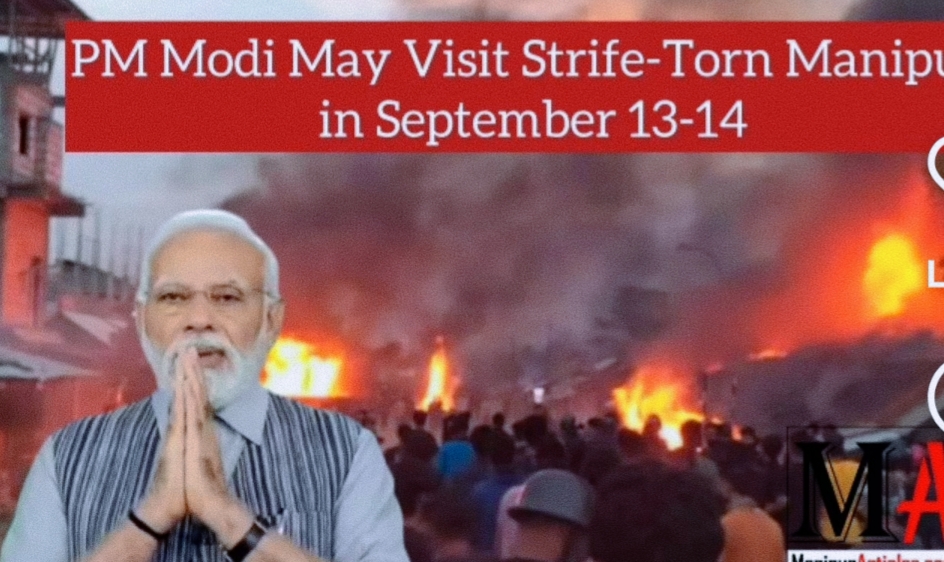
A state scarred by blood and betrayal waits to see if a Prime Minister’s visit can kindle healing—or become yet another performance in the theatre of lost chances.
Every leader faces moments when symbolism collides with reality, when words and gestures must stretch to hold together the brittle shards of a fractured society. For Prime Minister Narendra Modi, September 13, 2025, promises to be such a day. His scheduled visit to Manipur, a state torn apart by two years of Meitei–Kuki-Zo violence, is not merely a political appointment on the calendar but a high-stakes experiment in whether presence can heal absence. Since May 2023, when conflict erupted, more than 258 lives have been officially lost, thousands wounded, and over 60,000 displaced into camps and exile. Modi’s 27-month absence from Manipur has been a constant refrain from his critics, who accuse him of silence in the face of bloodshed. His supporters, meanwhile, see this as the long-awaited gesture of reconciliation, perhaps the beginning of a peace still trembling on fragile legs.
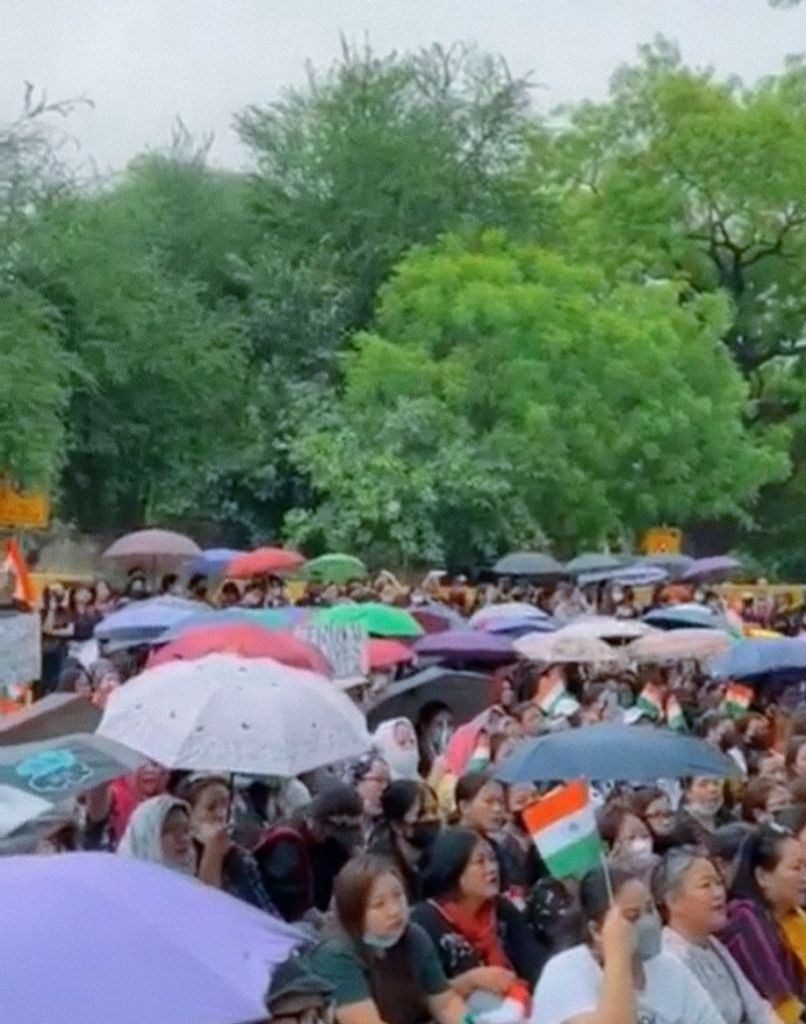
The stage he enters is precarious. President’s Rule has governed Manipur since February 2025, after Chief Minister N. Biren Singh resigned amidst growing unrest and accusations of bias toward Meitei vigilantes. Violence has ebbed, though the embers remain alive in whispers, sporadic clashes, and in the empty shells of villages never rebuilt. Governor Ajay Bhalla and Home Minister Amit Shah have held the reins with interlocutors negotiating fragile truces, but the state is still a tinderbox. Into this atmosphere of brittle calm, the Prime Minister steps—his visit at once a symbol of reassurance and a risk that passions may ignite again.
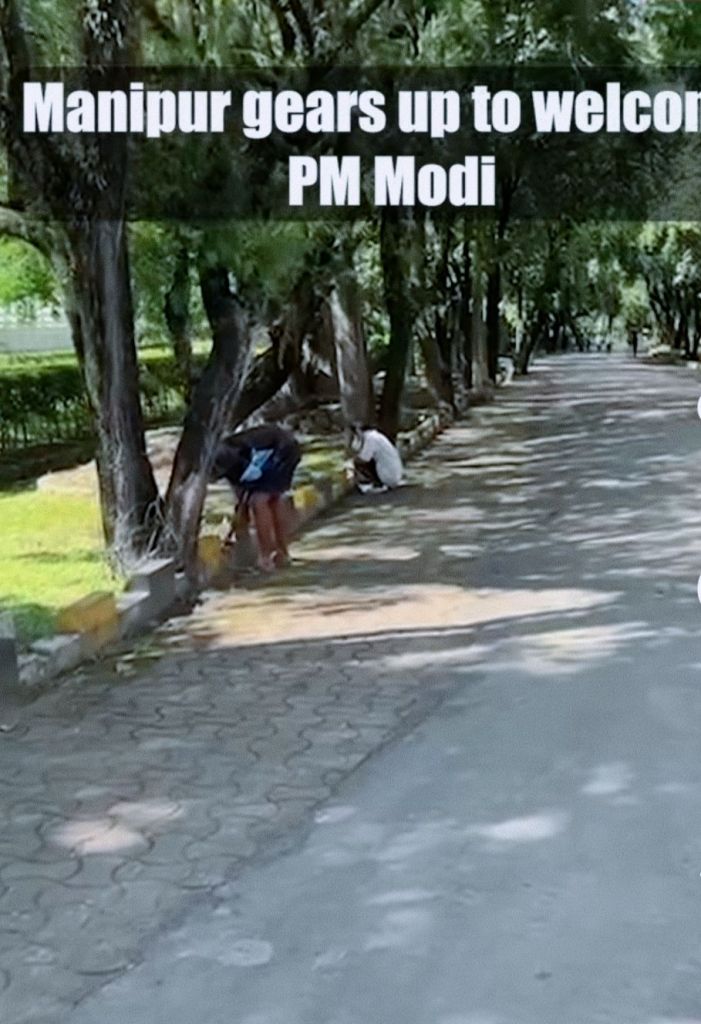
Preparations underline just how combustible this moment is. Churachandpur district, where Modi may address a Kuki-majority gathering, has already been declared a no-drone zone. Layers of jammers, CCTV webs, sanitization sweeps, and bulletproof vehicles have been deployed across both Kangla Fort in Imphal and Peace Ground in Churachandpur. Every security official is on duty; none allowed leave. Roads gleam with fresh paint, medians sprout new flowers, and facades wear hurried coats of whitewash—all desperate attempts to conjure normalcy against the backdrop of scars that no brush can cover. Beneath the petals, wounds remain open.
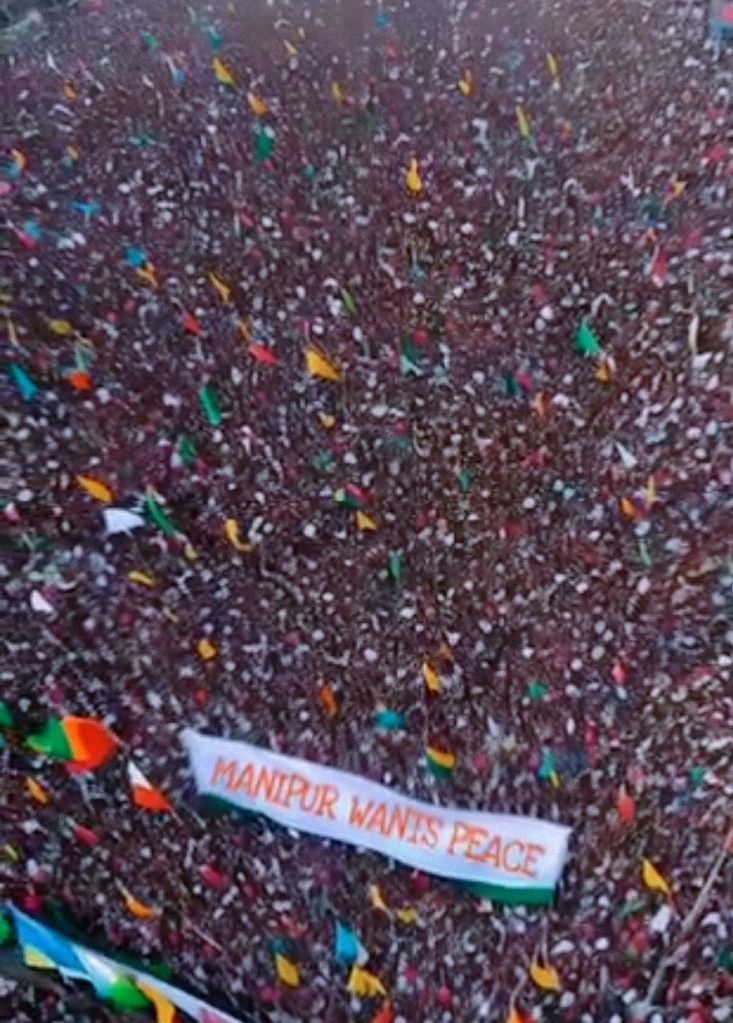
Politics is inseparable from the theatre. The BJP’s dominance in Manipur has collapsed. Both parliamentary seats were lost to Congress in the recent elections, while accusations against former CM Biren Singh of enabling Meitei vigilantes—who looted over 6,000 weapons from state armories—hang heavy. By setting foot in Manipur now, Modi seeks to distance himself from Singh’s failures and signal that New Delhi is committed to impartial peace. Analysts expect announcements ranging from rehabilitation packages for displaced families to promises of restoring an elected government after months of direct rule, perhaps coupled with the revival of economic projects meant to bridge the state’s inequalities.

Policy groundwork has already been laid. The government recently extended the Suspension of Operations pact with Kuki-Zo insurgents, restructuring it so cadres are paid directly through bank accounts, bypassing warlords who previously siphoned funds. The pact obliges militants not to brandish arms outside camps, a gesture toward reducing intimidation. Symbolically important too is the reopening of National Highway 2, long blockaded, to allow Meitei movement into Kuki areas and vice versa. If honored, this could stitch together a geography that has functionally been segregated—Meiteis in the valley, Kukis in the hills—into tentative wholeness.

Yet the challenges are enormous. Thousands of weapons still circulate freely. Mortars, rifles, even grenades remain in civilian hands, a reminder of how law collapsed during the peak of the crisis. Trust between communities is shredded. The Supreme Court itself acknowledged an “absolute breakdown of law and order” and heard allegations of state complicity. Against this backdrop, Modi’s arrival risks being read as cosmetic unless backed by commitments deeper than speeches.
Expectations are wildly divergent. Kuki leaders want him to walk the muddy floors of relief camps, look displaced families in the eye, and recognize their demand for a separate federally administered territory. Meitei groups demand that their sense of security be reaffirmed without conceding land or autonomy to Kukis. Both communities fear favoritism. Both remain trapped in camps, robbed of homes, education, and dignity. What unites them is exhaustion: a collective despair of children losing schooling, parents queuing for food and medicines, and families staring at a future suspended in limbo.
History offers sobering lessons. From Northern Ireland to Nepal, peace has rarely been forged by force alone. Disarmament, dialogue, justice, and reconciliation must move in tandem. Manipur’s wounds run deep—shaped by colonial boundaries, contested land rights, Scheduled Tribe politics, and grinding economic disparities. These fractures cannot be healed by flowers on freshly painted medians or even a single high-profile visit. They demand a Yellow Revolution of trust, a restructuring of justice systems, and an inclusive economy that unites hills and valley in shared progress.
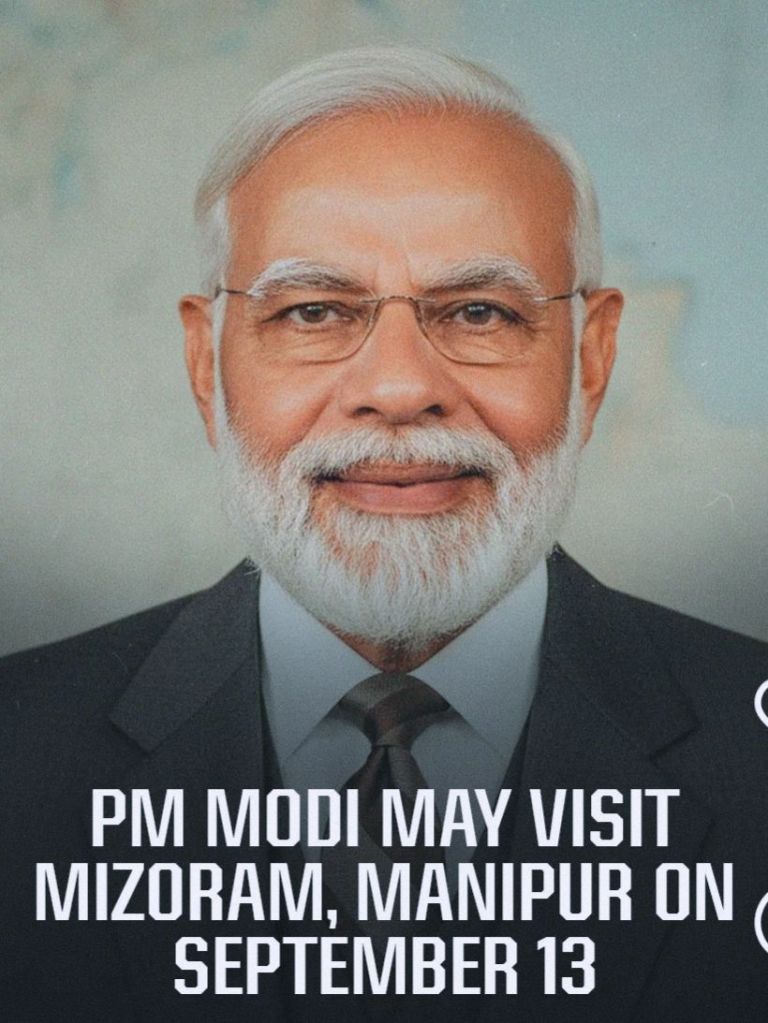
Modi’s walk into Manipur will be watched with forensic precision. Every word, every silence, every gesture will be parsed by communities desperate for validation. If his visit marks the beginning of a process—rehabilitation for the displaced, justice for the aggrieved, development that includes all, and a genuine dialogue between enemies—it could yet turn into a historic pivot. If it remains merely a spectacle behind bulletproof glass, it will be remembered as another missed chance in a state drowning in missed chances.
Manipur today embodies a paradox: peace dressed in Armor, normalcy choreographed under the gaze of snipers. The Prime Minister arrives not just as a politician but as the embodiment of the Indian state itself. For the weary people of Manipur, only substance—justice, safety, and dignity—will matter more than the theatre of symbolism. The stakes could not be higher, for in this crucible, the fate of trust in India’s democracy itself may be tested.
Visit arjasrikanth.in for more insights
 SOCIAL PERSPECTIVES