
In a country that builds satellites and sells trillion-dollar visions, millions of citizens with disabilities are still fighting for a single card to prove they exist—trapped in portals, paperwork, and percentages that decide their dignity.
In a nation obsessed with announcing digital revolutions, celebrating rocket launches, and dreaming of trillion-dollar milestones, the cruellest irony is that millions of its citizens are still waiting for something as basic as an identity card to prove they even exist. For persons with disabilities, this is not just another laminated document. It is the only passport to scholarships, welfare schemes, reservations, jobs, and, most importantly, dignity.

The Unique Disability ID (UDID), launched in 2016 with promises as grand as any space mission, was supposed to be the key to inclusion—a single card that would unify the fragmented certification jungle across states. Instead, nine years later, it looks less like a revolution and more like a half-built bridge, dangling over a canyon of bureaucracy, confusion, and apathy. Today, only about 39 percent of India’s disabled population has a UDID. The rest remain stranded at the gates of welfare, invisible by design.
The rot begins in the clash between central ambition and state responsibility. Disability certification in India falls under the state list, meaning district or block-level authorities control the process. For decades, states issued their own certificates in wildly different formats. When Delhi decided to bulldoze this into a single uniform card, the rollout turned patchy. Karnataka joined in 2019, others followed in fits and starts, and some still lag. By the time the diktat filters down to a taluk hospital clerk, the grand scheme has already lost steam.

Even for those who try, the application process resembles an obstacle course. Everything—from registration to card download—happens online, as though the state assumes India’s most marginalized population is also digitally literate, well-equipped with devices, and patient enough to wrestle clunky portals. For many, the first barrier is the digital divide itself. For those with visual impairments, intellectual disabilities, or motor limitations, the UDID website might as well be a locked fortress. Accessibility, ironically, is the one design feature it forgot to include.
Then comes the medical gauntlet. Hospitals often treat certification like paperwork to be done after real patients have gone home. Applicants are asked to return multiple times, face casual dismissals, or are handed temporary certificates that expire after a few years. When they do, the process resets: reapply, re-upload, re-justify your disability. Rules shift midstream too. In 2021, the government suddenly decreed that only IDs issued through the portal would count, rendering countless earlier certificates useless. Communication, naturally, never reached many district offices. Imagine being told your very existence has an expiry date—renew it like a bus pass or lose your rights.

As if that weren’t enough, the cruel arithmetic of percentages awaits. Indian disability law uses 40 percent as the magic cut-off to qualify for reservations and schemes. Below that, you are simply “not disabled enough.” A person with 38 percent hearing loss or 35 percent locomotor impairment falls into this absurd purgatory—not fit for affirmative action, yet too impaired for equal opportunity in the private sector. No wonder only about 24 percent of disabled Indians are employed, mostly in low-paying, low-skill jobs. Executive suites and managerial posts remain walled off by invisible prejudice and official indifference.
Children don’t fare any better. Flagship schemes like ADIP distribute wheelchairs and hearing aids at political camps that serve more as photo ops than as genuine welfare. Yet only 10 percent of India’s disabled population actually owns required assistive devices. Those with “invisible” conditions—autism, intellectual disabilities, or blood disorders like thalassemia—rarely find themselves even eligible for interventions. They vanish from classrooms, households, and policies alike.
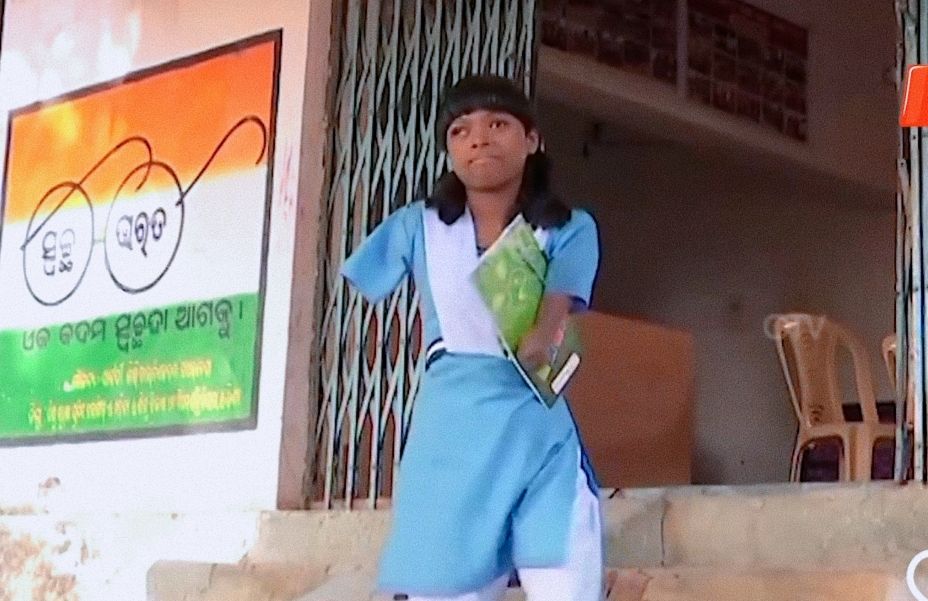
The statistics themselves reek of erasure. Census 2011, India’s last official dataset, recognized just eight categories of disability. The Rights of Persons with Disabilities Act, passed in 2016, expanded that number to twenty-one. This mismatch ensures that millions remain absent on paper, and in India, if you don’t exist in the data, you don’t exist at all. Add to this the cultural bias of hiding disabled daughters—families often omit them from surveys to preserve “marriage prospects”—and the official undercount turns into a gendered vanishing act. The steep drop in female disability ratios between 2001 and 2011 was no accident; it was a mirror held up to a society that prefers its daughters invisible.
Budgetary neglect seals the betrayal. The Department of Empowerment of Persons with Disabilities receives around ₹1200 crores annually but routinely fails to spend even half of it. States, handed token allocations of ₹15–20 lakhs per scheme, treat them as too petty to bother filing proposals. So the money lapses back into the treasury, while disabled citizens wait endlessly for hearing aids, prosthetics, or scholarships that never arrive.
Nine years after its birth, the UDID has turned into a parody of itself. Instead of levelling the field, it has built new walls: digital illiteracy, bureaucratic mazes, medical gatekeeping, and arbitrary percentages. The card that was meant to symbolize empowerment has become a cruel reminder of exclusion.
India never tires of saying it will “leave no one behind.” But until the disabled are counted, identified, and supported, those words ring hollow. For millions, liberty doesn’t mean freedom of choice or opportunity. It means proving again and again that they are “disabled enough” to deserve dignity. That is not just poor governance—it is a moral failure, one that no card can paper over.
Visit arjasrikanth.in for more insights
 SOCIAL PERSPECTIVES