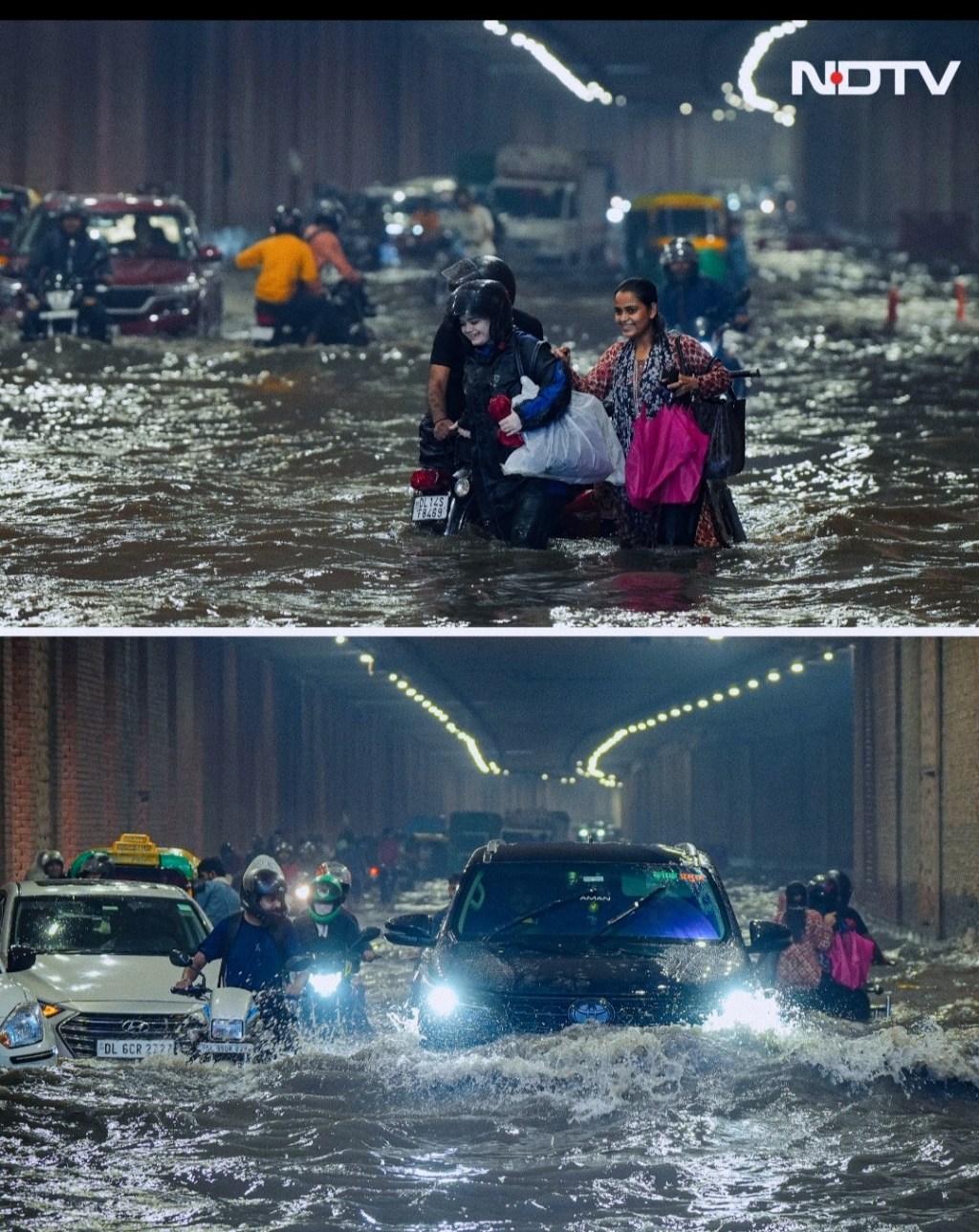
August 2025 broke records, drowned cities, and proved the monsoon is no longer a season—it’s a gamble with survival.
August 2025 will be remembered as a month when the sky simply refused to go silent. The Indian Meteorological Department (IMD) clocked rainfall at 268 mm, 5.2% above the long-term norm, making it the wettest August for North India since 2001. That single statistic carries history inside it, a reminder that we are dealing not with minor fluctuations but with seismic shifts in the way India’s climate is behaving. And this is only the halfway mark—the IMD has already warned that September could be worse, projecting rainfall at more than 109% of the long-period average of 167.9 mm. In other words, brace for a deluge.

This season’s monsoon, taken as a whole, has been generous, with rainfall since June running more than 6% above the norm. But averages hide more than they reveal. What matters is not just how much rain falls, but where, when, and how. And this year, the Northwest has borne the brunt. Punjab, Himachal Pradesh, and Uttarakhand were pounded with 265 mm in August alone—34% higher than normal. The cumulative June–August tally for the region is a staggering 614.2 mm, nearly 27% above its usual seasonal average of 484.9 mm. For the IMD, these are record entries; for the people of the region, they are weeks of flooding, landslides, displacement, and loss. Submerged fields in Punjab, crumbled mountain roads in Himachal, villages cut off in Uttarakhand, and devastation sweeping across Jammu & Kashmir—these are the lived realities behind neat statistical tables.
The monsoon has always been India’s paradox—saviour and destroyer rolled into one. On one hand, surplus rainfall revives agriculture, replenishes reservoirs, and breathes life into soils. Farmers nurturing rice, maize, cotton, and pulses see their crops thrive when the skies open generously. Food security, still tethered to the rhythm of the monsoon, looks a little more assured when water is plentiful. But the same rains, when they arrive in excess, turn feral. Floods wipe out infrastructure, disrupt supply chains, and paralyze transport. Landslides slice through Himalayan highways, isolating communities. For millions, every dark cloud that gathers is as much a source of dread as of hope.

Step outside the deluged Northwest, however, and the picture flips. Northeast India, the far south, and pockets of the northern frontiers are staring at deficits. Rainfall here has fallen below normal, reminding us that the Indian monsoon is no longer a uniform, dependable phenomenon. Instead, it is fragmenting—exploding in torrents in some places while ghosting others entirely. This patchwork of extremes is exactly what climate scientists have been warning about: a monsoon no longer governed by gentle continuity but marked by abrupt, violent swings.
What is particularly alarming is how the monsoon’s predictability window seems to be shrinking. For centuries, India’s farmers timed their sowing, harvesting, and irrigation cycles with astonishing precision to its rhythms. Today, that trust has frayed. Too much rain, too soon, drowns seedlings. Too little rain, for too long, wilts crops. It is not just about water anymore—it is about uncertainty. And uncertainty is the cruellest adversary in a country where livelihoods still hang on the balance of the skies.

The August label—wettest since 2001—should not be filed away as a mere weather factoid. It is a red flag, a wake-up call. If the IMD’s projection of a heavy September plays out, risks will deepen further. Floodwaters could rise in the plains, landslides could multiply in the mountains, and the economic bill could spiral. Cities like Delhi, Chandigarh, and Dehradun are already showing their fragility, with waterlogged roads, gridlocked traffic, and paralysed drainage systems after each downpour. Rural regions, meanwhile, live the paradox of abundance: fields that gleam with promise one day are drowned in standing water the next.
This monsoon is laying bare a deeper truth: India is woefully unprepared for a climate that is mutating faster than its infrastructure. Disaster management cannot remain a game of catch-up, where governments respond only after the waters rise or the hills collapse. Preparedness must move from reactive relief to proactive prevention. Technology-driven forecasting, AI-powered flood modelling, and community-level early warning systems are not luxuries anymore—they are survival tools. As the IMD’s Director General rightly pointed out, resilience is not an option; it is the only strategy that makes sense in an age where the monsoon itself has gone rogue.

Numbers like 268 mm in August or 614.2 mm across the season are not just climate trivia. They are markers of upheaval—statistical signposts of homes destroyed, livelihoods lost, and lives altered forever. The monsoon of 2025 is no longer just about rainfall; it is about rewriting India’s contract with its climate. It tells the story of a nation caught between abundance and ruin, where farmers rejoice at full reservoirs even as mountain villagers mourn landslides, and where the thin line between relief and disaster grows fainter each year.
When the sky won’t stop talking, India must learn to listen differently. Because this is no longer weather. It is survival.
Visit arjasrikanth.in for more insights
 SOCIAL PERSPECTIVES