
Ballots of faith are undone by arrests of convenience, suspicion—not justice—threatens to rewrite India’s Constitution and chain the very soul of representation.
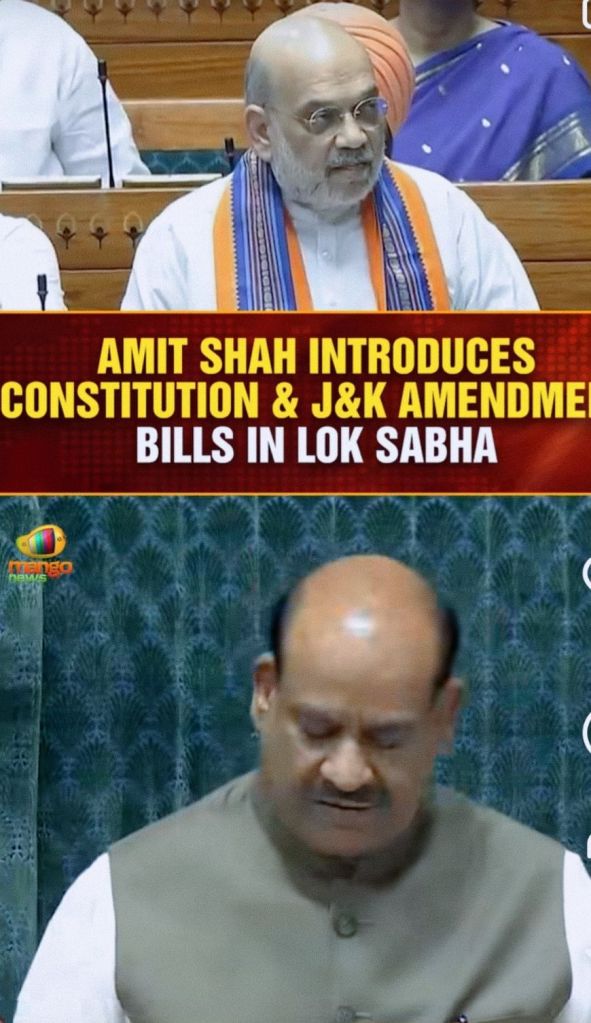
Democracy breathes through trust. When a voter casts a ballot for an MLA or an MP, it is not merely a tick on a machine; it is a covenant of faith. That faith gives life to governance and legitimizes political power. The 130th Constitutional Amendment Bill, recently introduced in the Lok Sabha, threatens to rupture this covenant by proposing that any minister—Union or state—detained for thirty days should be stripped of office. On the surface, the bill parades as a noble step to cleanse politics of corruption and restore morality. But beneath its varnish lies a dangerous precedent: it gives central agencies, already accused of political bias, a free hand to destabilize governments, silence dissent, and mock the very Constitution that guarantees equality and liberty.
The government’s justification sounds appealing. Why should a minister serve from behind prison bars? Why should someone accused of serious crimes govern citizens? These questions resonate with the public because frustration with tainted politics runs deep. The Representation of the People Act of 1951 already bars convicted politicians from contesting elections if sentenced to more than two years. Courts have tightened this framework over decades, demanding transparency from candidates about criminal cases pending against them. But the new amendment seeks to leapfrog conviction and jump straight from accusation to disqualification. That leap is not a stride toward accountability but a tumble into authoritarianism, because it hinges not on judicial verdicts but on arrests orchestrated by agencies under political command.
Herein lies the fatal flaw. Central agencies like the Enforcement Directorate, the CBI, or even state police forces do not exist in a vacuum. Time and again, the Supreme Court has warned about their misuse. Terms like “caged parrot” have entered our political vocabulary precisely because these institutions are viewed as instruments of those in power. By handing them the authority to trigger disqualification after a 30-day detention, Parliament would be weaponizing suspicion. A mere arrest becomes enough to topple a minister, sabotage a state cabinet, or cripple an opposition party. This is not reform; it is the legalization of vendetta politics.
Imagine the implications. A chief minister challenging central policy could suddenly find half his cabinet in custody. Thirty days later, they would stand stripped of office, their voters betrayed not by choice but by manipulation. This would not just weaken opposition states; it would corrode the very idea of federalism. The balance of power between center and state, already fragile, would tilt dangerously in favor of whichever party controls the agencies of arrest. It is not an exaggeration to say that the bill amounts to installing handcuffs at the heart of India’s Constitution.
The defenders of the bill argue that removal is temporary. Once released, a legislator could again be sworn in. But this is sophistry. Arrests under draconian laws like the PMLA often drag on for months before charges are even framed. Bail itself can take years. By the time release comes, political equations have shifted, governance has stalled, and reputations are permanently scarred. The damage is irreversible, even if the case later collapses in court, as happened with several high-profile leaders recently discharged of charges after long periods of custody.
The principle of innocent until proven guilty is not a slogan; it is the backbone of constitutional morality. Our founders wisely entrusted disqualification to the courts, not the police. It is only a neutral authority—High Courts or the Supreme Court—that can sift suspicion from truth and decide whether an elected representative deserves to remain in office. To replace judicial oversight with agency discretion is to replace justice with expediency. It hands political actors a sledgehammer with which they can smash rivals while claiming the halo of reform.
The irony is that this bill, while welcomed by many ordinary citizens tired of corruption, will ultimately turn against the very politicians supporting it. Today’s ruling party may cheer its power to dislodge opponents, but tomorrow, when the wheel of politics turns, the same sword will fall upon them. In politics, no party is immune from accusation, and no leader is beyond the reach of agencies once unleashed. Passing this bill is like loading a gun and leaving it on the table, certain that sooner or later, it will be fired at friend as well as foe.
India’s Parliament has seen many noisy sessions, but rarely has it faced a proposal so deceptively dressed in morality yet so dangerous in consequence. It claims to uphold constitutional values while hollowing them out. It seeks to restore trust in politics by eroding trust in the law. It pretends to empower voters by trampling on the very choice they made at the ballot box. If the people have placed faith in a leader, only a court of law—not a raid, not an arrest, not a 30-day detention—can determine whether that trust was misplaced. Anything else is a betrayal not just of politicians but of the voters themselves.
The path forward is clear. Strengthen the judicial system to deliver swifter verdicts. Empower the Election Commission to ensure transparency in candidacies. Demand higher ethical standards from political parties themselves. But do not hand over the keys of democracy to agencies that have shown time and again they can be bent by those in power. The bill, if passed, will not cleanse politics; it will poison it.
In the end, India must ask itself: do we want a democracy where the people decide through their votes and courts uphold justice, or a democracy where suspicion handcuffs representation, and agencies—clutched tightly in the grip of power—become the executioners of political destiny? The answer will decide not just the fate of this bill, but the fate of India’s democracy itself.
Visit arjasrikanth.in for more insights
 SOCIAL PERSPECTIVES