
Kashmir’s cloudburst is more than a freak storm—it is nature’s ultimatum to a civilization building faster than it can prepare.
On the morning of August 14, 2025, the heavens over Kashmir threw a tantrum that would have impressed a diva. At 11:30 a.m., Sodhi town in the Kishtwar district found itself smacked by a cloudburst so furious that the rain turned to mud in minutes, a geological paint mixer that scythed across roofs and roads with gleeful abandon. Meteorologists labeled it a cloudburst—more than 100 millimeters of rain in under an hour—yet the spectacle felt almost theatrical: a sky that decided to drop a grand tragedy on a single, unsuspecting valley. Pilgrims gathered at a high-altitude shrine to Goddess Durga, expecting reverence and ritual, instead became witnesses to chaos as floodwaters surged into a community kitchen crowded with worshippers for lunch. By nightfall, the valley whispered in the language of sirens and rotor blades: dozens of lives lost, hundreds missing, and the landscape altered beyond recognition.

This was not an isolated incident but a chapter in a troubling Himalayan dossier. Within days, Uttarakhand’s hillsides had already bled with floods and mudslides, and Himachal Pradesh’s Kinnaur region faced a comparable reckoning. The pattern revealed a mountain range under unprecedented duress—from warming temperatures and rapid glacial melt to the unregulated flux of tourism and pilgrimage that threads people through fragile ecological seams. Each disaster amplifies the question that science whispers and policymakers shout: has development in these sacred, treacherous terrains outrun nature’s tolerance?
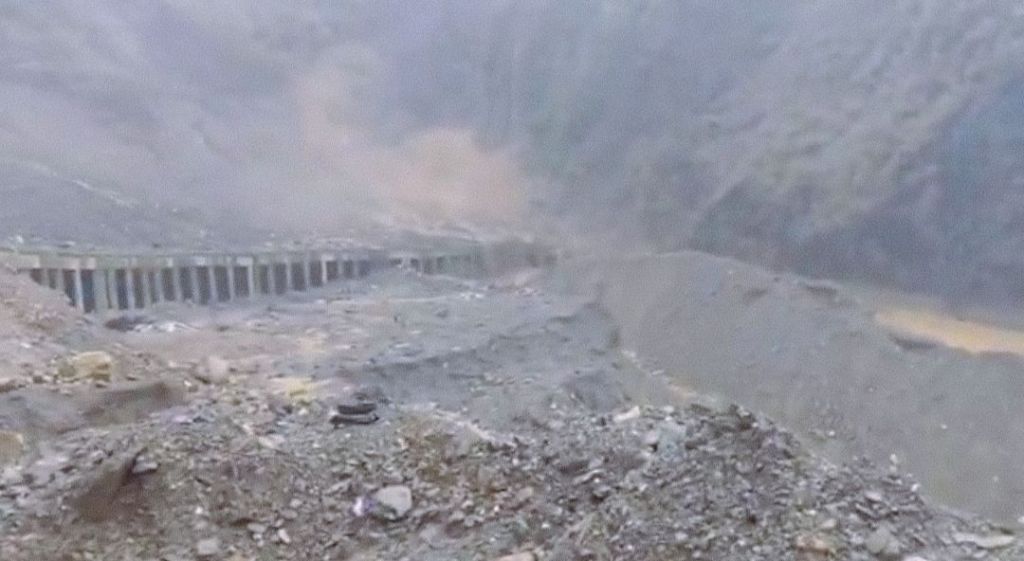
The Kashmir response was swift yet hemmed in by geography’s stubborn rigidity. Rescue teams—local police, disaster response forces, the Indian Army, and the Air Force—braided through collapsing roads and washed-out slopes, racing against continuing rainfall to recover bodies and pull the living from the teeth of a torrent. Jammu and Kashmir’s Chief Minister spoke candidly about the difficulty of confirming information from the worst-hit pockets; every hour mattered when ground vanished beneath you and communications faltered. Survival depended on courage and calculation, but the broader truth lurked in the margins: India’s preparedness for high-impact weather events remains misaligned with the scale of the challenge.

Cloudbursts are a well-charted meteorological phenomenon, yet the defense against them remains frustratingly porous. The collision of monsoon air with cool western disturbances, amplified by the Himalayas’ dramatic topography, spawns violent precipitation. Climate change serves as a ruthless amplifier, injecting more moisture into a system already prone to chaos. The Himalayas, warming faster than global averages, see glaciers retreating in a cascading spiral of floods, landslides, and glacial lake outburst floods. In 2025 alone, cloudburst-like events punctuated three Himalayan states, signaling systemic stress rather than coincidence.
Beyond the science lies the stubborn arithmetic of human choices. Riverside construction, deforestation, poorly planned hydropower schemes, and settlements in flood-prone corridors turn nature’s tantrums into amplified tragedies. Pilgrimages—culturally vital and spiritually resonant—draw tens, sometimes hundreds, into zones that remain ill-prepared for sudden disaster. Makeshift shelters, temporary kitchens, and narrow access routes morph into lethal choke points when the mountains unleash their fury. In Kishtwar, a cherished community space became an epicenter of grief, its ordinary walls suddenly guarding nothing against an upset sky.

The globe offers a syllabus for resilience. Switzerland’s early-warning systems for glacial lake outburst floods have saved lives; Nepal’s SMS-based community alerts empower villagers to evacuate in time; Japan’s eco-engineering nets and check dams stabilize slopes; the Netherlands’ Room for the River demonstrates a bold reimagining of floodplains. These cases sketch a blueprint that India could adapt with urgency: broaden early warning beyond pilots, deploy Doppler radars, automated rain gauges, and robust community alert networks as the backbone of Himalayan preparedness; refocus infrastructure policy from ad hoc growth to climate-resilient planning; enforce strict zoning to forbid risky settlements; invest in watershed management, reforestation, and slope stabilization; and elevate public education so that locals and pilgrims alike understand evacuation protocols and survival strategies.

The Kashmir cloudburst is more than a disaster report; it is a warning etched in water, mud, and the quiet between helicopter blades. Climate change is not a distant abstraction here; it is a lived, breathing force that tests both natural systems and governance alike. Devotion has always drawn people toward lofty, sacred spaces; now responsibility must steer them clear of danger. Development, even when cloaked in progress and piety, must evolve to honor the mountains’ thresholds. The true measure of advancement will be what remains after the clouds disperse: a society that chooses resilience over reckoning, humility before nature over bravado in development.

If the sky could speak after tearing open that day, it would urge a collective prayer for preparedness. The Himalayas will endure their splendor and peril, but their future—whether a graveyard of neglect or a sanctuary of resilience—will depend on the choices we make today, not tomorrow.
Visit arjasrikanth.in for more insights
 SOCIAL PERSPECTIVES