
A silent Chinese exit from Foxconn’s iPhone plants in India became a geopolitical stress test—one that exposed fragility, ignited resilience, and may have jump-started India’s true journey to tech sovereignty.
It began quietly—no announcement, no official explanation—just the discreet exit of over 300 Chinese engineers and technicians from Foxconn’s iPhone manufacturing plants in India in July 2025. On the surface, it appeared to be a routine corporate reshuffle. But for observers tracking India’s ambitious industrial journey, it was anything but. This silent retreat raised a much louder, more unsettling question: How self-reliant is India’s electronics manufacturing ecosystem—and how vulnerable is it to geopolitical undercurrents?

Foxconn, the Taiwanese manufacturing behemoth and Apple’s primary production partner, has long been central to high-end global electronics assembly. When it brought iPhone production to India, it wasn’t just a commercial decision—it was a landmark shift. It marked India’s transition from an assembly-line participant to a serious contender in global supply chains, aiming to challenge China’s dominance in advanced electronics manufacturing.
The Indian government catalysed this shift with policy clarity, robust incentives, and aggressive facilitation. The Production-Linked Incentive (PLI) scheme, launched in 2020, raised import duties to encourage local production, eased FDI rules, and allowed 100% foreign ownership in electronics manufacturing. States like Tamil Nadu and Karnataka offered additional support—power, land, logistics, skill training, and streamlined regulatory clearances. Labour laws were modernized. Night shifts for women were approved. India bent policy and practice to attract investment—and it paid off.
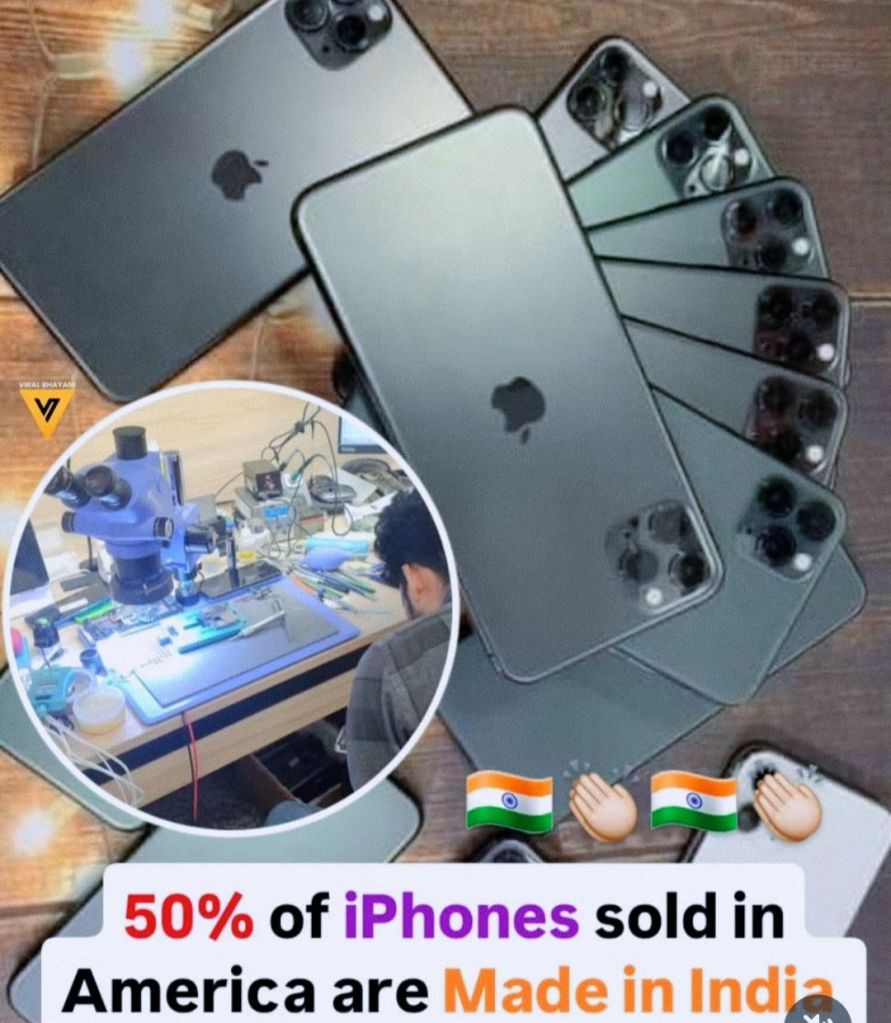
India’s iPhone production share rose from 1% in 2018 to 14% by 2024. Exports of mobile phones crossed ₹1.2 lakh crore. The industrial hub of Sriperumbudur transformed into a thriving electronics corridor, complete with component suppliers, logistics firms, residential infrastructure, and thousands of newly skilled workers. India was no longer just assembling phones—it was assembling a future.
Yet the sudden withdrawal of Chinese personnel exposed a fragile undercurrent. These engineers were not easily replaceable. They were key to operating and maintaining sophisticated machinery, managing quality control, and ensuring compliance with Apple’s exacting standards. Their absence disrupted the operating rhythm and cast doubt over India’s readiness to manage high-tech manufacturing autonomously.
Early signs of this shift were already visible in January 2025. Chinese engineers’ travel to India was delayed.
High-precision tools embedded with Chinese software were held up at customs. Efforts to localize the software met technical resistance and linguistic barriers. These developments—seemingly minor—were compounded by broader diplomatic strains, including India’s tightening of visa rules for Chinese nationals.
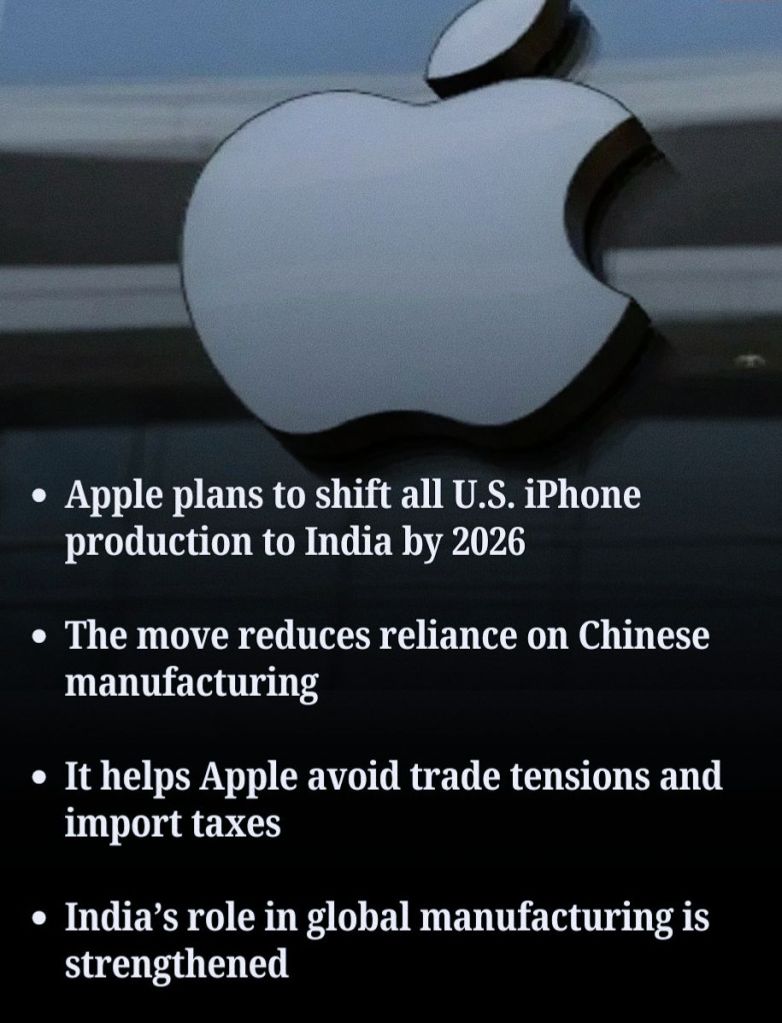
Whether this was retaliation or strategic recalibration, it underscored a reality: while India may be assembling iPhones, China still controls critical components, software, and operational knowledge. This was less an act of sabotage and more a reminder—of dependence, of the complexity of global supply chains, and of the unfinished nature of India’s manufacturing journey.
Yet even as anxiety grew, India’s response demonstrated quiet resilience. Apple had reportedly anticipated the situation and begun onboarding engineers from Taiwan, Vietnam, and South Korea. Foxconn accelerated training programmes for local talent. Tata Electronics and other Indian players increased their engagement in mid- to high-value components. Government agencies, too, realigned semiconductor and R&D strategies to support deeper localization.
Importantly, production has not stopped. No major disruption has been reported. The narrative, while shaken, remains intact.

India’s Minister for Electronics and IT, Ashwini Vaishnaw, characterized the episode as a “bump in a long journey.” And the data supports that perspective. India now produces over 1,000 components locally. Infrastructure continues to improve, and reforms are steadily closing the productivity gap with China. While challenges persist—skill shortages, high component import duties, and competition from countries like Vietnam and Mexico—India retains its most critical asset: momentum.
The departure of Chinese engineers may ultimately mark an inflection point, not a reversal. It has exposed vulnerabilities, yes—but also galvanized resolve. India’s long-term strategy now demands not just assembling devices, but mastering the technology stack—design, tooling, software, and systems integration. Building resilient, diverse supply chains will be central. So will workforce development and sustained investment in advanced manufacturing capabilities.

What happened at Foxconn in July 2025 was not an ending—it was a signal. A subtle but powerful prompt to deepen India’s industrial independence and reinforce its position as a global electronics manufacturing hub.
In hindsight, the exit of Chinese technicians may be remembered not as a disruption, but as the moment India’s true self-reliance in electronics manufacturing began to crystallize—quietly, firmly, and irreversibly.
Visit arjasrikanth.in for more insights
 SOCIAL PERSPECTIVES