
Seconds to Oblivion: How Five Flickers in the Cockpit Doomed Flight AI171
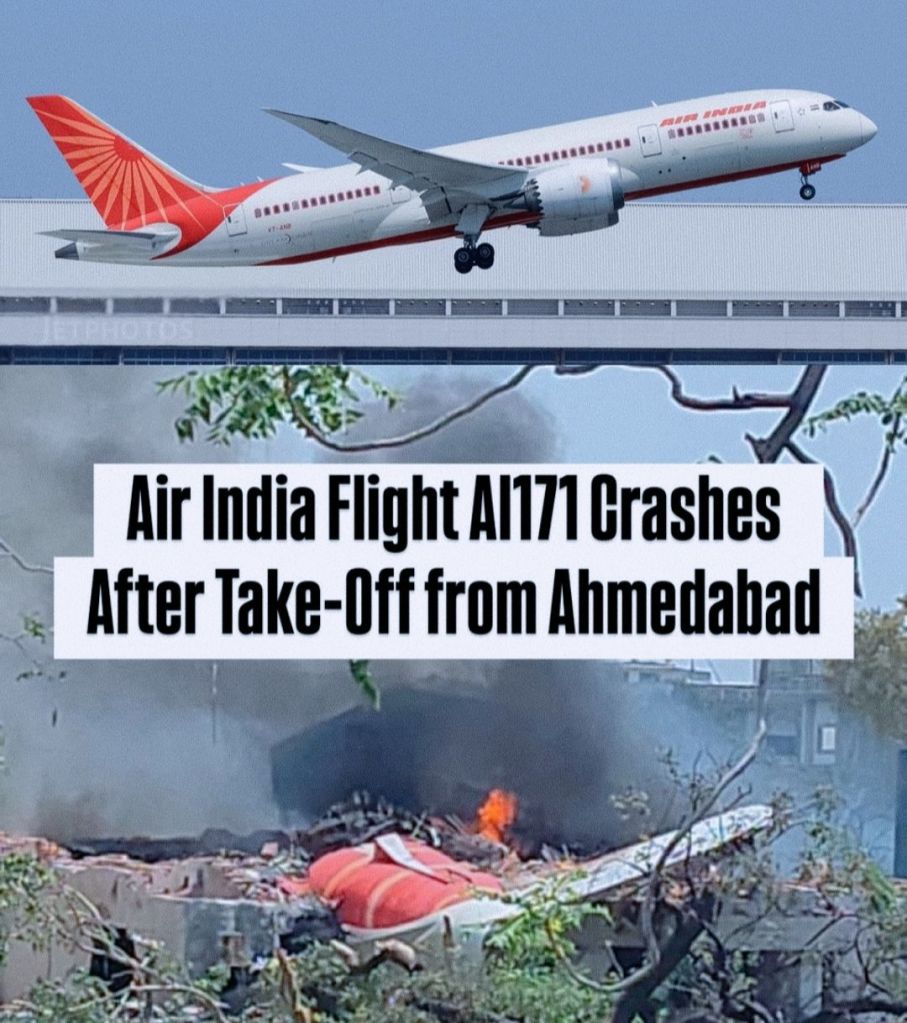
June 12, 2025, began like any other day at Ahmedabad’s Sardar Vallabhbhai Patel International Airport. The sky was unwrinkled blue, the tarmac hot but calm, and Air India Flight AI171 to London Gatwick sat gleaming at the gate—a Boeing 787-8 Dreamliner ready to flex its wings. The crew smiled, the cabin hummed, and 230 passengers settled into their seats, blissfully unaware that the aircraft was about to become a case study in catastrophe. Perfectly prepped for take-off, engines at full thrust, flaps extended, Ram Air Turbine on standby—every tick in the checklist had its box. But somewhere between circuitry and steel, fate had other plans.
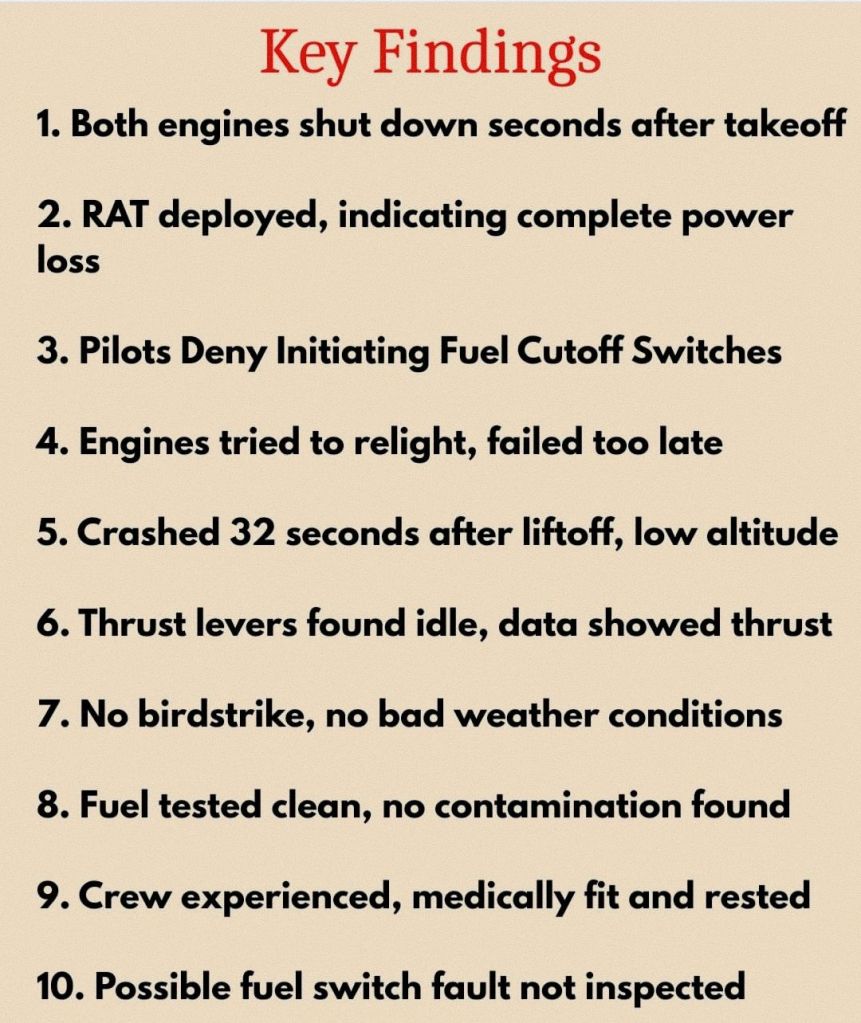
At 13:38 IST, the Dreamliner roared down Runway 23 and lifted into the sky. But three seconds in—yes, three—the unthinkable happened. Both engine fuel control switches flipped from “RUN” to “CUTOFF,” as if someone had yanked out the aircraft’s lungs mid-flight. The jet, now a 280-ton projectile with no breath, began a silent, spiralling argument with gravity. The pilots, stunned, wrestled with the switches, turning them back to “RUN.” FADEC, the onboard brain, rushed to restart the engines. But by then, precious seconds were gone.
What unfolded was 29 seconds of chilling helplessness, recorded in black boxes and burned into aviation memory. The Mayday call came at 08:09:05 UTC. But AI171 was no longer flying. It was falling. The aircraft, once a feat of engineering, was now a sky coffin. And then came the final five seconds. Five seconds that would stretch across newsrooms, courtrooms, and grieving homes for years.
At T-minus 5 seconds, the plane cleared the airport’s edge. One pilot yelled, “We’re not getting thrust!” as his hands danced between displays and dead switches. The co-pilot stared, hollow-eyed, trying the switch again, hoping against hope that it might respond like machines sometimes do in desperate movies.
At T-minus 4 seconds, the nose dipped. Ahead, the BJ Medical College campus sprawled like an obstacle course no one signed up for. A hostel full of sleeping interns, a doctor’s quarter, and a mess hall loomed in the descending path. The plane wasn’t just falling—it was aimed.
At T-minus 3 seconds, the control stick was yanked back. Stall warnings screamed in defiance. It was too late. No altitude. No speed. No forgiveness. Even the silence of the engines seemed to echo louder than sound.
At T-minus 2 seconds, the cockpit voice recorder caught a final curse—a short, sharp expletive—uttered without blame or rage. Just recognition. The aircraft was in terminal descent. There would be no miracle.
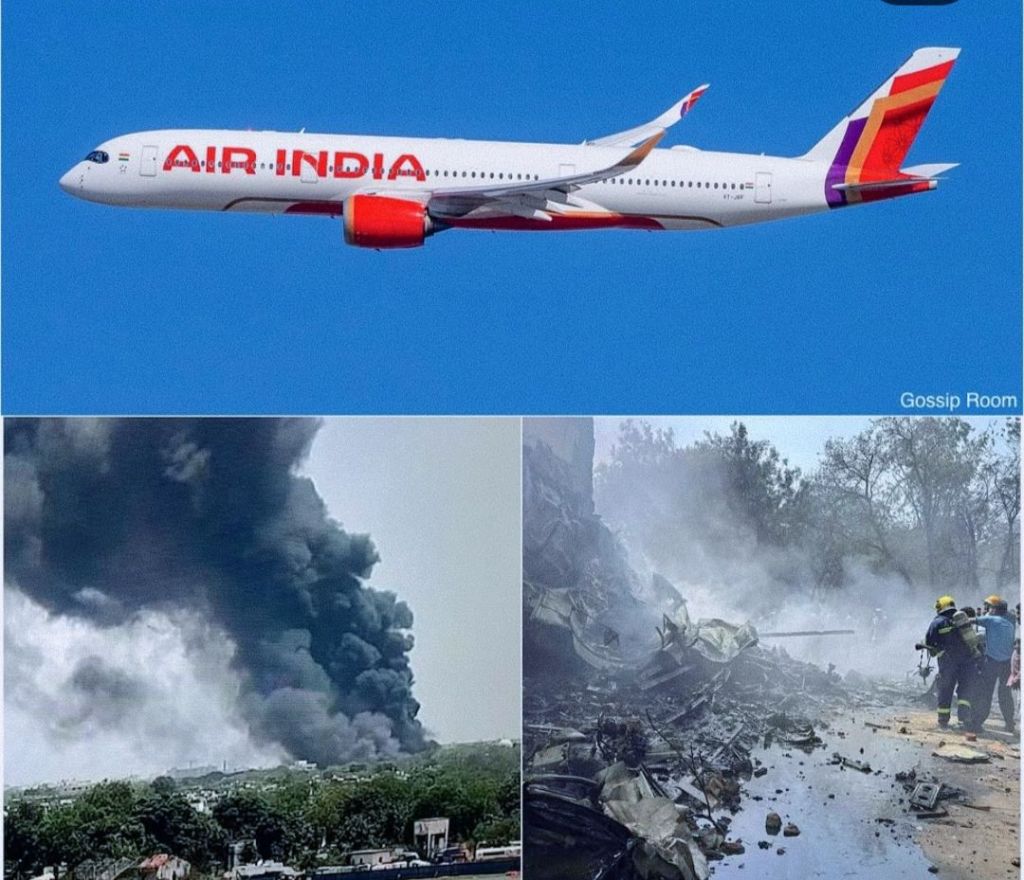
At T-minus 1 second, metal met earth. VT-ANB disintegrated into a firestorm over concrete and living flesh. It tore through buildings, shredded structures, and ignited lives. The blast claimed 241 of the 242 onboard and 19 more on the ground. The final death toll stood at 260, making it one of India’s worst aviation disasters in history.
Miraculously, one man survived. British-Indian engineer Vishwash Kumar Ramesh, seated by an emergency exit, staggered from the wreckage. His words later, from a hospital bed, would haunt investigators: “I saw someone look up… and then, nothing.”
The crash investigation, led by India’s AAIB and backed by UK and US aviation authorities, got to work immediately. The black boxes were recovered—one within 28 hours, the other days later. What they found was shocking in its simplicity: the flight was normal. Until it wasn’t. No bird strike. No foreign object. No weather event. Nothing external. Just two switches… flipped.
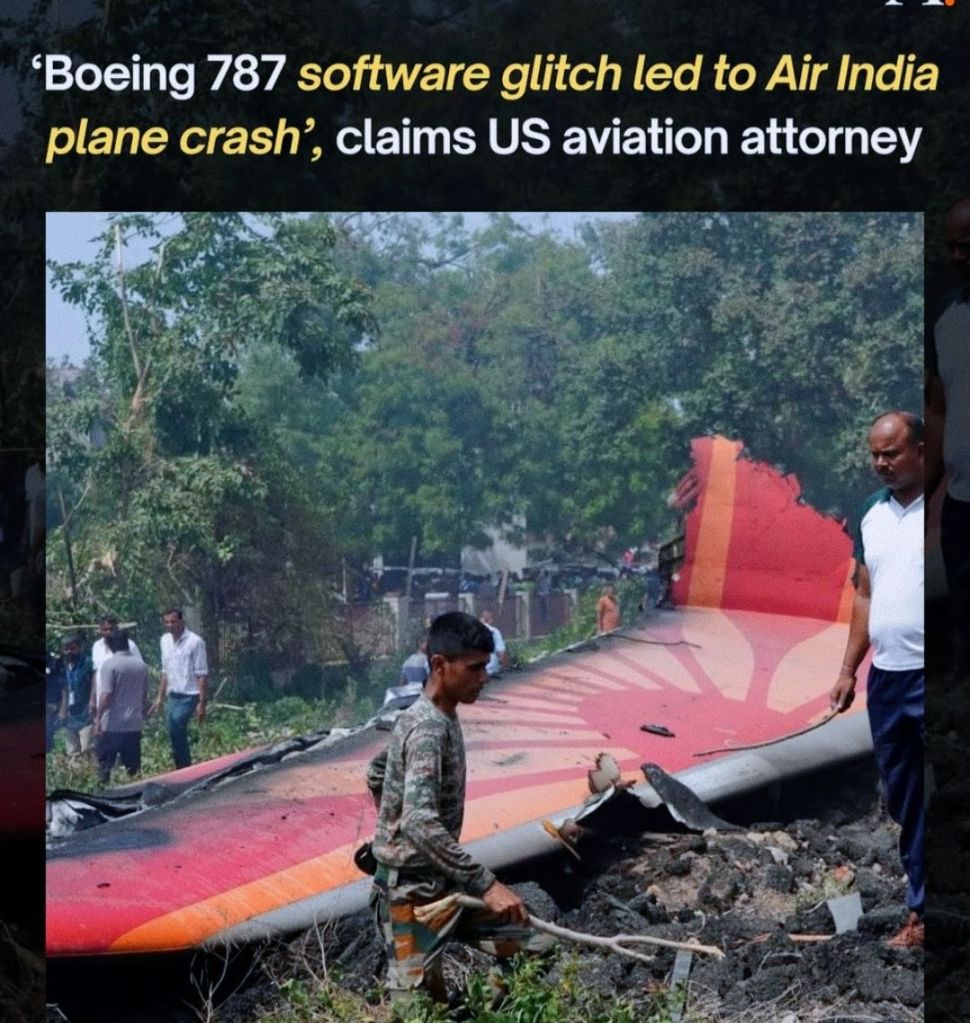
The cockpit audio revealed that neither pilot knew why the fuel had been cut. “Did you switch it off?” one asked. “No, did you?” came the reply. No alarms. No pre-warning. Just fuel starvation. Investigators speculated on three possible villains: a hardware failure in the locking mechanism, a rogue electric signal, or a software bug—perhaps the one the FAA had quietly flagged in 2018. But since the advisory wasn’t mandatory, many operators, including Air India, hadn’t acted.
Now a high-level Indian panel, chaired by the Union Home Secretary, is probing deeper. Not just into the crash, but into the culture. Into why recommended inspections were skipped. Into why a modern jet became a coffin in 32 seconds. Into why, in 2025, switches that should never move… did.
And so, the lessons are already forming, as raw as the wounds they come from.
Fuel switches must never flick without hands and intent. Human error must be anticipated—not punished, but trained for. Regulatory advisories must stop being suggestions and start becoming shields. And emergency response must prepare for cities, not just runways.

Because in the end, it’s not about the altitude or the airspeed. It’s about seconds. The five seconds that define tragedy or survival. The five seconds between “We’re okay” and “We’re gone.”
Flight AI171 is no longer just a crash. It is a call—an angry, urgent call for reform in air safety, engineering, and oversight. Those last five seconds will never be recovered. But their echo must change everything.
Because in aviation, there’s no room for ghosts in the cockpit.
Visit arjasrikanth.in for more insights
 SOCIAL PERSPECTIVES