
A Scathing Look at How Industrial Safety Is Being Traded for Speed, Secrecy, and Spectacle in India’s Emerging Power Corridors
India’s industrial ascent was once envisioned as a harmonious blend of innovation, infrastructure, and inclusive growth. Instead, the nation confronts a dissonant reality—where the hum of machines is often drowned by the roar of explosions, and the pursuit of prosperity is laced with systemic peril. From Bhopal in 1984 to more recent tragedies in Visakhapatnam and Hyderabad, a pattern has emerged that reflects institutional decay and an alarming disregard for industrial safety.
The Bhopal gas tragedy, etched into global memory, revealed the catastrophic consequences of regulatory indifference. A pesticide plant leaking methyl isocyanate gas resulted in mass death and prolonged environmental degradation. Safety mechanisms were disabled, alarms failed, and accountability was deflected. Four decades later, contaminated groundwater remains a haunting legacy, emblematic of justice denied and lessons unlearned.
In 2020, the industrial city of Visakhapatnam was enveloped in a cloud of styrene gas, released from a plant operating without environmental clearance. Emergency systems were absent, preparedness was nominal, and governance was conspicuously inactive. The aftermath echoed Bhopal: casualties, evacuations, public fury, and institutional inertia.

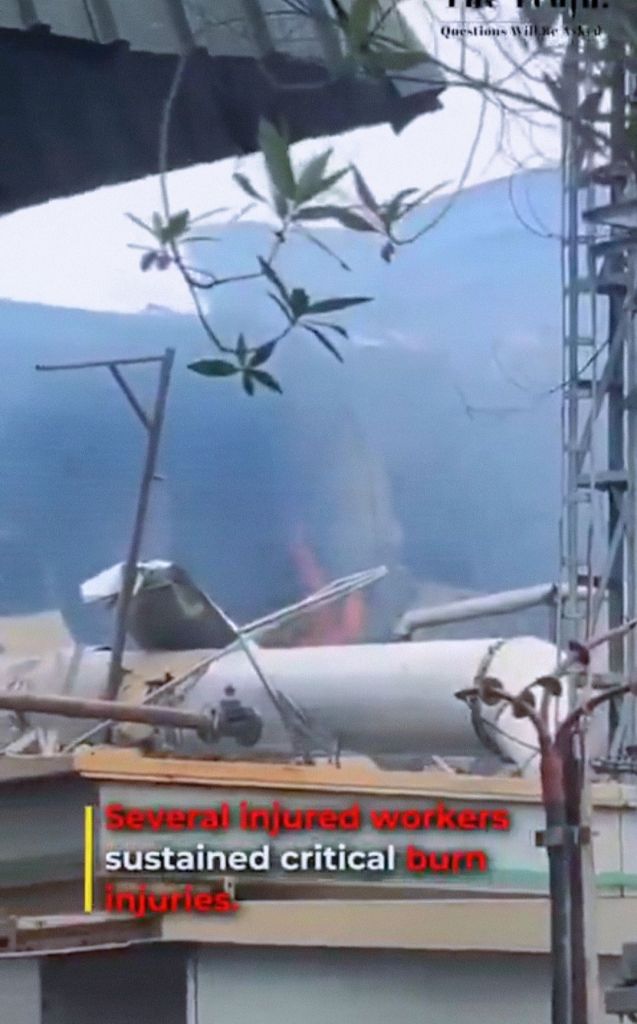
In June 2025, a devastating explosion at Sigachi Industries Pvt. Ltd., a pharmaceutical unit in Pashamylaram near Hyderabad, resulted in the collapse of a reactor unit, trapping several workers. Investigations revealed critical lapses—hazardous chemicals were mishandled, fire safety audits were ignored, and laborers were inadequately trained. The unit’s location near residential zones amplified the disaster’s impact, endangering nearby communities. This tragedy was not a random accident but a direct consequence of wilful negligence and systemic regulatory failure. It underscores the urgent need for stringent safety enforcement and industrial zoning reforms to prevent such catastrophes from recurring.

The core of this crisis lies in a volatile blend of weak regulation, perfunctory inspections, and entrenched impunity. Regulatory frameworks, including the Chemical Accidents Rules of 1996 and OSHA-aligned protocols, exist but remain ineffectively enforced. Licensing processes are vulnerable to manipulation. Compliance audits are often superficial, creating a facade of safety that conceals operational hazards.
Emergency drills are sporadic at best. Technological interventions—such as IoT-enabled leak detection, AI-based surveillance, and automated fire alert systems—are absent in many high-risk sectors. Contract labour, forming a substantial part of the industrial workforce, receives inadequate safety training. The human cost of these gaps is paid in casualties, health crises, and irreversible environmental damage.
A paradigm shift in industrial governance is imperative. Legal frameworks must move from suggestion to strict obligation. Compliance should be measurable, publicly accessible, and digitally monitored. Penalties for violations must escalate from monetary fines to criminal prosecution. Safety training, insurance coverage for workers, and the institutionalization of Industrial Disaster Response Teams are critical steps toward mitigation.
Public institutions must adopt zero tolerance for lapses that endanger lives. Corporate entities must integrate safety as a non-negotiable core value rather than a dispensable overhead. The illusion of growth cannot justify systemic negligence.

Industrial tragedies in India are not isolated aberrations—they are the cumulative result of broken oversight, compromised ethics, and bureaucratic complacency. The cost of inaction is exacted in human lives, public trust, and long-term sustainability. Unless structural reforms are pursued with urgency and integrity, the industrial engine of India will continue to be powered by volatile contradictions.
Boom. Bust. Repeat. The cycle persists—until safety ceases to be a footnote and becomes the foundation.
Visit arjasrikanth.in for more insights
 SOCIAL PERSPECTIVES