
Unmasking the Horror: A Law Student’s Battle Against the Shadows of Violence
In a society that often turns a blind eye to the plight of women, the harrowing experiences of young female students serve as a grim reminder of the vulnerabilities that persist across different fields of study and professions. Just yesterday, a medical student fell victim to horrifying violence, and today, a law student finds herself ensnared in a similarly tragic ordeal. These narratives, while distinct in their details, echo a common theme: the relentless cycle of vulnerability that young women face in educational institutions and workplaces alike. This recurring cycle not only highlights the urgent need for systemic reform but also compels society to confront the uncomfortable truths surrounding gender-based violence.

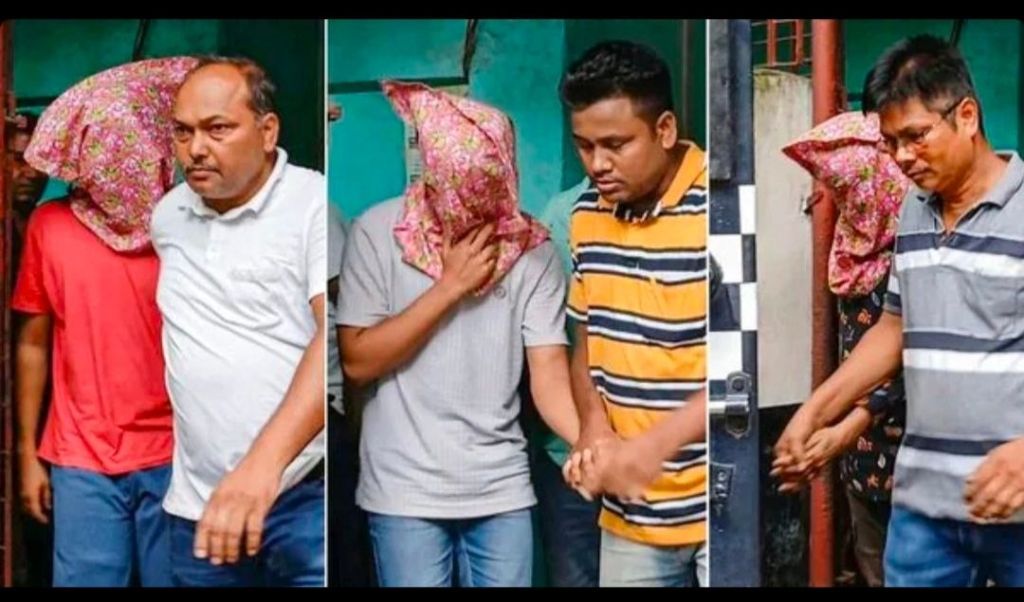
On June 25, a 24-year-old law student at South Calcutta Law College set out to complete a routine task, unaware that her life was about to take a horrific turn. When she was approached by Mano Mishra, an alleged student leader with ties to the ruling Trinamool Congress party, what began as an innocent interaction quickly escalated into a nightmare. Mishra’s initial advances, cloaked in declarations of love, morphed into aggression when the young woman rejected his proposal. Rather than respecting her boundaries, Mishra enlisted the help of two accomplices, and together they orchestrated a brutal act of violence within the confines of the college.
Despite her desperate pleas for help, the young woman found herself trapped in a room where she was subjected to unspeakable horrors. Her attempts to escape were met with hostility, and the guard stationed nearby offered no assistance—an act of negligence that epitomizes the systemic failures that enable violence against women. In that moment, her world transformed from one of academic promise into a scene of terror, as she was assaulted while her attackers looked on, complicit in her suffering. The trauma she endured was compounded by the psychological terror of being threatened with violence against her loved ones if she dared to speak out. This chilling reality is representative of a broader societal issue where victims of sexual violence often face intimidation rather than support, leaving them feeling isolated and powerless.

The vulnerability of women in educational settings is not a new phenomenon. Just a year prior, a 31-year-old female doctor was raped and murdered within the premises of RG Kar Medical College, another institution that should have served as a sanctuary for learning and growth. Her tragic death sparked nationwide protests and highlighted the pervasive culture of violence against women in the healthcare sector. This recurring pattern of violence reinforces the notion that no profession or academic pursuit is immune to the threat of sexual assault, leaving women perpetually on guard and vulnerable.
These incidents have garnered heightened media attention, not only for their shocking details but also for the systemic failures they reveal. The outcry following these cases has exposed a society increasingly aware of the dangers women face, yet the political response has often been more about scoring points than enacting real change. The political fallout from the law student’s assault saw the BJP demanding accountability from the ruling TMC, accusing them of failing to protect women in West Bengal. Meanwhile, the TMC attempted to deflect blame, insisting that swift action had been taken against the accused. Such politicization of violence against women only serves to muddy the waters, distracting from the urgent need for comprehensive reforms that address the root causes of gender-based violence.
Moreover, the complicity of bystanders cannot be overlooked. The indifference shown by those who should have intervened, whether it be college guards or fellow students, underscores a pervasive culture that often prioritizes silence over action. This culture not only enables violence but also perpetuates a climate of fear that silences victims and discourages them from coming forward. As the stories of these brave young women unfold, they serve as a powerful reminder of the necessity for societal change—one that demands accountability from institutions and individuals alike.
In conclusion, the experiences of a medical student yesterday and a law student today reflect the broader systemic issues that plague women in educational institutions and the workforce. Their vulnerabilities are not isolated incidents but rather indicative of a pervasive culture that allows violence and intimidation to persist. It is imperative for society to confront these uncomfortable truths and take meaningful actions to dismantle the structures that perpetuate this cycle of abuse. The fight for justice and equality is far from over, and it begins with all of us standing in solidarity with those who have suffered in silence for too long. Only through collective action can we hope to create an environment where women feel safe, empowered, and free from the fear of violence, regardless of their chosen
 SOCIAL PERSPECTIVES