
A radical blueprint where classrooms meet code, villages birth universities, and every learner becomes the architect of a future-ready India.
In a compelling stride towards educational renaissance, the state of Andhra Pradesh has initiated a transformative overhaul of its education ecosystem over the past year, redefining the principles of access, equity, and excellence. Guided by the inclusive philosophy of “No child left behind in education, no youth left behind in employment,” the state’s reform agenda is not confined to expanding enrolment; it aims to embed quality, relevance, and employability into the core of every educational and skill development intervention.
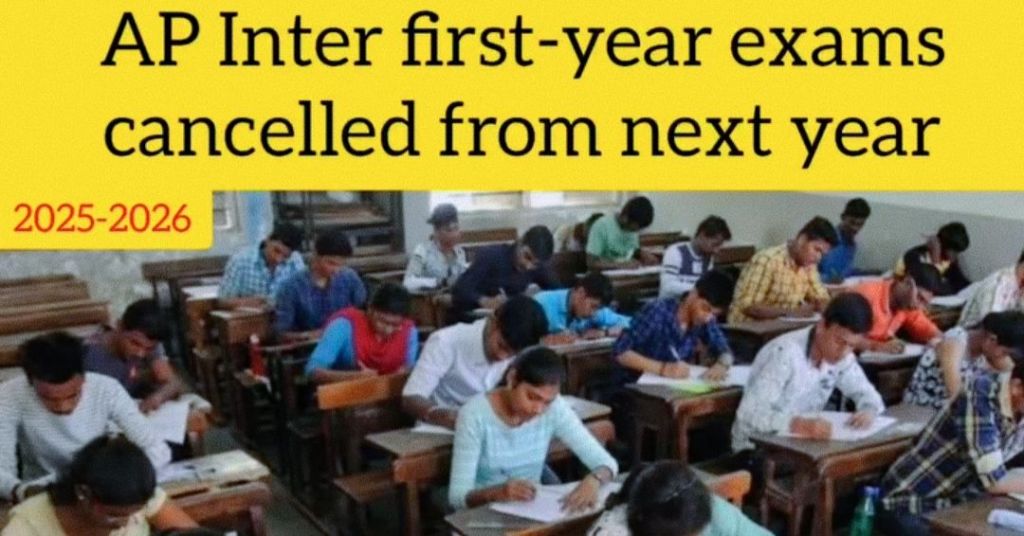
Central to this evolution is the innovative introduction of dual certification for vocational students, developed through a collaborative framework between the National Council for Vocational Education and Training (NCVET) and the State Board. This initiative integrates vocational education into the National Skill Qualification Framework (NSQF), creating clear vertical and lateral pathways and enhancing the credibility and market alignment of vocational skills. Simultaneously, the decision to establish a Government Junior College (GJC) in every Mandal signifies a robust commitment to localized access, ensuring equitable opportunities for both academic and industry-aligned vocational education.
The higher education sector has undergone unprecedented expansion and structural reform. The state now comprises 50 universities—including public, private, deemed, sectoral, and central institutions—alongside 2,601 affiliated colleges, with 169 being government-run. These institutions cater to a staggering 19.29 lakh students and collectively contribute to a Gross Enrollment Ratio (GER) of 36.5%, significantly exceeding the national average of 28.4%. A student-faculty ratio of 16:1 reflects an emphasis on academic quality, while a Gender Parity Index of 0.93 underlines progressive strides toward gender equity in higher education.

Despite having five universities ranked in the top 100 under the National Institutional Ranking Framework (NIRF), Andhra Pradesh’s aspirations extend toward global recognition, with active pursuit of positions in the QS World University Rankings and Times Higher Education (THE). Comprehensive institutional restructuring within the Higher Education Department has enabled this trajectory, emphasizing unified legislation, enhanced faculty recruitment, and the creation of specialized institutions that act as engines of future growth. Among these are the Artificial Intelligence University in Visakhapatnam, the India International University of Legal Education and Research in Amaravati, and a proposed Sports University—all of which signify a paradigm shift toward innovation-led knowledge infrastructure. Additionally, the revitalization of institutions impacted by bifurcation, such as Dr. B.R. Ambedkar Open University, now transitioning into a digital university, demonstrates a pioneering commitment to open and distance learning aimed at reintegrating dropouts and expanding GER further.

The hallmark of Andhra Pradesh’s educational reform lies in the strategic convergence of academia and industry. Institutional governance structures have welcomed industry participation, and curricula are being recalibrated to align with emerging market demands. This integration ensures that graduates emerge with competencies not only grounded in academic theory but also responsive to real-world applications. The state’s vast network of 262 polytechnics and 517 Industrial Training Institutes (ITIs) underscores its commitment to skilling, evidenced by exceptional placement rates of 88.9% and 92%, respectively, in government-run institutions.
An ambitious, first-of-its-kind Skill Census—piloted in Mangalagiri and intended for state-wide expansion—demonstrates Andhra Pradesh’s intent to build a comprehensive data ecosystem for workforce planning. By mapping the skill sets and employment aspirations of individuals aged 15–59, the state is creating an empirical foundation for curriculum reform, regional training strategies, and industry alignment. Complementing this effort is the introduction of foreign language training—such as German for nursing professionals—designed to meet international standards and promote overseas employment opportunities.

Moreover, the state’s commitment to contextual skilling is evident in its cluster-based training models tailored to regional industrial strengths—for instance, pharmaceutical industries in Srikakulam and green energy sectors in Kurnool. Partnerships with global technology leaders such as Microsoft and Oracle have facilitated the rollout of cutting-edge training programs in artificial intelligence, robotics, data analytics, and renewable energy, thereby preparing students for the realities of an evolving digital economy.
Institutional synergy with national missions further amplifies Andhra Pradesh’s reform momentum. The National Academy of Construction (NAC) has emerged as a catalyst in preparing a skilled workforce for the infrastructure sector. Centrally sponsored schemes such as the Pradhan Mantri Kaushal Vikas Yojana (PMKVY) and SANKALP have been strategically harnessed to offer internships and employment pathways, particularly under the Viksit Bharat @2047 framework. Additionally, the implementation of the Deen Dayal Upadhyaya Grameen Kaushal Vikas Yojana (DDUGKY), through the Society for Employment Generation and Enterprise Development in Andhra Pradesh (SEEDAP), highlights the state’s proactive efforts in integrating rural youth into mainstream employment avenues.
Andhra Pradesh’s sweeping reforms in education represent not merely a set of policy interventions but a visionary model of systemic transformation. By fusing inclusivity with innovation and infusing employability into every level of the learning continuum, the state is setting a compelling benchmark for national emulation. It demonstrates how a unified strategy—combining educational access, curriculum reform, institutional accountability, and public-private collaboration—can deliver meaningful outcomes. As Andhra Pradesh continues to script this success story, it stands as a beacon of progressive governance, ensuring that no child is denied the right to education and no youth is excluded from the opportunities of the future.
Visit arjasrikanth.in for more insights
 SOCIAL PERSPECTIVES