
From Population Boom to Parenthood Bust— India Must Rethink More Than Just Numbers
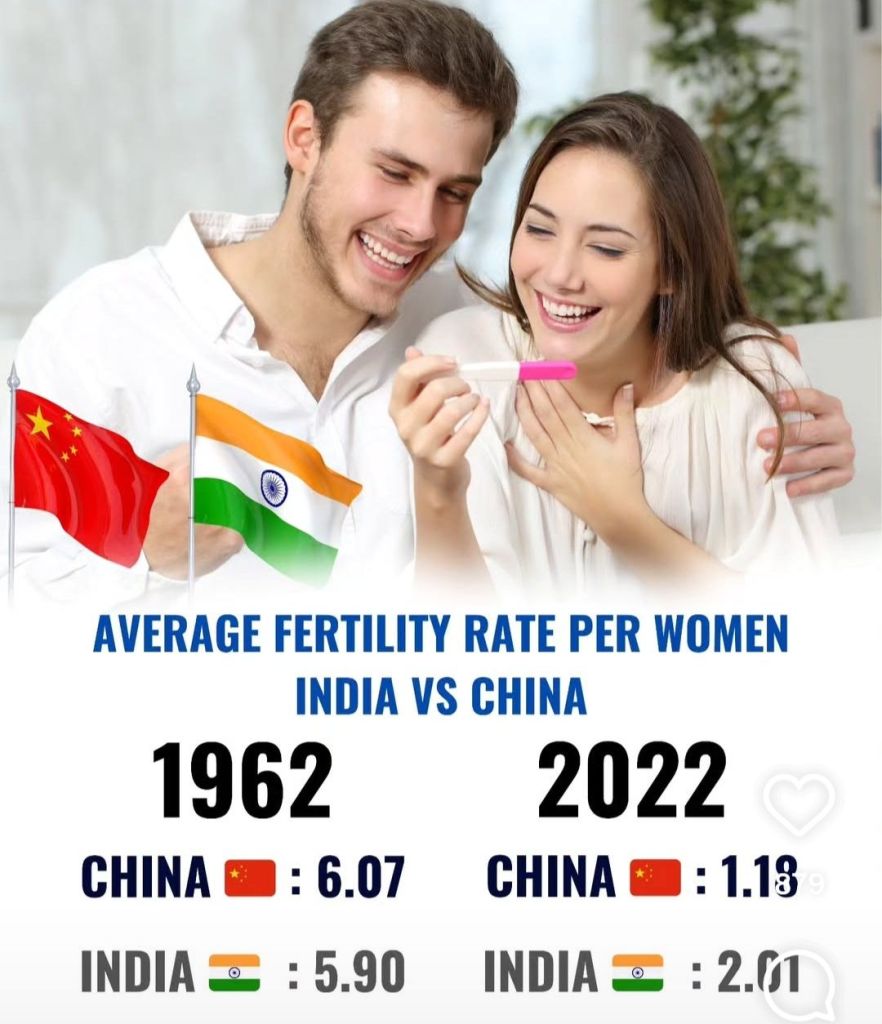
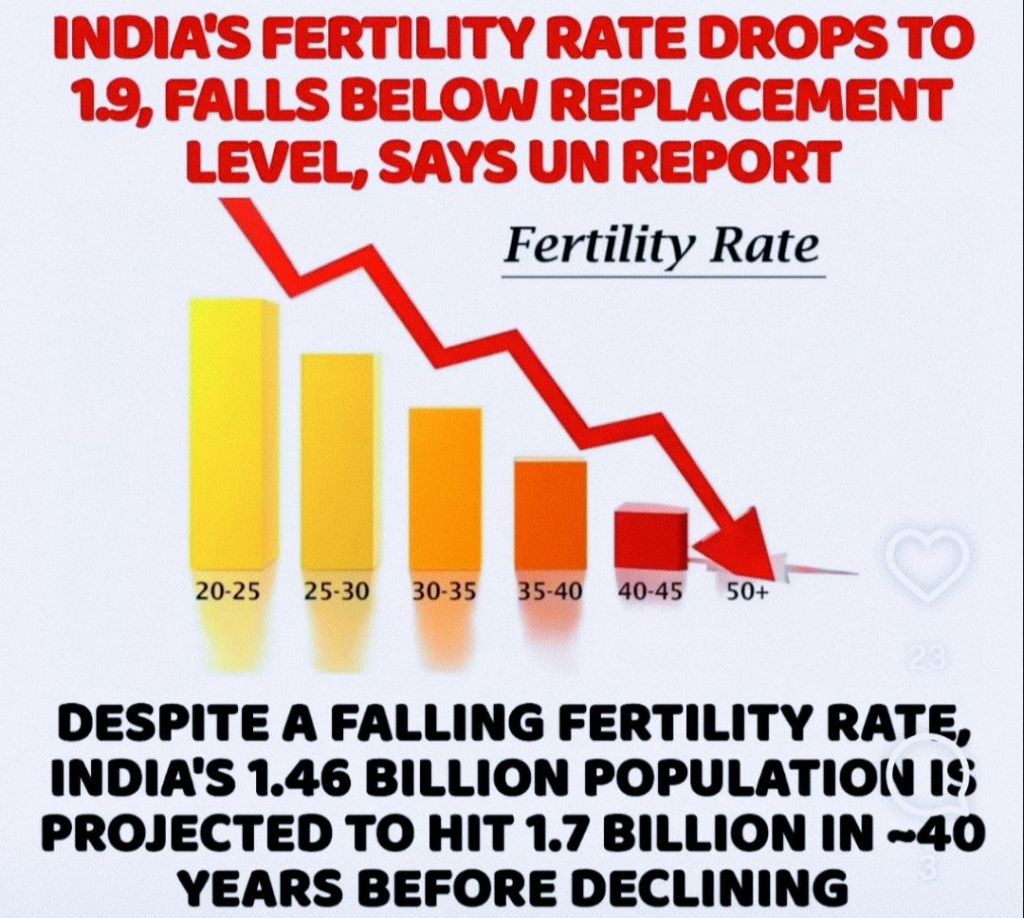
India, once renowned for its staggering demographic size, is now quietly embarking on a monumental transformation in its population landscape. The United Nations Population Fund’s (UNFPA) 2025 State of World Population Report starkly illustrates this shift: India’s Total Fertility Rate (TFR) has plummeted to 1.9, significantly below the replacement threshold of 2.1. In layman’s terms, Indian women are now having fewer children than necessary to maintain a stable population over time. This marks a dramatic departure from the early post- Independence era, when a TFR of 5.7 children per woman in 1950 raised alarms about a population explosion. Presently, though India retains its title as the world’s most populous nation with 1.46 billion inhabitants, projections indicate that its numbers will peak at 1.7 billion by 2065 before embarking on a gradual and irreversible decline.

However, this demographic transition is anything but uniform, as stark regional disparities emerge. States like Bihar (TFR 3.0), Uttar Pradesh (2.7), and Meghalaya (2.9) report persistently high fertility rates, contrasting sharply with states such as Delhi, Kerala, and Tamil Nadu, where the TFR hovers between 1.4 and 1.5. These variations imply that certain regions will grapple with a surplus of youth and strained resources, while others confront the challenges accompanying an aging population and possible labor shortages. Currently, 7% of India’s populace is aged 65 and older, a figure expected to double by 2050. This demographic shift presents substantial challenges for pension systems, healthcare services, and intergenerational support frameworks.
Yet, the discourse surrounding the fertility crisis transcends mere statistics; it revolves around the unmet reproductive aspirations of millions. According to the UNFPA report, over one-third of Indian adults have experienced unintended pregnancies, while 30% are unable to have as many children as they desire. Alarmingly, 23% face the compounded burden of unplanned pregnancies alongside constraints preventing them from achieving their desired family size. This scenario underscores a profound issue of choice—or rather, the lack thereof.
Economic precarity is a significant factor in this reproductive landscape. An astonishing 38% cite financial instability as a reason for postponing or forgoing childbirth. Concerns about job insecurity (21%), housing (22%), and lack of childcare (18%) loom large, shaping reproductive decision-making. Conversely, inadequate access to quality healthcare (14%), infertility (13%), and subpar maternal care (14%) hinder those eager to expand their families. Compounding these challenges, nearly one in five individuals feels societal or familial pressure to have fewer children than they wish.
The existing reproductive paradox is exacerbated by deeply entrenched gender norms. As the demands of parenting escalate, the societal expectation of “intensive motherhood” increasingly burdens women. The growing epidemic of loneliness, shifting patterns in relationships, and societal stigma surrounding larger families further complicate this landscape. Ultimately, India’s demographic challenges are human-centric, rooted in individual aspirations rather than mere arithmetic.

The path forward presents both significant risks and opportunities. The North-South demographic divide threatens to strain India’s political equilibrium. Southern states, having stabilized their populations, may face repercussions in parliamentary seat redistributions—yet continue to shoulder the financial burdens associated with elder care. In contrast, Northern states must provide adequate education, healthcare, and employment opportunities for their burgeoning youth populations.
The economic implications of these demographic shifts are equally pressing. India’s once-celebrated demographic dividend—comprising 68% of the population in the working-age group—stands at risk due to low female workforce participation (a mere 24%) coupled with chronic skill gaps. If not addressed, this dividend could morph into a demographic liability. Simultaneously, the elderly population is on the rise, but support systems are dwindling. More than 40% of elderly individuals belong to the lowest wealth quintile, challenging the nation’s resolve and resource allocation for elder care.

To navigate this evolving landscape, India must pivot from a population control focus to one centered on empowerment. Prioritizing universal access to contraception, abortion services, infertility treatments, and comprehensive sex education is essential. Structural and financial enablers—such as affordable childcare, flexible work policies, housing incentives, and family subsidies—must be prioritized to aid those who desire children but feel economically constrained.
Concurrently, India must brace itself for an aging society. Expanding pension schemes, enhancing geriatric healthcare, and engaging the “silver workforce” through delayed retirement and part-time opportunities are essential strategies. Policymakers must implement region-specific approaches to address the diverse demographic realities of various states while promoting gender equity to encourage women’s workforce participation and shared parenting responsibilities.
Ultimately, India needs to recalibrate its metrics of success. Fertility rates provide an incomplete picture—policymakers should track reproductive autonomy, satisfaction, access, and unmet needs regularly through national surveys to ensure policies are attuned to the realities of individuals’ experiences.
In conclusion, India stands at a demographic inflection point where the focus must shift from mere birth numbers to the fundamental question of whether individuals and couples have the freedom and support necessary to actualize their reproductive choices. The future does not lie in coercive policies or panic-driven measures, but in nurturing individual rights, dignity, and aspirations. If harnessed correctly, India can not only navigate its demographic destiny—it can actively shape it to build a more equitable future.
Visit arjasrikanth.in for more insights
 SOCIAL PERSPECTIVES