
India Must Ditch Dependency and Forge a Doctrine of Strategic Autonomy Amidst U.S. Duplicity and Regional Threats
In the chaotic theatre of global diplomacy, where alliances shift like tectonic plates, the United States’ recent glorification of Pakistan as a “phenomenal partner” in counterterrorism feels less like strategy and more like satire. For India—scarred by decades of cross-border terrorism enabled by Pakistan—this endorsement isn’t just tone-deaf; it’s a brutal reminder that realpolitik trumps righteousness in Washington’s foreign policy playbook.
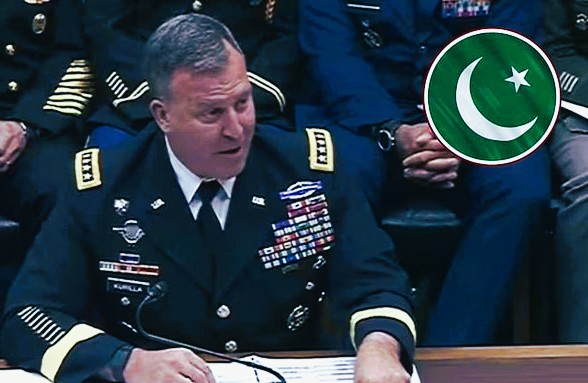
Pakistan’s track record in the war on terror reads like a paradox. On one hand, Islamabad is applauded for helping neutralize global jihadist threats like ISIS. On the other, it provides oxygen to terrorist factions responsible for heinous acts on Indian soil. The 26/11 Mumbai attacks, executed with chilling precision by Lashkar-e-Taiba operatives with alleged ISI backing, remain a grim monument to Pakistan’s duality. Yet, successive U.S. administrations continue to play a diplomatic balancing act—praising Islamabad’s cooperation in counterterror efforts while conveniently ignoring its deep complicity in nurturing terror proxies.
Commentators like Yaroslav Trofimov of The Wall Street Journal have begun piercing through this narrative, calling out the moral contradictions in Washington’s posture. But the problem goes deeper than perception—it’s embedded in the architecture of American strategy. From Cold War utility to post-9/11 tactical alliances, the U.S. has often viewed Pakistan not as a problem, but as a “necessary evil.” In doing so, it has repeatedly mortgaged long-term regional stability for short-term geopolitical expediency.
For India, this isn’t just disappointing—it’s disorienting. The idea that the world’s most powerful democracy would ignore thousands of terror incidents traced back to Pakistan while offering it counterterror accolades is a strategic slap in the face. It exposes the limits of diplomatic faith and underscores the need for a dramatic recalibration of India’s national security doctrine.
The road ahead demands two things from New Delhi: strategic autonomy and uncompromising deterrence. India must cast aside any lingering illusions of unwavering support from Washington or any other global power. The Kargil betrayal, the sluggish international response to the Pulwama attack, and now the U.S.’s bizarre glorification of Pakistan’s counterterrorism credentials form a pattern that cannot be ignored.

India must pivot toward self-reliance in defense and diplomacy. Investments in indigenous defense production, cyber warfare, and artificial intelligence must not be treated as future ambitions but present imperatives. At the same time, India must deepen partnerships with nations that value sovereignty and global rules—not just transactional convenience. Japan, France, Israel, and Australia offer avenues for meaningful strategic cooperation outside the U.S.-centric security paradigm.
The China-Pakistan nexus further amplifies India’s two-front dilemma. A revisionist China at the LAC and an emboldened Pakistan supported by selective U.S. patronage represent a dual threat that cannot be neutralized through appeasement or delay. India must shift from reactive diplomacy to a proactive defense doctrine—one that blends deterrence with innovation.

Revisiting India’s nuclear posture, bolstering its space and maritime capabilities, and developing cutting-edge surveillance and strike systems must form the backbone of this revamped doctrine. Simultaneously, multilateral platforms like the Quad, I2U2, and SCO must be leveraged not just for optics, but for deep strategic coordination, real-time intelligence sharing, and joint counterterror operations.
Equally crucial is the narrative war. India must expose the contradictions in U.S.-Pakistan ties across diplomatic and media platforms. The message must be unequivocal: rewarding a state sponsor of terrorism erodes the global counterterror framework and legitimizes the very behavior the world claims to fight.
The recent events serve as a wake-up call that third-party arbitration or moral outrage won’t secure India’s borders. Sovereignty is not defended in international forums—it is defended in real-time, by resilient institutions and a fearless strategic doctrine.
The United States’ choice to wear blinders when dealing with Pakistan isn’t just a failure of perception—it’s a moral hazard. It signals to the world that as long as a nation serves tactical interests, its long-term destabilizing behavior can be overlooked, even rewarded. That’s not partnership—it’s complicity.
India, therefore, must rise not in protest, but in preparation. It must stop waiting for the world to validate its grievances and start shaping the battlefield—diplomatically, technologically, and militarily. A sovereign India, anchored in self-strength and strategic autonomy, is the most potent answer to both adversaries and indifferent allies.

In the end, when the firefighter turns out to be the arsonist’s best friend, you stop calling 911. You build your own fire brigade—and you make damn sure it’s invincible.
Visit arjasrikanth.in for more insights
 SOCIAL PERSPECTIVES