
Air India Flight 171’s Tragedy Laid Bare the Dreamliner’s Hidden Tech Terrors and Shook the Myth of Aviation’s Safest Jet
The tragic crash of Air India Flight 171 on June 12, 2025, has deeply shaken global confidence in the Boeing 787 Dreamliner. Once seen as a symbol of modern aviation safety and innovation, the Dreamliner’s spotless record was shattered in a matter of seconds near Ahmedabad. The aircraft, carrying 242 people on its journey from Ahmedabad to London, crashed just moments after take-off. One survived. This heart-breaking incident has not only cast a shadow over the Dreamliner program but also highlighted a number of technical concerns that have long been whispered about but largely ignored.

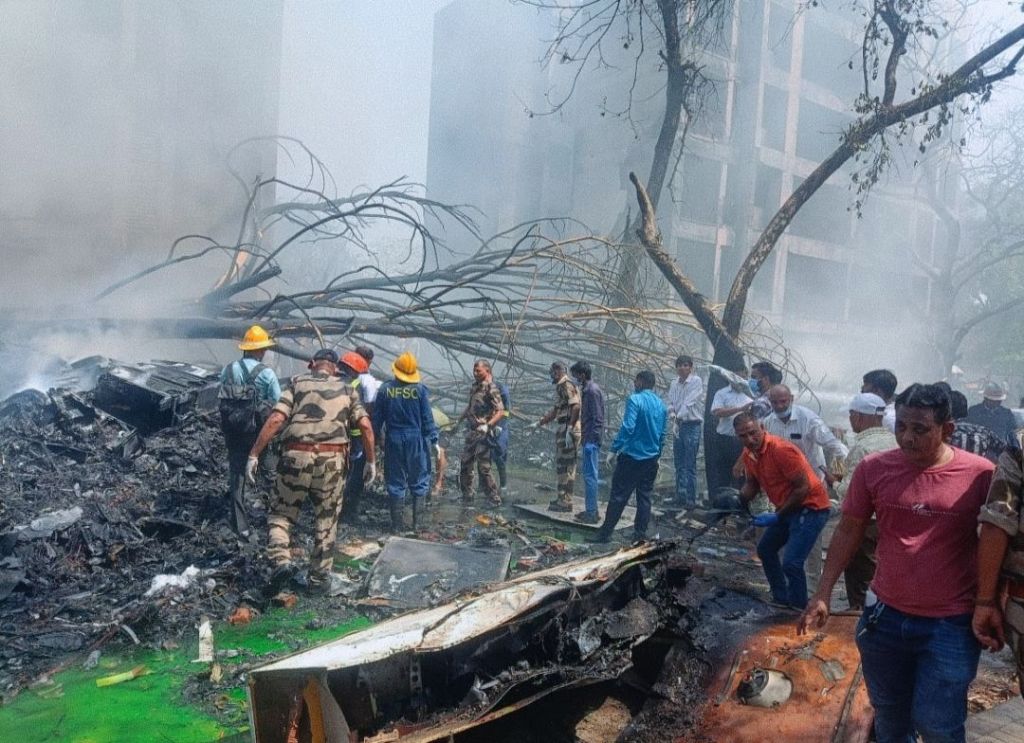
The crash was both sudden and shocking. The 11-year-old aircraft issued a Mayday call shortly after lifting off, before vanishing from radar at just 625 feet. It then slammed into a residential building near a major medical college. The landing gear, still extended when it should have been retracted, suggests either a serious mechanical fault or a procedural failure. The loss of life—both in the aircraft and on the ground—is a grim reminder of the consequences when aviation systems fail.
For more than a decade, the Dreamliner had avoided major accidents, unlike its troubled sibling, the 737 MAX. However, its seemingly spotless record hid a series of worrying incidents. In 2013, all Dream-liners were grounded worldwide after lithium-ion batteries caught fire on several aircraft. Though the issue was resolved quickly, it revealed how vulnerable the aircraft was to certain technical flaws.

Problems didn’t end there. In 2016, one Dreamliner filled with smoke mid-flight, forcing an emergency landing. In 2017, whistle blowers warned that the oxygen system—crucial during cabin depressurization—had repeatedly failed tests. These issues pointed to a deeper problem: Boeing’s focus on speed and cost-cutting often compromised safety and quality.
One of the most concerning voices came from John Barnett, a former Boeing quality manager. He raised alarms about serious safety lapses, including metal debris left near essential wiring and improper installation of oxygen systems. His warnings were initially ignored. His unexpected death later cast a long shadow over Boeing and raised further concerns about internal accountability.
Now, following the Ahmedabad crash, the aviation industry is demanding answers. Why was the landing gear still down? Why did the aircraft lose altitude so quickly in good weather? Could long-standing production flaws have finally caused a catastrophic failure? Or did operational mistakes play a role? Investigators, including teams from GE Aerospace and aviation authorities, must now piece together flight data, mechanical evidence, and past safety concerns to find the truth.

The impact of this disaster extends far beyond Air India and Boeing. For Air India, it is a devastating blow as it tries to modernize its fleet. For Boeing, the crash has triggered a major crisis, with falling stock prices, growing legal scrutiny, and renewed criticism of its production practices. The upcoming Paris Air Show, expected to celebrate technological progress, will now be overshadowed by tough questions about corporate responsibility, safety oversight, and regulatory integrity.
This tragedy calls for a rethinking of the Dreamliner’s legacy. While innovation and efficiency are vital, they must never come at the expense of safety. The crash of Air India Flight 171 marks the end of a period of blind trust in the 787’s safety and the beginning of a new era of serious scrutiny. In aviation—where lives depend on every detail—there is no room for complacency. This heartbreaking event is a powerful reminder: dreams must be matched by discipline, vigilance, and integrity.
Visit arjasrikanth.in for more insights
 SOCIAL PERSPECTIVES