From Import-Addict to Export-Addict — India Reloaded Its Defence Arsenal, Rewired Its Industry, and Rewrote the Rules of the Game
In an unexpected yet thrilling twist to its post-independence narrative, India has pulled off a feat that few imagined possible two decades ago—emerging as a heavyweight in the global defence export market. In FY 2024, the country exported nearly ₹21,000 crore worth of defence equipment, a record-shattering figure that signals the coming-of-age of a sleeping giant. For decades stereotyped as a buyer, not a builder, of military hardware, India has now flipped the script with such force that even sceptics are left applauding. This transformation isn’t a random spurt; it’s a meticulously choreographed leap rooted in visionary policy shifts, strategic disruption, and an unyielding resolve to turn India from an arms importer into a defence powerhouse.

Rewind to 1947. Freshly independent, India inherited the dusty remnants of a British-era defence manufacturing system, barely capable of producing rifles, let alone fighter jets or missiles. The next several decades were marked by dependency—mostly on the Soviet Union, followed by the United States and France. This over-reliance placed India perpetually at the mercy of geopolitical winds, reducing its strategic autonomy and saddling it with bloated procurement bills and technology gaps. For years, “defence indigenization” was more aspiration than action, with each new procurement scandal triggering yet another round of reforms that rarely cut through the entrenched inertia.
But all that began to change in 2001, when the government cracked open the gates of defence production to private players and cautiously welcomed foreign direct investment (FDI). The impact was slow at first, like a turbine warming up. It took another decade—and the moral jolt of procurement controversies—for the system to begin shedding its bureaucratic skin. The 2002 Defence Procurement Procedure (DPP) introduced transparency and order into the maze of military acquisitions. However, it wasn’t until 2014, with the launch of the “Make in India” campaign, that India made an unapologetic pitch for industrial self-reliance. This was turbocharged in 2020 by the Atmanirbhar Bharat initiative, a clarion call to reduce external dependency across sectors, including defence.

That same year, India introduced the Defence Acquisition Procedure (DAP), a gamechanger that prioritized indigenous products in procurement plans. With clear incentives for Indian firms and joint ventures, and well-defined categories like “Buy Indian” and “Make in India,” the policy provided a strong commercial signal: local is no longer just patriotic—it’s profitable.
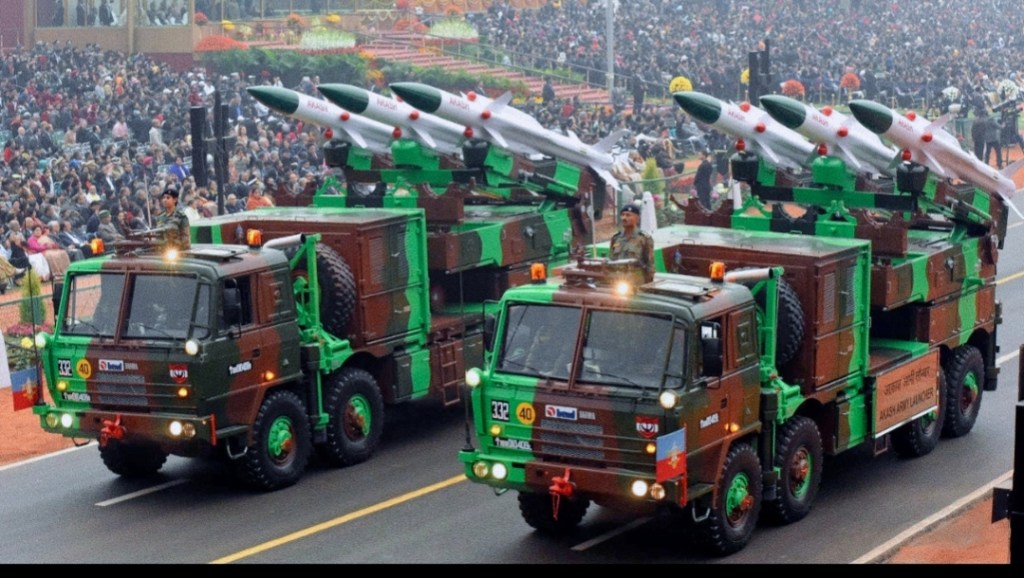
And profitable it has been. Indigenous systems like the Tejas Light Combat Aircraft, the Akash missile system, and the BrahMos cruise missile are no longer just showpieces at defence expos—they’re battle-ready, globally marketed assets. India’s defence firms, once silent subsidiaries of the public sector, have become headline-grabbing innovators. L&T is building naval vessels. Tata Advanced Systems is partnering in aerospace. Mahindra is making strides in armoured vehicles. These aren’t niche efforts—they are the new face of Indian defence manufacturing.
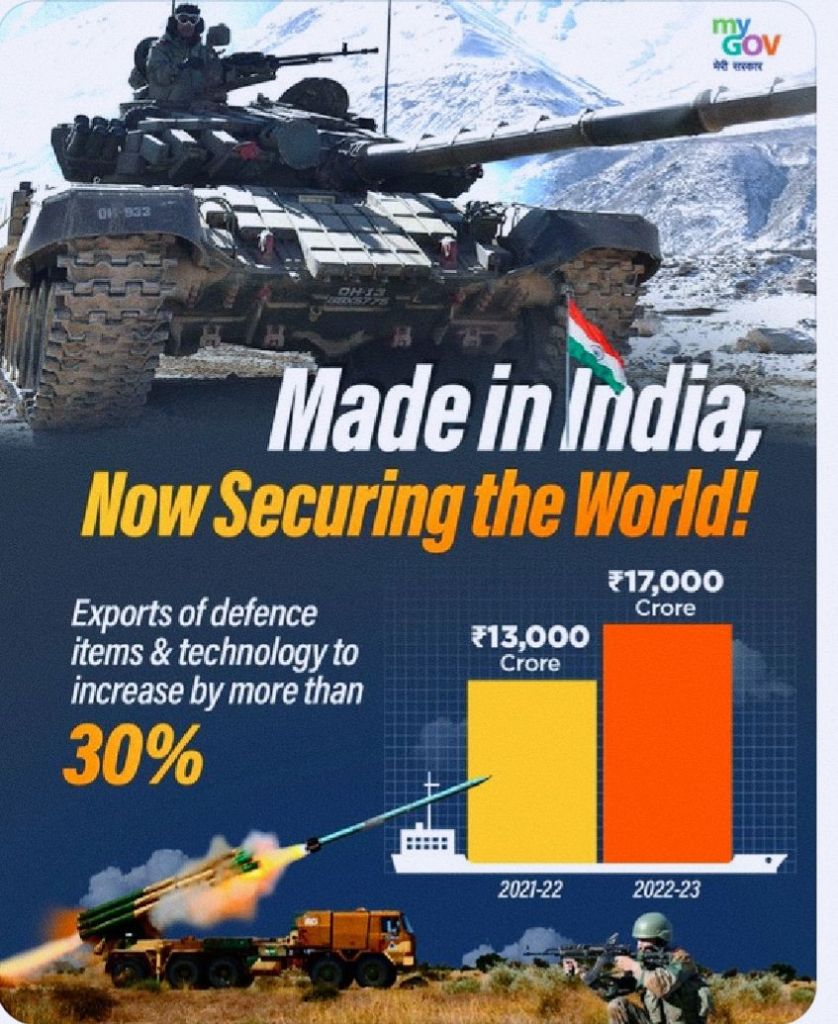
The numbers tell a story louder than any slogan. Defence exports, a modest ₹686 crore in 2013-14, are projected to hit ₹23,622 crore in 2024-25—a meteoric rise of nearly 3,300%. India’s clientele now includes the Philippines, which inked a $375 million deal for BrahMos missiles; Armenia, which bought missile systems amid its conflict with Azerbaijan; and even the United States, a traditional seller now also a buyer. Indian firms are now exporting everything from drones to protective gear, from naval simulators to surveillance systems. It’s a strategic soft power play, one that enhances India’s regional influence while creating economic ripple effects back home.

But what makes this truly historic is not just the export figures or the glitzy weapon systems. It’s the structural shift in mindset. India is no longer content with screwdriver technology. It’s investing in R&D, eyeing disruptive domains like artificial intelligence, space-based warfare, and hypersonic propulsion. Defence Industrial Corridors in Uttar Pradesh and Tamil Nadu are drawing private investments and fostering innovation ecosystems. Small and medium enterprises, once locked out of defence contracts, are now critical links in complex supply chains.
Challenges, of course, remain. India still imports critical technologies like jet engines and certain radar systems. Bureaucratic bottlenecks haven’t disappeared entirely, and defence startups face uphill battles in scaling. But even these hurdles are now seen as opportunities—spaces to innovate rather than obstacles to lament. With export targets set at ₹50,000 crore by 2029, the trajectory is clear: India wants not just to be self-reliant but to become a net contributor to global security infrastructure.
This rise has profound geopolitical implications. By offering affordable, reliable, and non-aligned defence solutions, India is giving many countries an alternative to traditional superpower suppliers. In a world increasingly polarized by strategic rivalries, that neutrality is both rare and valuable.

India’s journey from importer to exporter isn’t just a transformation—it’s a quiet revolution. And like all revolutions, it wasn’t sparked overnight. It took visionaries in policymaking, risk-takers in industry, and a larger national awakening to the fact that sovereignty isn’t just about having soldiers—it’s about having the tools to arm them, the factories to build them, and the will to export them.
In short, India’s defence sector isn’t just booming. It’s boomeranging—what once came in from the world is now flying out, faster, better, and proudly stamped: Made in India.
Visit arjasrikanth.in for more insights
 SOCIAL PERSPECTIVES