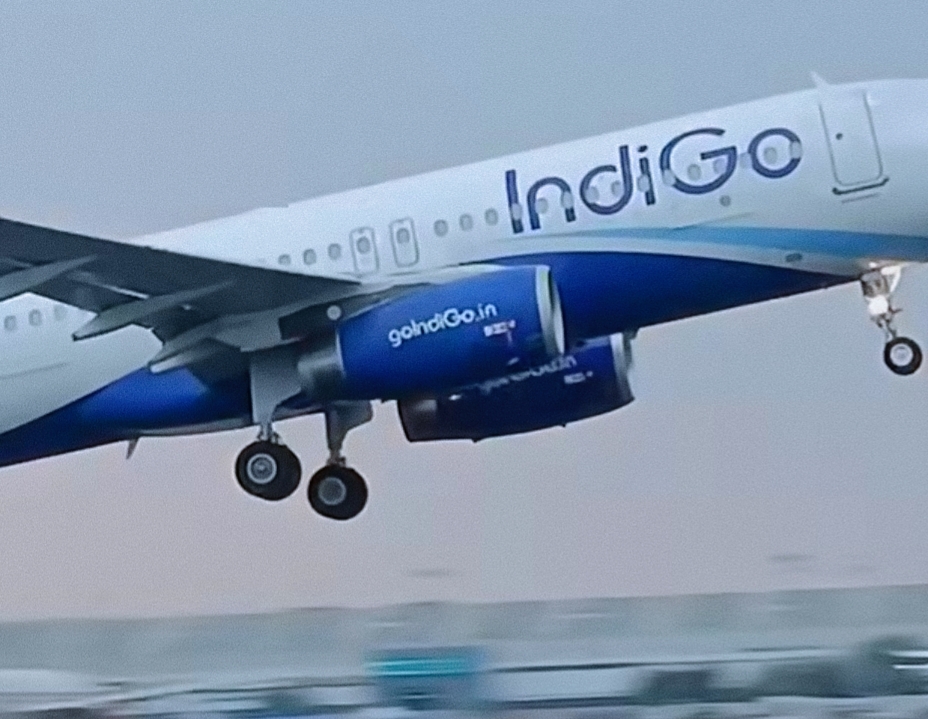
From Tightrope Walking to Triumph: Indigo Transformed Challenges into Opportunities and Redefined Aviation Success
In the vast expanse of India’s aviation landscape, one name stands out above the rest: Indigo Airlines. Known for its vibrant blue and orange livery, Indigo has become synonymous with Indian aviation, controlling nearly 65% of the market share—an astonishing figure that dwarfs its nearest competitor, SpiceJet, by a staggering margin of nearly 25 times. To understand the pulse of India’s aviation industry, one must delve into the workings of Indigo, a company that has not only survived the turbulence of an unpredictable industry but has also thrived remarkably well.
Running an airline is akin to walking a tightrope; it requires balancing operational costs against unpredictable revenue streams. The aviation business is notoriously tricky. Airlines face astronomical costs that do not wane with fluctuating passenger numbers, meaning corners cannot be cut, especially when it comes to safety. The stakes are high—failure to maintain aircraft can have catastrophic consequences. Furthermore, no airline can ensure passenger bookings solely through its policies; demand is a fickle friend, contingent on economic conditions and external factors such as fuel prices, pandemics, and geopolitical tensions.
Indigo’s recent quarterly performance has been nothing short of stellar. The company reported a revenue increase of nearly 25% year-on-year, with expenses rising at a much slower rate of just 19.1%. This impressive financial agility resulted in an expanded EBITDA margin, soaring to 27.5% compared to 22.4% from the previous year. Ultimately, the company’s net profit surged by nearly two-thirds, jumping from ₹1,800 crore to approximately ₹3,068 crore—a significant milestone, as this marks the first time Indigo has surpassed the $10 billion revenue mark in a fiscal year.

So, what’s behind this remarkable performance? For starters, Indigo has been expanding its fleet and operations. The airline increased its number of aircraft from 367 to 434 and extended its routes, resulting in a substantial rise in available seat kilometers (ASK). The ASK metric, which represents the number of seats available multiplied by the distance flown, jumped from 34.8 billion to 42.1 billion in a single quarter. Adding to this success was an impressive passenger load factor of 87.4%, indicating that the vast majority of its seats were filled—a testament to the airline’s operational efficiency.
While Indigo’s operational strength is commendable, it has also been fortunate enough to benefit from falling fuel prices. The airline managed to reduce its fuel costs to ₹1.6 per kilometer, down from ₹1.76 a year earlier. This seemingly minor adjustment has a compounding effect on the bottom line, showcasing how even small efficiencies can lead to significant savings. Additionally, the company capitalized on a busy wedding season and a once-in-a-decade gathering, which contributed to increased passenger numbers.

Indigo has faced its share of challenges, particularly in recent years. A problematic series of A320 Neo engines led to grounded aircraft, straining operations and forcing the airline to lease additional planes, raising costs. However, resilience proved vital as nearly half of the previously grounded aircraft have returned to action. This resurgence not only alleviated leasing costs but also allowed Indigo to maintain a competitive edge in a sector threatened by numerous competitors.
Indigo’s reputation as a low-cost carrier initially set it apart in an industry dominated by full-service airlines. However, recent developments suggest a gradual shift towards slightly more premium offerings. The introduction of a loyalty program, “BluChip,” and the creation of a business-class-like experience with additional perks signify this transition. Yet, the management emphasizes that while they might be experimenting with enhanced services, the core value proposition remains—Indigo is committed to providing low-cost operations without compromising on the quality of service.
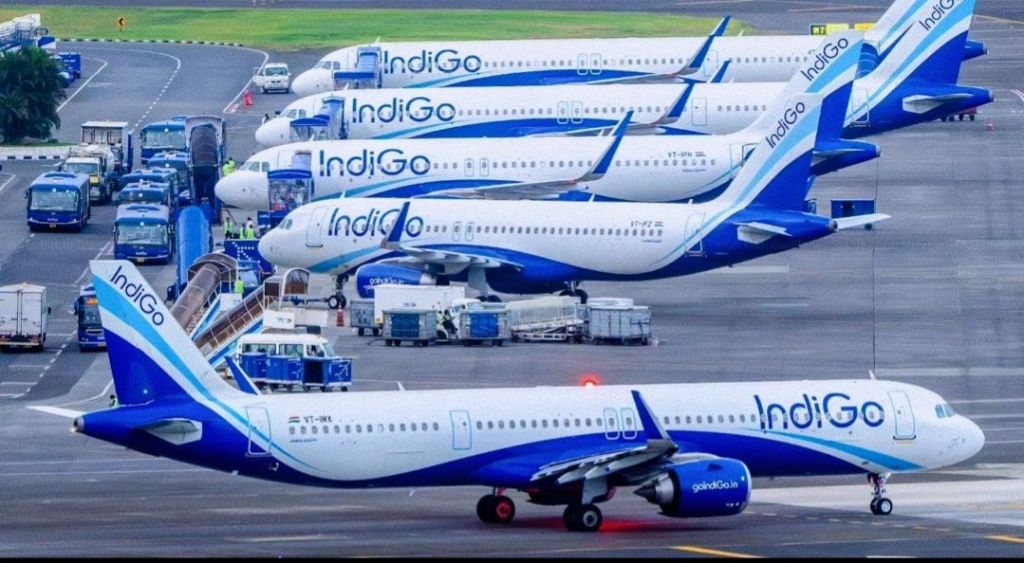
Despite the recent geopolitical tensions and the fallout from attacks affecting air travel in the region, Indigo’s extensive network has allowed it to weather these storms. While the airline faced flight cancellations and operational challenges, its diverse routes across India and abroad mitigated the impact. As air travel demand began to rebound, Indigo was quick to adapt, showcasing its resilience and operational robustness.
As we look to the future, Indigo Airlines appears well-positioned to navigate the unpredictable skies of the aviation industry. Its ability to adapt, coupled with efficient operations and a commitment to maintaining low costs, sets it apart as an industry leader. While challenges will undoubtedly arise—be it from geopolitical tensions, fluctuating fuel prices, or competition—Indigo has demonstrated an impressive capacity to absorb shocks and emerge stronger.
In a world where the aviation industry is often marked by uncertainty and volatility, Indigo Airlines stands as a beacon of success, a testament to effective management, robust operational strategies, and a commitment to customer satisfaction. As it continues to soar to new heights, the journey of Indigo serves as an inspiring narrative of resilience, innovation, and a relentless pursuit of excellence in the skies.
Visit arjasrikanth.in for more insights
 SOCIAL PERSPECTIVES