Revving Up the Future: India’s Car Market is Navigating a Bumpy Road to Transformation!
India’s automotive industry, once a predictable engine of economic momentum, has hit a patch of shifting gravel. In FY2025, it managed to clock a 2% to 2.6% rise in passenger vehicle sales, reaching around 4.32 million units. At first glance, this growth appears to signal resilience—but the story beneath the hood tells a tale of economic headwinds, demand distortions, and consumer recalibration. After the heady post-COVID rebound that saw the sector roar back with over 8% growth, this deceleration feels like downshifting on a freeway.

What’s slowing the gears? A potent mix of affordability concerns, evolving safety and emission regulations, and macroeconomic pressure. The mandatory switch to BS6 norms and additional safety protocols have inflated vehicle prices—particularly entry-level models—at a time when steel and other input costs are also on the rise. Add to that the consumer shift toward feature-rich variants, and the overall cost of ownership has escalated beyond what many middle-class buyers can stomach.
Meanwhile, inflation is sticking around like a stubborn pothole, while high interest rates continue to undercut consumer sentiment. Even the traditionally dependable rural demand has turned tentative, with many aspirational buyers delaying or altogether skipping vehicle purchases. The net result: a psychologically bruised market hesitant to make big-ticket commitments.

Amid this hesitation, one trend has screamed through the smog—SUVs are dominating the Indian auto imagination. By FY2025, SUVs accounted for 55% of all passenger vehicle sales, a staggering 11% increase year-over-year. From compact crossovers to full-size beasts, the Indian consumer is clearly chasing road presence, safety, and perceived luxury. The price-sensitive small car segment, which once symbolized middle-class India’s dream of mobility, saw a sharp 12% contraction, its worst performance in recent memory.
This shakeup has spurred contrasting strategies from the Big Three: Mahindra & Mahindra, Maruti Suzuki, and Tata Motors—each choosing a unique gear.

Mahindra & Mahindra seems to be riding the SUV expressway with turbo confidence. Having deliberately stayed away from the crowded and shrinking small car market, Mahindra’s bet on rugged SUVs like the Scorpio and XUV series paid off. With a 20% jump in sales and a commanding 22.5% share of SUV revenues, Mahindra’s positioning looks almost clairvoyant. Their profitability metrics are equally robust: a 9.5% profit-before-interest-and-tax margin and a stellar 45.2% return on capital employed (ROCE), leaving competitors far behind. Even with a few software bugs in their EV launches, Mahindra’s ₹12,000 crore commitment to EV and passenger vehicle development by 2027 signals that they’re driving with one eye on the horizon.
Maruti Suzuki, on the other hand, finds itself in a more complex roundabout. Though it posted a 4.6% overall sales increase in FY2025, this was largely propped up by a 17.5% surge in exports. Domestically, it’s been a bumpy ride. Once the undisputed monarch of the hatchback kingdom, Maruti’s small car dominance has steadily eroded—its hatchback market share plummeting from 46% in 2019 to 23.5% in 2025. Meanwhile, rising input costs and new plant expansions have dragged operating margins down to 8.7%. If Maruti doesn’t shift lanes soon, it risks being stuck in a traffic jam of its own legacy.
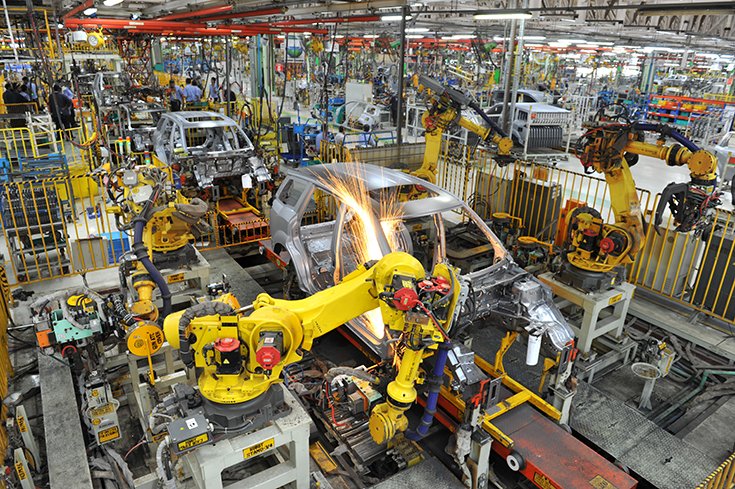
Tata Motors offers a hybrid narrative. With a pioneering footprint in the EV space, it now commands 55.4% of the electric passenger vehicle market, and continues to strengthen its CNG lineup. Yet, even Tata wasn’t immune to headwinds. Its overall passenger vehicle sales dipped by 3%, with hatchbacks pulling down the numbers. High fixed costs have constrained profitability, but the silver lining lies in growing EV margins, hinting at future dividends. Tata seems poised for long-haul endurance, but must tune its short-term efficiency.
Looking toward FY2026, the industry isn’t exactly revving up—but it’s also not stalling. Modest single-digit growth projections hinge on inflation cooling, rural markets rebounding post-monsoon, and credit becoming more accessible. Meanwhile, the shift to electric mobility is gathering speed—but affordability remains a speed breaker.
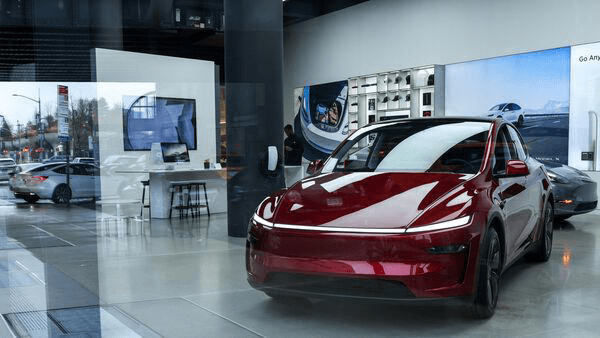
The road ahead will demand more than horsepower. It’ll require vision, agility, and collaborative acceleration. Here’s what needs tuning:
Designing affordable EVs and compact SUVs that meet safety, sustainability, and price expectations.
Smart subsidies and incentives from the government, especially for low-income consumers entering the EV era.
Strengthening supply chains, especially in EV battery manufacturing, to insulate against global market volatility.
Creative consumer financing models like subscription services and micro-leasing that reduce entry barriers.
Robust public-private collaboration for charging infrastructure, technology R&D, and localized manufacturing.

In a landscape where change is the only constant, India’s automotive sector stands not merely at an inflection point—but a fork in the future. The days of one-size-fits-all hatchbacks are behind us. The new game is about range, resilience, and relevance.
FY2025 might go down as a year of disruption, but it is also a year of instruction. The manufacturers that read the road signs, tweak their engines, and invest in innovation will not only survive the storm—they’ll define the next chapter of Indian mobility. For now, the check engine light is blinking, but the journey is far from over. The real question: Who’s ready to shift into top gear?
Visit arjasrikanth.in for more insights
 SOCIAL PERSPECTIVES