The Great Bypass: Putin’s Bid to Redraw Europe from Istanbul
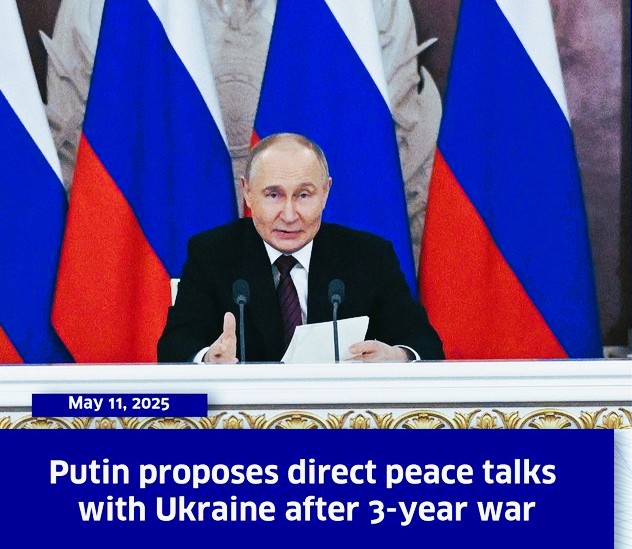
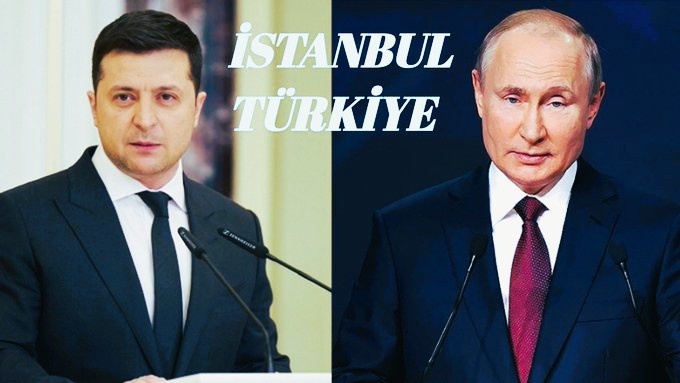
In a bold recalibration of diplomatic posture, Russian President Vladimir Putin has proposed direct peace negotiations with Ukrainian President Volodymyr Zelenskyy—an initiative scheduled for May 15, 2025, in Istanbul. This overture, bypassing traditional Western intermediaries, signals a calculated geopolitical manoeuvre: one that seeks to reassert Russia’s agency over the course of the conflict while marginalizing Euro-Atlantic influence in the peace process. Far from being a conciliatory gesture, the move underscores Moscow’s determination to recast the strategic architecture of Eastern Europe on its own terms.
Putin’s call for “negotiations without preconditions” is carefully framed as a chance to confront the so-called “root causes” of the war, a reference laden with historical and ideological significance. Chief among Russia’s grievances is NATO’s eastward expansion—a longstanding irritant in Moscow’s foreign policy doctrine—and what it perceives as Western orchestration of regime change in Kyiv. By advocating for a bilateral format, Putin aims to dilute the multilateral pressure led by the United States and European Union, re-establishing a two-player dynamic in which Russia holds both territorial leverage and psychological upper hand.
At the heart of Moscow’s demands is a proposed redefinition of Ukraine’s geopolitical identity: formal neutrality, a renunciation of NATO ambitions, and the withdrawal of Ukrainian forces from four partially occupied regions—Donetsk, Luhansk, Zaporizhzhia, and Kherson—now claimed by the Kremlin. These are not tentative starting points; they are non-negotiable pillars of Russia’s post-conflict vision. Their articulation at the outset of peace talks suggests not a spirit of compromise but a desire to normalize the outcomes of military aggression under the guise of diplomatic settlement.
Turkey’s mediation introduces an intriguing asymmetry to the talks. As a NATO member with enduring ties to both Russia and Ukraine, Ankara occupies a rare position of strategic ambivalence. President Recep Tayyip Erdoğan’s backing of the Istanbul initiative—albeit conditional on a verified ceasefire—lends the effort a veneer of neutrality. However, it also complicates Putin’s attempt to frame the negotiations as free from Western intrusion. Turkey’s involvement, if leveraged skillfully, could serve as a rare stabilizing force or, conversely, become a contested middle ground for diverging strategic interests.

Zelenskyy’s conditional openness to dialogue—predicated on the establishment of a verifiable, durable ceasefire starting May 12—reflects both tactical prudence and a deep scepticism rooted in past Russian duplicity. The recent three-day “Victory Day” truce was widely dismissed in Kyiv as a cynical ploy rather than a genuine effort to de-escalate. The Ukrainian leadership, acutely aware of the risks of legitimizing Russian territorial gains through premature diplomacy, remains wary of entering talks without security guarantees or clear commitments to sovereignty.
Meanwhile, Western responses to Putin’s initiative are increasingly fractured. While the European bloc has maintained a firm line demanding unconditional Russian withdrawal and warning of expanded sanctions, the United States—particularly through voices like former President Donald Trump—has signaled a shift toward encouraging Zelenskyy to negotiate directly. This divergence exposes cracks in the transatlantic alliance, potentially emboldening Russia by portraying the West as strategically disjointed and diplomatically fatigued.
The broader implications of this maneuver are far-reaching. Putin’s proposal is part of a wider campaign to project Russia not as an aggressor, but as a rational actor seeking stability in a volatile region. By casting the conflict as the byproduct of Western provocation rather than imperial ambition, the Kremlin seeks to rewrite the narrative of the war, both for domestic consumption and for the non-aligned world. However, beneath this rhetorical pivot lies a stark asymmetry of power: with nearly 20% of Ukrainian territory under Russian control, any dialogue initiated under such conditions risks entrenching, rather than resolving, the status quo.
The prospect of direct diplomacy does offer a slender opening for de-escalation, but only if anchored in mutual respect for sovereignty, territorial integrity, and international law. Without these principles, negotiations risk becoming a performative exercise—an extension of the battlefield by other means. The role of Turkey and other potential mediators, including neutral powers or multilateral organizations, will be critical in establishing a framework that balances the realities on the ground with the imperatives of a just peace.
In conclusion, Putin’s Istanbul initiative is a high-stakes gambit—an effort to reframe Russia as a peace broker while entrenching the gains of war. Whether this constitutes a genuine diplomatic inflection point or a tactical smokescreen will depend on the integrity of the negotiation process, the unity of international response, and the resilience of Ukraine’s strategic posture. As the world watches Istanbul, the question remains: is this a moment of transformation—or simply the latest chapter in a prolonged and perilous geopolitical contest?
Visit arjasrikanth.in for more insights
 SOCIAL PERSPECTIVES