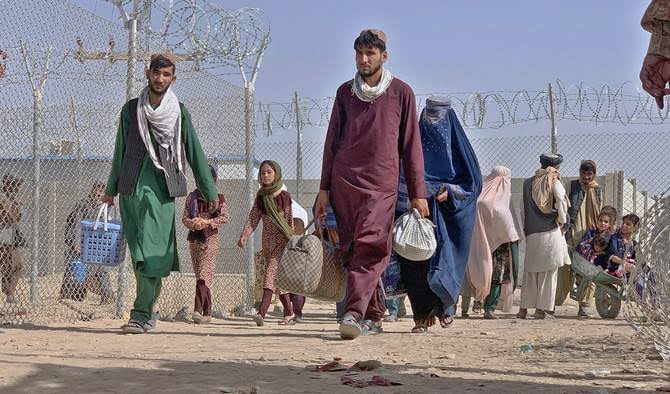
The Great Indian Migration Mystery: Unpacking the Enigma of Unauthorized Immigrants!!
Estimating the number of undocumented immigrants in India is like counting stars through a foggy sky—possible in theory, elusive in practice. And yet, behind the shifting data lies a profound truth: India has evolved into a compassionate destination, a sanctuary for thousands escaping the chaos of conflict, economic distress, and historical turmoil in neighboring lands. From Bangladesh to Myanmar, Afghanistan to Sri Lanka, these migrants carry not just burdens, but also aspirations and determination, enriching India’s cultural, economic, and social fabric.

Bangladesh forms the heartbeat of this migration wave. A BBC estimate suggests around 1.2 million undocumented Bangladeshi migrants may reside in India. Many arrived decades ago, particularly during the 1971 Liberation War, seeking safety from conflict and blending seamlessly into local communities over generations. These individuals have contributed to industries, supported local economies, and become informal yet essential threads in India’s national tapestry.
From the lush hills of Myanmar, waves of Rohingya and Chin migrants have crossed into India, often through the northeast, particularly Manipur and Mizoram. Their reasons are clear: escaping persecution and seeking the basic human right of safety. With numbers estimated between 50,000 to 100,000, they are survivors, striving to rebuild lives with dignity amidst the unknown, many engaging in small trades, crafts, and local services.

Afghanistan, long caught in the throes of political instability and conflict, has seen over 13,000 of its citizens find shelter in India. These individuals often arrive with dreams of peace and prosperity. They establish small businesses, pursue education, and contribute silently to the vibrant life in cities like Delhi and Hyderabad. Their resilience shines even in the face of uncertainty.
From Pakistan, approximately 7,600 undocumented individuals have arrived, many due to religious or economic challenges. Rather than being seen through the lens of legality alone, their stories are best understood through compassion. These are families who, in search of religious freedom or livelihood, looked to India not as a border to cross, but as a beacon of hope.
In southern India, Tamil Nadu and Odisha host over 58,000 Sri Lankan refugees, many of whom arrived during and after the civil war. Despite initial challenges, they have built lives in refugee camps, formed communities, educated their children, and kept their culture alive while integrating into the broader Indian milieu. Their presence speaks of endurance and hope.
On the other hand, citizens of Nepal benefit from one of the world’s most unique and open bilateral arrangements: the free movement agreement. Their seamless integration into Indian society sets a compelling example of what regional unity can look like when rooted in mutual trust and shared history.
Overall, India is home to an estimated 4.9 million foreign-born residents—roughly 0.4% of the population. An overwhelming 98% of them come from Asian countries, reaffirming India’s central role in the regional migration ecosystem. Delhi stands out with the highest concentration of foreign-born residents (21%), while Maharashtra leads in total migrant numbers, and Uttar Pradesh registers the most outbound migration—an intricate dance of movement that keeps India dynamic and evolving.

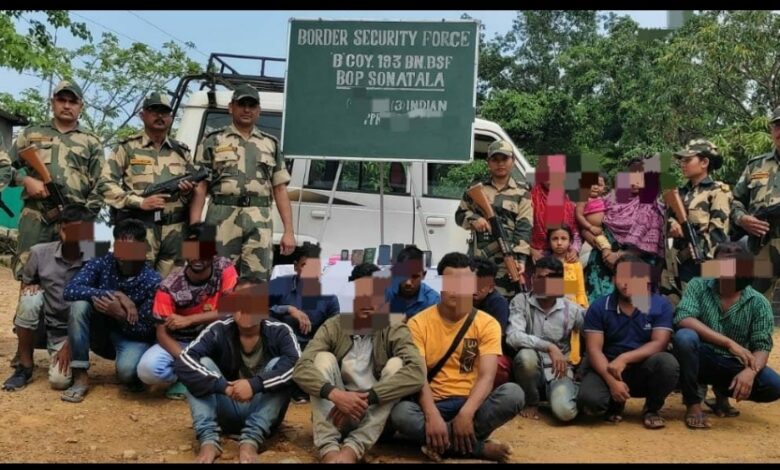
While unauthorized migration presents complex administrative and security challenges, it is also a deeply human issue. Many migrants have built their lives in India, working hard, educating their children, and contributing meaningfully to local economies. Repatriation, therefore, isn’t just a legal matter—it’s a question that intersects with identity, belonging, and emotion.
India’s strategy for managing undocumented migration is evolving. Authorities utilize document verification, biometric data, and local intelligence, while also relying on community inputs. These efforts are increasingly sensitive to the human element, recognizing that behind every ID check lies a story of struggle and survival.

Solutions for effective repatriation or integration must begin with diplomacy. Stronger bilateral ties with countries like Bangladesh, Myanmar, and Pakistan can lay the groundwork for more humane and coordinated approaches. Initiatives like the India-Bangladesh Coordinated Border Management Plan show promise. When diplomacy walks hand-in-hand with empathy, the outcomes can benefit both nations and the people caught in between.
Of course, political dimensions cannot be overlooked. Electoral considerations in border states or fears of demographic imbalance can create hesitation. But when political will is aligned with long-term national interest and humanitarian values, breakthroughs become possible. The key is to see migrants not as problems to be solved, but as people with potential to be unlocked.
As India strides into the future, its response to migration will define more than just policies—it will define its character. A strong, diverse, and inclusive India is one that acknowledges its role not just as a nation, but as a neighbour. Whether it’s offering shelter, enabling self-reliance, or ensuring orderly repatriation where needed, India has the opportunity to lead with wisdom, balance, and heart.

In the swirling currents of migration, India stands not just as a destination, but as a crossroads of humanity—a place where the dreams of millions converge, and where the future is shaped not by where one comes from, but by the courage to begin again. With vision and compassion, India can turn its migration maze into a mosaic of hope and harmony.
Visit arjasrikanth.in for more insights
 SOCIAL PERSPECTIVES