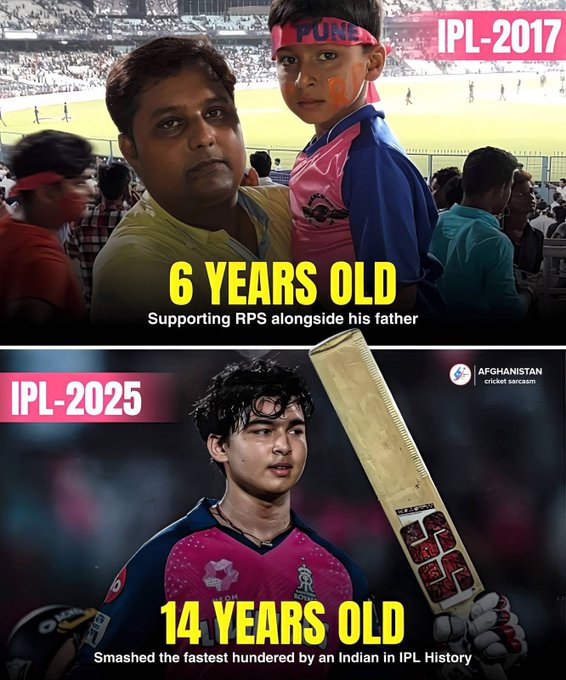
🔥 *“Pad Up, History: A 14-Year-Old Just Torched the IPL and Nobody Saw It Coming”* 🔥
On the evening of April 28, 2025, cricket did not merely evolve—it transformed. In Jaipur, a 14-year-old from Samastipur, Bihar, turned a T20 match into a moment of sporting history. Vaibhav Suryavanshi, just 14 years and 32 days old, scored a century off 35 balls in an Indian Premier League (IPL) match, becoming the youngest ever to do so and registering the second-fastest century in the tournament’s history.
His innings wasn’t simply a statistical marvel—it was a cultural moment that stunned commentators, delighted fans, and redefined what is possible in the sport.

Bihar, a state often associated with academic aspirations rather than cricketing pedigree, is rarely seen as a nursery for sporting icons. At 14, while most adolescents grapple with school and adolescence, Vaibhav faced—and triumphed over—bowlers like Rashid Khan and Mohammed Siraj, names that have humbled seasoned professionals.
His ascent is not rooted in privilege. There were no elite academies, corporate sponsorships, or headline-grabbing junior records in his early years. What defined his journey were makeshift nets, second-hand bats, and an unrelenting desire to improve. Discovered at the age of nine by coach Manish Ojha, Vaibhav’s early training was marked by sacrifices. Family savings were spent on travel and coaching. Dreams travelled in sleeper-class compartments and were sharpened in silence, away from the limelight.

At 13, Vaibhav entered the IPL auction as an outsider and emerged with a ₹1.1 crore contract from Rajasthan Royals—the youngest player ever to be selected. While scepticism prevailed on social media and among experts, the franchise saw potential that defied age and convention.
His debut on April 19 hinted at greatness. Facing Avesh Khan, Vaibhav struck his first delivery for six—a symbolic announcement of intent. A quieter second game followed, but in Jaipur, he exploded. Against Gujarat Titans, he reached his fifty in just 17 balls, including a 30-run over off Karim Janat, before completing his century in 35 balls.
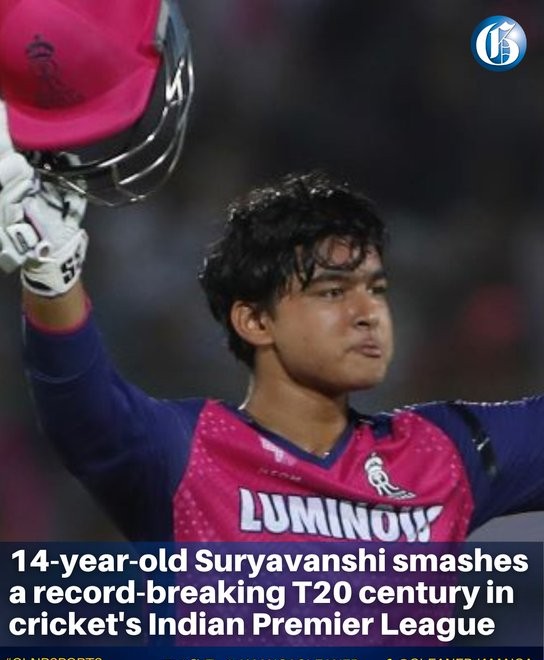
Cricketing legends responded in awe. Sachin Tendulkar termed it “rare and fearless,” while Yuvraj Singh quipped, “At 14, I was still afraid of maths class.” Rahul Dravid, the epitome of composure, was seen visibly emotional.
Every boundary and six was not just a display of technique—it was a testament to resilience, sacrifice, and belief. Each shot echoed the stories of countless young aspirants training in anonymity, and served as a message that brilliance can emerge from any corner of the country—including Bihar.
Yet, with meteoric rise comes responsibility. The pressure on prodigies can be immense. Rajasthan Royals, under the mentorship of Vikram Rathour, have taken a measured approach, ensuring Vaibhav’s long-term development is prioritized over short-term gains. The focus is on building not just a cricketer but a sustainable sporting career.
Vaibhav Suryavanshi is no longer just an emerging athlete; he is a symbol of aspiration for small-town India. His story resonates with children who train with plastic balls, with parents who invest their modest earnings into dreams, and with coaches who nurture raw potential with limited resources.
Behind the cheers lie years of struggle—of skipped meals, early rejections, and persistent doubts. The phrase, “Bihar se koi cricketer nahi nikalta,” has now been replaced with awe and admiration.
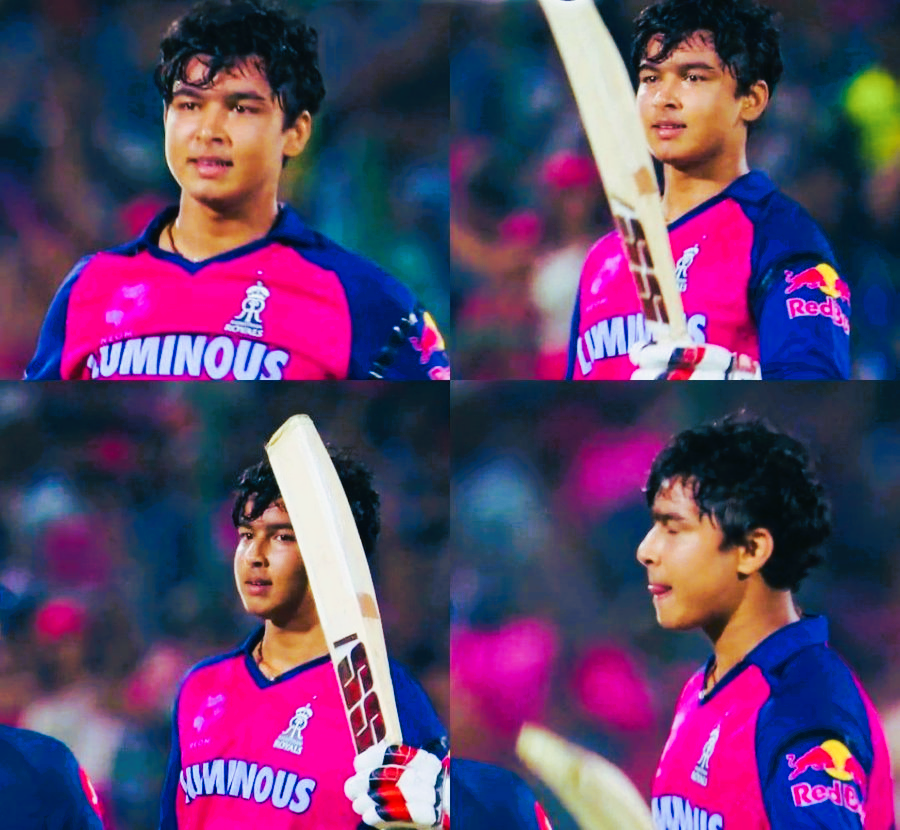
There will be challenges ahead. There will be failures and comebacks. But April 28, 2025, will remain immortal in cricketing lore as the day a teenager didn’t just arrive—he announced a new era. As his own words whispered before the innings began, “Sir, aaj maarunga.”
He did. And Indian cricket may never be the same again.
Visit arjasrikanth.in for more insights
 SOCIAL PERSPECTIVES