
“Code Red: The Existential Reckoning of India’s IT Empire”
Once the engine propelling India’s ascent in the global economy, the Indian IT industry now stands at a critical juncture, facing unprecedented disruption. Confronted with shrinking client budgets, accelerating automation, and intensifying geopolitical headwinds, the sector’s giants—Infosys, TCS, and Wipro—are issuing cautionary signals. Once synonymous with growth, the industry is witnessing a marked downturn, with near-zero growth projections, plunging stock prices, and widespread hiring freezes. The skyline of Bangalore, shaped by the ambitions of this once-thriving sector, reflects an uncertain future as it grapples with the seismic shift ushered in by artificial intelligence and economic volatility in key international markets.
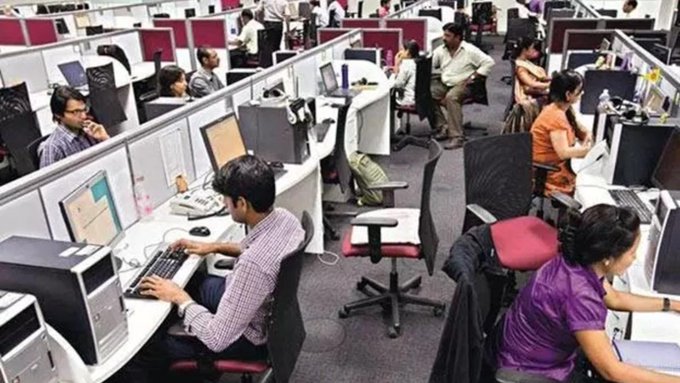
Recent data paints a sobering picture. Infosys, traditionally a bellwether of the industry, has forecasted growth between 0% and 3% for 2026, a far cry from its era of double-digit expansion. Wipro offers a similarly restrained outlook, while TCS, despite its formidable reputation, has missed earnings expectations. These warning signs have not gone unnoticed by investors—India’s IT index has tumbled by nearly 20% this year, in stark contrast to the relatively stable Nifty 100, signalling eroding confidence in the sector’s resilience.
At the heart of this crisis lies the United States, long the most significant market for Indian IT services. With recession fears rising, American corporations are slashing discretionary spending, stalling IT projects, and renegotiating contracts with relentless scrutiny. The resurgence of protectionist policies, including the re-imposition of tariffs under President Donald Trump, has further strained bilateral business relations. Industries such as manufacturing and retail have responded with budget cuts and project cancellations, eroding the dependable revenue pipelines Indian IT firms once enjoyed. These shifts have introduced a climate of uncertainty where previously there was predictability.

Nonetheless, pockets of resilience remain. The banking and financial services domain continues to exhibit relative stability, providing a slender thread of continuity. Yet, this is an insufficient bulwark against the structural changes sweeping the industry. The global demand landscape is evolving rapidly; clients now seek expertise in artificial intelligence, cloud technologies, and cybersecurity, not bulk manpower for coding. Indian IT must therefore evolve from a volume-based delivery model to one rooted in high-value innovation.
Generative AI encapsulates this transformation—both as a disruptive force and a catalyst for renewal. It enables automation of routine tasks, accelerates delivery timelines, and empowers leaner project teams. However, it simultaneously compresses margins by prompting clients to demand faster and cheaper services, eroding traditional business models. The technology is reshaping expectations and redefining competitiveness in ways that traditional service offerings cannot accommodate.
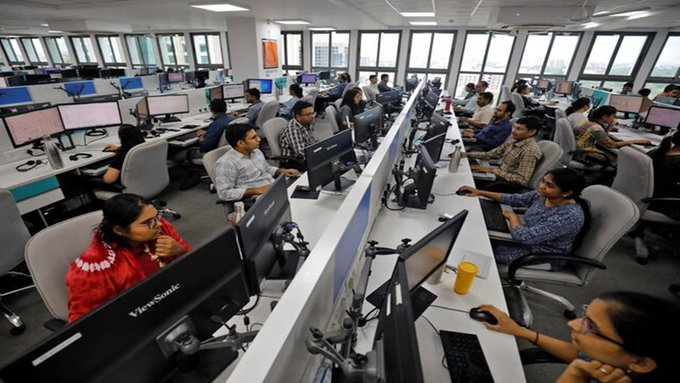
Compounding this technological disruption is a deepening talent crisis. Once voracious recruiters, Indian IT firms have dramatically scaled back hiring. Infosys, for instance, which hired over 50,000 fresh graduates in a single year, has now curbed recruitment significantly. The shift in focus from expansion to efficiency underscores a paradigm change—low-cost manpower no longer guarantees competitive advantage. The future belongs to firms capable of harnessing specialist talent in machine learning, cloud architecture, and digital security.
The path forward demands radical reinvention. Companies must pivot toward AI-led solutions and differentiate their offerings through proprietary platforms and advanced analytics. The global migration to cloud computing presents a transformative opportunity, and Indian IT must stake a strong claim in this domain or risk obsolescence. Positioning as strategic partners in clients’ cloud transitions will be critical for survival and relevance.
Cybersecurity also represents a rapidly expanding frontier. As cyber threats grow more sophisticated and pervasive, the ability to safeguard digital infrastructure is no longer optional—it is existential. Indian IT firms must invest in building world-class capabilities in this space, both in terms of technology and human capital.
Geopolitical challenges, particularly restrictive visa regimes and increasing scepticism of offshoring, require strategic recalibration. Establishing nearshore centres, investing in local talent across the U.S. and Europe, and adopting hybrid delivery models are no longer forward-looking strategies—they are immediate imperatives for maintaining market access and client trust.
Upskilling is another cornerstone of the sector’s renewal. Engineers proficient in legacy coding languages must be reskilled in AI, cloud technologies, and cyber defense to stay relevant. Without a large-scale commitment to workforce transformation, the risk of obsolescence looms large.

The Indian IT industry, while facing immense pressure, is not beyond redemption. Its foundational strengths—discipline, global delivery models, and client trust—still hold value. But the time for incremental change is over. What is required now is a bold, decisive embrace of innovation and specialization. The industry stands at a crossroads, with one path leading to reinvention and renewal, and the other to stagnation and decline. The choices made today will determine whether Indian IT regains its position as a global leader or becomes a cautionary tale of missed transformation in the face of change.
Visit arjasrikanth.in for more insights
 SOCIAL PERSPECTIVES