
Terror in Eden: The Day Kashmir’s Heaven Turned Hostage to Hell
What unfolded in the serene meadows of Baisaran near Pahalgam on April 22, 2025, was not merely a terror attack—it was a calculated act of ideological and psychological warfare. Designed to weaponize identity, cripple the economy, and shred the social fabric of a pluralistic region, the assault marked a chilling evolution in the anatomy of terrorism. The perpetrators, identified as members of The Resistance Front (TRF)—a Lashkar-e-Taiba affiliate—executed a massacre so meticulously staged, it resembled a grim theatrical ritual rather than an impulsive outburst of fanaticism.

In the tranquil lap of Kashmir’s rolling green valleys, just as families picnicked and children played with ponies, assailants dressed in counterfeit military uniforms descended upon civilians with chilling intent. Their method was rooted in a toxic fusion of ideological absolutism and performative cruelty. Victims were asked to recite Islamic verses to prove their faith—those who failed were executed without pause. This perverse religious test, followed by acts of public stripping to ascertain identity through circumcision, signified a macabre obsession with purity—a theological cleansing camouflaged as terror. Survivors, particularly women, were deliberately spared not out of mercy but as vessels of trauma, forced witnesses to carry tales of brutality into the wider world.

The attack was not random; it was an exercise in narrative control. By turning the sacred act of prayer into a litmus test for survival, the assailants sought to erase the human and elevate the symbolic. The victims—tourists, ordinary citizens, even uniformed personnel—were reduced to abstract embodiments of a ‘demographic threat.’ This psychological reduction of the individual to an ideological enemy mirrors genocidal precedents in Rwanda and the Balkans, where identity itself becomes a crime. The theological weaponization in Baisaran perverts religion into an instrument of supremacy, where martyrdom is reframed as dominance and cruelty as spiritual assertion.

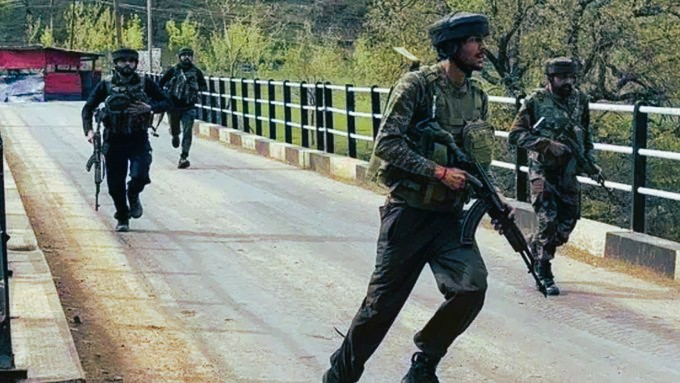
Central to the attack was also the element of spectacle. The public execution of an Indian Navy officer and an Intelligence Bureau official in front of their families conveyed a deliberate message: the state cannot protect you, not even in its most fortified zones. This was terror as theatre, meant to unravel the psychological defences of a nation. In choosing security personnel as victims, the attackers struck at the very symbol of institutional strength. In forcing them to die stripped of uniform and dignity, they sought to dismantle faith in the state’s invincibility.
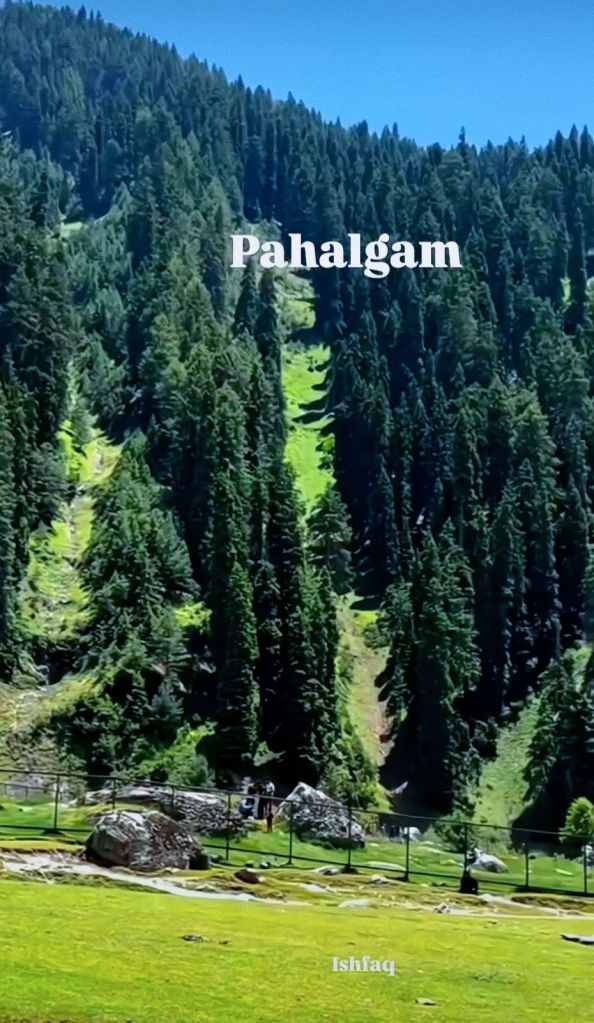
Yet, beyond the ideological, there lay a cold economic calculus. Baisaran, dubbed the “Switzerland of India,” is not merely a picturesque valley—it is the nerve center of Kashmir’s tourism economy, contributing significantly to livelihoods in a region long marred by unemployment and conflict. By targeting such a location, the assailants aimed to strangle the region’s economic arteries. Their objective was twofold: discredit Indian administration by projecting insecurity, and deepen local resentment through economic attrition. Already, tourism contributes roughly 7% to Jammu and Kashmir’s GDP. Attacking this very engine of recovery served the dual purpose of internationalizing the conflict and creating conditions conducive to radicalization among disillusioned youth.

The TRF’s post-attack manifesto made no attempt to mask its intent. Citing the influx of so-called “outsiders”—an alleged demographic invasion—they framed their actions as resistance to a cultural and political annexation following the revocation of Article 370. By invoking settler-colonial analogies, they tapped into both local insecurities and global sympathies, framing their terrorism as counter-colonial insurgency. This semantic camouflage, widely used in proxy warfare, has historically allowed terror outfits to hijack grievances and transform them into calls for jihad.
Compounding the horror is the systemic failure that enabled the attack. How such a group infiltrated a heavily militarized zone remains an open question. Whether through local collusion, overlooked human intelligence, or the complacency bred by an overreliance on technology, the breach indicates a lapse far deeper than procedural failure. And on the global stage, the ritual condemnation from major powers rang hollow. While nations like the United States, Russia, and the UAE expressed solidarity, the absence of substantive punitive action against known sponsors of terror underscores a structural hypocrisy in global geopolitics. Pakistan, as always, denied complicity, hiding behind the now-familiar veil of ‘non-state actors’—a diplomatic fiction that the international community continues to indulge for strategic convenience.

India’s response must transcend the binary of retaliation and restraint. Military operations alone will not sever the roots of such ideologies. Psychological resilience must be institutionalized—through trauma support, religious deradicalization campaigns, and rehumanization efforts that restore dignity to affected communities. Economically, the state must insulate Kashmir’s tourism sector through insurance mechanisms, visitor safety protocols, and expanded opportunities for local employment that deter youth from extremist recruitment. Internationally, New Delhi must lead a campaign to strip terror sponsors of legitimacy—not merely through declarations, but through sanctions, financial tracking, and digital surveillance of radical networks.
The Baisaran massacre was not simply an attack on people—it was an attack on belonging. It sought to unmake Kashmir as a shared homeland, to replace its mosaic of identities with a monochrome of fear. The true measure of India’s response will lie not in the force of its retaliation, but in the resilience of its moral and constitutional ethos.
In the arithmetic of terror, the suffering can never be undone. But in the algebra of justice, if courage is multiplied by unity, even the darkest equations can be defied.
Visit arjasrikanth.in for more insights
 SOCIAL PERSPECTIVES