
Kolleru Lake: The Sleeping Wetland Giant Ready to Soar Like Chilika – A Paradise Waiting to Happen!
Kolleru Lake, nestled between the Krishna and Godavari deltas in Andhra Pradesh, is one of India’s most significant and historically celebrated freshwater lakes. Often referred to as a “sleeping giant,” this wetland—once a thriving haven for biodiversity—now stands at the cusp of a remarkable transformation. With an ambitious ₹375 crore revival plan underway, Kolleru is poised to reclaim its ecological grandeur and emerge as a global ecotourism destination, rivalling the success story of Odisha’s Chilika Lake.

Kolleru’s significance extends beyond its geography. It has long been a sanctuary for migratory birds, including the rare Siberian crane, and once hosted more than 200 avian species during the peak of its glory. However, unregulated aquaculture, encroachments, and pollution gradually degraded its ecosystem. But a fresh chapter is being written—one that combines scientific insight, community empowerment, and sustainable tourism. At the heart of this vision is a commitment to rejuvenate the lake’s ecology while ensuring inclusive development for the communities that depend on it.
The revival strategy is rooted in environmental sensitivity and innovative restoration techniques. Floating wetlands constructed from naturally occurring water hyacinth and vetiver grass are being deployed to purify water and create new nesting grounds. Artificial islands will provide safe habitats for returning bird species, while thick reed buffer zones will serve as natural barriers, ensuring migratory birds are undisturbed by human activity. The target is ambitious: increase avian diversity from the current 80 species to over 150 in the next five years—a true renaissance for the lake’s ecosystem.
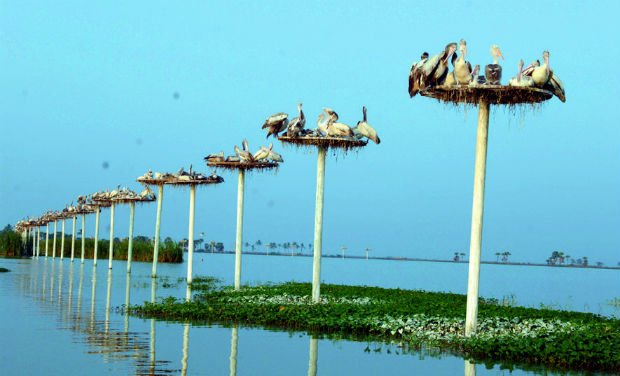
Technology is set to play a transformative role. The eco-tourism experience at Kolleru will be unlike anything seen before in Indian wetlands. Silent solar-powered boats equipped with underwater cameras will allow tourists to witness aquatic life with minimal disruption to nature. Augmented reality binoculars will provide real-time identification and storytelling about the birds, making visits educational and immersive. A proposed “Kingfisher Nest” interpretation centre will blend tradition with futuristic design—featuring holograms, interactive exhibits, and archival footage that narrate Kolleru’s environmental journey through the decades.
But beyond the flora and fauna, Kolleru’s revival rests firmly on the shoulders of its people. The lake supports over 50,000 traditional fishermen whose livelihoods have been adversely affected by environmental degradation and illegal practices. The new plan envisages empowering these communities, not displacing them. Fishermen are being trained to become eco-guides, conservation advocates, and artisans. By transforming invasive species like water hyacinth into handicrafts, they are turning a problem into opportunity. Meanwhile, the introduction of sustainable cage aquaculture—an approach successfully piloted in Kerala—ensures a balance between conservation and economic sustenance.
This holistic model of development is projected to generate over 5,000 green jobs across tourism, conservation, and local crafts. Women’s self-help groups will be central to this transformation, producing eco-friendly souvenirs, managing homestays, and operating visitor facilities. It is a rare example of ecological restoration doubling up as a vehicle for rural prosperity. What makes this revival effort even more compelling is its strong financial architecture. Backed by ₹150 crore from the National Wetland Programme, ₹100 crore from the Swadesh Darshan scheme, and ₹75 crore from the World Bank, the project is not just visionary—it is viable. Additional support from public-private partnerships will enable the construction of floating eco-lodges, birdwatching towers, and handicraft bazaars, all of which will offer visitors a rich and sustainable travel experience.
The economic ripple effects are expected to be substantial. With an increase in tourism infrastructure and global visibility, the lake is projected to attract more than 500,000 tourists annually—a tenfold increase from its current footfall. This influx is expected to contribute over ₹300 crore per year to the local economy, positioning Kolleru as a premier wetland destination not just in India, but across Asia.

The 2025 deadline is critical. It marks the target year for removing illegal fishponds, restoring the lake’s natural contours, and launching key infrastructure projects. Each passing season is a reminder of what’s at stake—continued pollution, reduced bird migration, and the fading of a natural treasure. But the tide is turning. With visionary leadership, community participation, and strategic investment, Kolleru is on the brink of a renaissance.
The transformation of Kolleru Lake is more than an environmental initiative—it is a symbol of India’s ability to harmonize ecological restoration with human development. It presents a blueprint for wetland conservation in the country and underscores how nature, when nurtured, can become a powerful force for economic growth and cultural pride. The migratory birds that once graced its skies may have flown away, but with renewed commitment, they will return—ushering in a new dawn for Kolleru, for Andhra Pradesh, and for India’s ecological heritage.
visit arjasrikanth.in for more insights
 SOCIAL PERSPECTIVES
One response to “Kolleru 2.0: From Bird less Silence to a Symphony of Wings””
Thank you for this article/ blog post. We have been visiting the bed and belt villages of Lake kolleru for more than a year. We have not come across the schemes that you mentioned in your article. Yes, there have been issues with the Operation Kolleru and hopefully the local fishers and other vulnerable communities will be included in these investment plans. Thanks for sharing the updates.
LikeLike