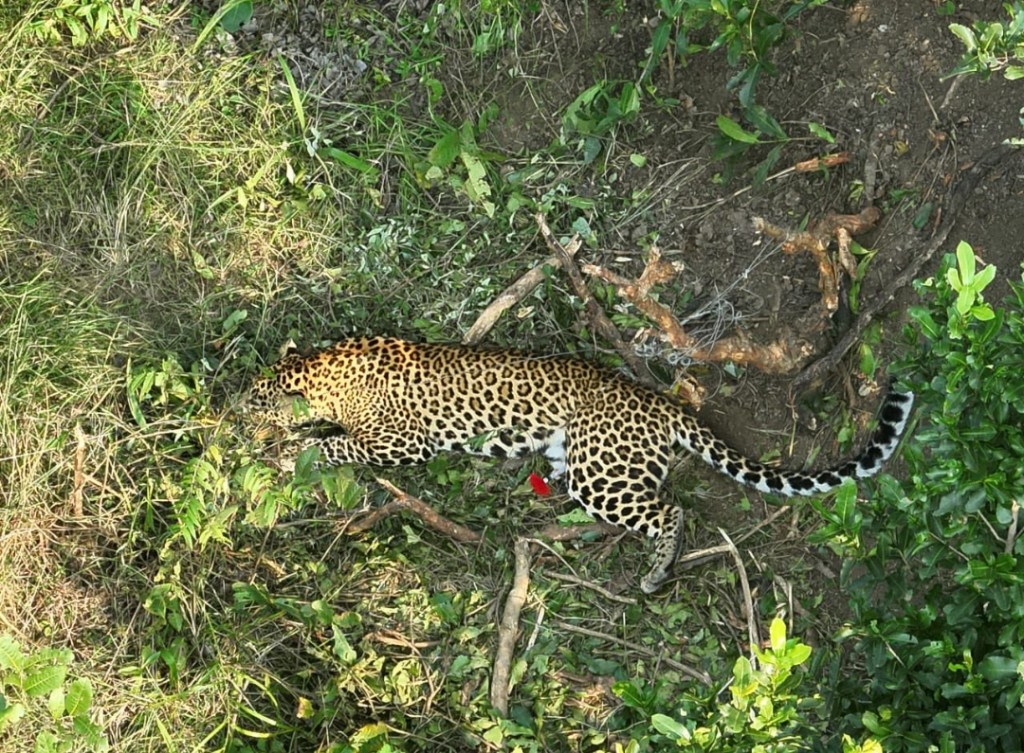
“Trapped in Tragedy: The Death of a Pregnant Leopard Sparks a Roaring Call for Wildlife Reform!”
In the picturesque landscapes of Madanapalle, Andhra Pradesh, a heartrending tragedy has unfolded, casting a shadow over the profound connection between humanity and wildlife. The haunting tale of a pregnant leopard, laden with the promise of new life, serves as both a bitter reminder and a clarion call for urgent reform in wildlife management and human-wildlife coexistence.
On a day that should have celebrated life, a pregnant leopard became ensnared in a net laid by local farmers, intended to protect their crops from wildlife intrusions. This well-meaning but misguided attempt to shield agricultural interests turned into a death sentence for the leopard, who struggled vainly against the constricting net for over ten hours. Ultimately, her frantic attempts to free herself culminated in her tragic death—a result not just of the physical trap, but of systemic negligence and unpreparedness in wildlife conflict management. The delayed response from the forest department was a tragic reflection of a larger failure; help arrived only after precious time had slipped away, leaving the leopard and her unborn cubs to pay the ultimate price.
The method of her demise was not a random mishap but rather a culmination of several alarming oversights. The absence of a rapid response team indicates a critical weakness in wildlife management protocols. The forest department, poorly equipped and lacking essential support, succumbed to a situation that might have been salvaged had there been preparedness and immediacy. The tools needed to effectively rescue a trapped animal—tranquilizers, nets, and veterinary assistance—were conspicuously absent, leading to the loss of a majestic creature that might have otherwise experienced a nurturing future.

The death of this pregnant leopard shines a light on the multi-faceted issues surrounding human-wildlife conflict in the region. As leopard sightings increase amid vanishing habitats, the conflict between human needs and wildlife survival has escalated. Farmers facing threats to their livelihood often resort to illegal and lethal measures. The endemic use of nets and traps to protect crops often leads to unintended casualties, spiraling these conflicts into a continuous cycle of death and retaliation. The Wildlife Protection Act of 1972 has proven ineffective in curtailing this behavior. Its lack of stringent penalties for illegal trapping and insufficient compensation for agricultural losses do little to deter harmful practices, thereby perpetuating these grim outcomes.
Addressing these systemic failures calls for immediate and decisive action. In the short term, a thorough post-mortem and forensic investigation should be launched to understand the circumstances of the leopard’s death. Filing an FIR against the illegal use of nets can set a precedent for accountability. Acknowledging the loss of this leopard with compassion, if warranted, can serve as a poignant reminder of our responsibilities toward these magnificent animals.
In the months that follow, establishing rapid response teams in leopard-prone regions will be critical. These teams should be trained in effective rescue techniques and emergency response. Parallel efforts must aim to educate local communities on legal and safer methods of wildlife conflict resolution. By providing farmers with alternative solutions—such as improved fencing for crops and livestock insurance—we can help mitigate the reliance on illegal trapping methods that endanger both wildlife and livelihoods.
Long-term strategies also demand attention. The urgent enforcement of wildlife laws, including stricter penalties for illegal trapping, is paramount. A comprehensive conservation plan specific to the Annamayya district should be crafted, focusing on coexistence and support for local communities. Additionally, training forest personnel in modern rescue methodologies will fortify our efforts in addressing similar future incidents effectively.
To prevent such tragedies from occurring again, the establishment of a Wildlife Emergency Response Unit cannot be overstated. Equipped with veterinary support and rescue resources, this initiative could revolutionize our capacity to address wildlife emergencies. Simultaneously, a dedicated toll-free number should be created, allowing villagers to report wildlife crises with immediacy.
Engagement with local communities is vital for the overall success of these initiatives. Introducing compensation schemes for crop and livestock losses can significantly reduce retaliatory killings. Workshops on humane deterrents, such as solar fencing and utilizing guard dogs, will empower farmers to protect their livelihoods without resorting to illegal and destructive traps.
Legal and policy reforms are necessary to solidify wildlife protection in our society. Amending state wildlife laws to impose penalties for illegal trapping and incorporating wildlife conflict management in local governance can foster a cultural shift toward coexistence with nature.

The tragic death of the pregnant leopard in Madanapalle serves as a solemn reminder of our collective failures in wildlife conflict management. The urgency of immediate action is clear: we must bolster rescue systems, enforce laws, and educate communities on coexistence, transforming this loss into a powerful motivator for change. The fate of this leopard and her unborn cubs highlights our shared moral obligation to protect the natural world—a responsibility that cannot be ignored.
As we forge ahead, high-level discussions between the Andhra Pradesh Forest Department and the Wildlife Board must take precedence, alongside media efforts to raise awareness about leopard conservation. The time for action is now. Just as we safeguard our shared ecosystem, we must also protect the future of leopards, ensuring that the silent screams of our wildlife do not echo unheard into oblivion.
Visit arjasrikanth.in for more insights
 SOCIAL PERSPECTIVES