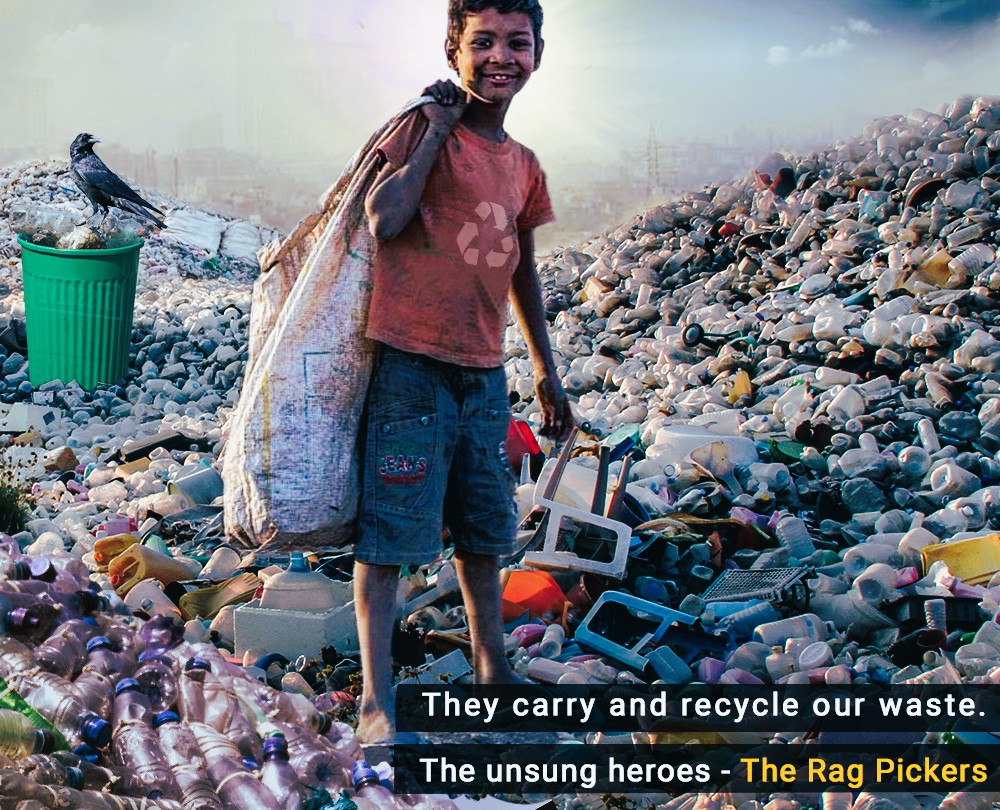
From Shadows to Spotlight: Recognizing the Unsung Heroes of Urban Sanitation – The Waste Pickers
In the vibrant yet chaotic fabric of urban life, where the rhythm of progress often drowns out the quiet persistence of those on the margins, exists a community whose contributions are foundational to the functioning of our cities—waste pickers. Operating in the shadows of development, these individuals shoulder the critical responsibility of maintaining urban cleanliness and promoting environmental sustainability. Despite their indispensable role, they remain largely invisible, their efforts unrecognized, and their lives excluded from the ambit of formal welfare and dignity.

In a meaningful step toward addressing this long-standing neglect, the launch of a dedicated national initiative for mechanised sanitation marks a transformative moment. Conceived as a pathway to integrate informal sanitation workers into formal support systems, this initiative seeks to extend the promise of social security, healthcare, and livelihood opportunities to those who have historically been left behind.
At its heart, the initiative acknowledges a fundamental truth: that those who ensure the health and hygiene of our cities should themselves be protected, empowered, and valued. By identifying and profiling waste pickers, it lays the groundwork for extending essential services and recognition. This is not merely a data-gathering exercise—it is a shift in narrative, from marginalization to inclusion, from anonymity to identity.
While waste pickers are ever-present in the urban landscape, their work is often taken for granted. Their daily engagement with waste—sorting, segregating, and salvaging—plays a pivotal role in sustaining ecological balance and public health. Yet, the absence of legal and institutional recognition deprives them of the most basic entitlements. Many endure hazardous working conditions without protective gear, earning paltry incomes while intermediaries exploit their labour. The result is a perpetual state of vulnerability, marked by poverty, health risks, and social exclusion.

The initiative’s rollout across several districts offers a timely opportunity for change. It is a clarion call for waste pickers to step forward and claim the visibility that has long eluded them. By facilitating their integration into welfare schemes, the initiative promises not just support, but transformation—an opportunity to reimagine waste picking as a dignified and secure livelihood.
This move holds profound implications. It not only safeguards the wellbeing of a marginalized community but also reinforces the ideals of equity and sustainability. By investing in the wellbeing of waste pickers, the initiative strengthens the foundations of inclusive urban governance. It underscores the belief that development must leave no one behind and that dignity must be extended to all, regardless of occupation or social status.
Furthermore, the framework sets a powerful precedent for replication across the country. It calls upon public institutions, civil society, and citizens alike to recognize the silent contributions of waste pickers and to collectively ensure their upliftment. This is not a matter of charity—it is an assertion of justice, human rights, and responsible governance.

As we move forward, continued advocacy and policy support are essential to sustain this momentum. Waste pickers are more than laborers in the waste economy—they are stewards of sustainability, champions of recycling, and custodians of cleaner cities. Their work lies at the intersection of environmental conservation and public health. Recognizing this contribution is not only morally imperative but strategically wise for cities aspiring to be resilient and sustainable.

In essence, this initiative stands as a beacon of long-overdue change—a conscious effort to bring dignity and protection to those who have worked in the shadows for too long. It reaffirms our collective responsibility to build cities that do not merely function efficiently, but also embody fairness and humanity. By embracing waste pickers as valued members of the urban ecosystem, we take a vital step towards cleaner, more compassionate, and more just urban futures.
Visit arjasrikanth.in for more insights
 SOCIAL PERSPECTIVES