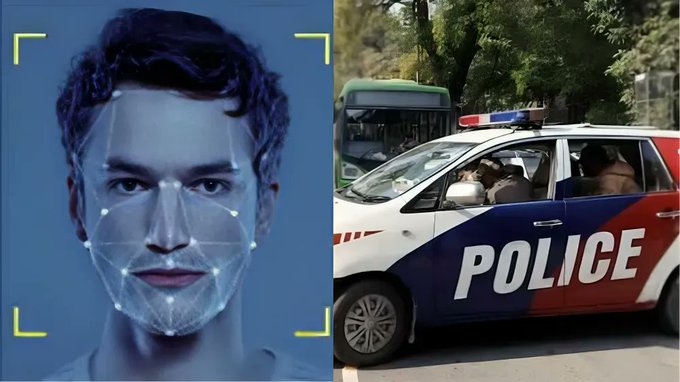
Delhi Goes Full Cyborg: A Dive into the Crazy World of Facial Recognition and the Rights We Might Lose!
In a bold leap toward technologically driven policing, the Delhi Police have announced a significant expansion in their deployment of facial recognition technology (FRT) across the national capital. Envision a network of surveillance cameras powered by artificial intelligence, capable of identifying suspects in a sea of faces—seemingly a page from a science fiction novel turned real. For many, this initiative signals progress: a promise of safer streets, particularly for women, senior citizens, and other vulnerable groups.
Yet, beneath this futuristic façade lie pressing questions about privacy, civil liberties, and the core principles of democracy. Can the advancement of surveillance genuinely enhance public safety, or does it risk infringing upon the very freedoms it seeks to protect?
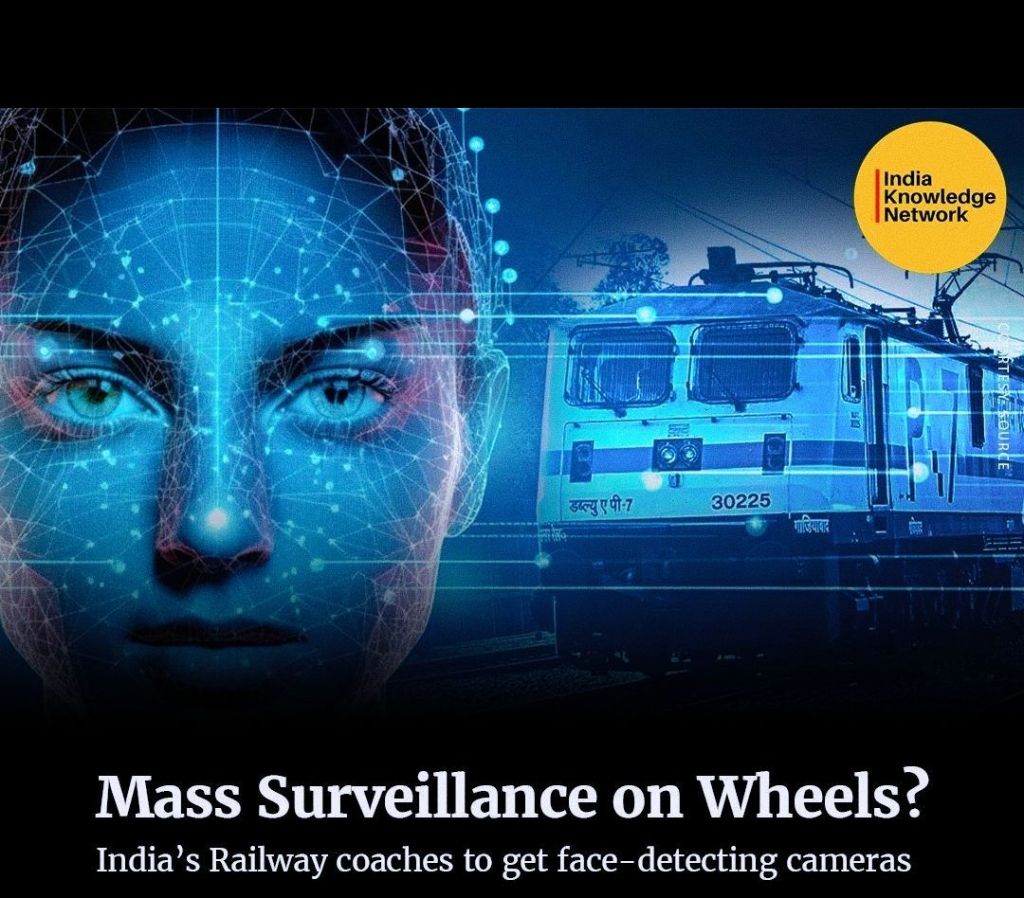
Currently, FRT is employed selectively—at high-security events like the Republic Day parade or the recent G20 Summit, and during investigations following episodes of civil unrest, such as the farmers’ protests or the 2022 Jahangirpuri clashes. Building on this foundation, the police now propose to install an additional 10,000 high-resolution CCTV cameras across the city. Driven by the maxim “the more eyes, the better,” officials are confident this will serve as both a deterrent and a response mechanism to criminal activity. Some even believe that enhanced surveillance will not only aid in recovering stolen property or identifying miscreants but will lead to a substantial decline in crime itself—a claim met with both hope and scepticism.
However, this expansive vision has not gone unchallenged. Privacy advocates and civil society groups have voiced grave concerns regarding potential misuse and overreach. History reveals that minority communities are often disproportionately subjected to intensified policing. With FRT systems poised to integrate with municipal bodies and residential societies, apprehensions are mounting: Who controls the data? Who monitors the monitors?

The urban landscape is inherently complex, and deploying blanket surveillance solutions risks flattening this complexity into a simplistic equation of suspicion and control. While police officials have assured that initial access to the FRT system will remain restricted to senior headquarters personnel, such safeguards offer limited comfort without comprehensive oversight mechanisms.
Compounding this are the well-documented limitations of facial recognition itself. Instances of mistaken identity—where individuals have been wrongly flagged—highlight a fundamental flaw: technology is not infallible. Misidentifications can lead to lasting harm, particularly when individuals are erroneously entangled in legal or criminal proceedings. People are not algorithms, and attempts to automate identity carry significant human consequences.
Moreover, FRT systems are only as reliable as the data they are trained on. Biased or incomplete datasets—often drawn from government-issued documents like passports or driver’s licenses—can perpetuate existing societal prejudices. In such scenarios, rather than correcting inequalities, technology risks replicating and reinforcing them. This raises a critical question: Is Delhi embracing advanced policing tools with sufficient awareness of their social and cultural implications?
Another significant concern lies in the absence of a clear legal framework. India currently lacks comprehensive legislation governing the deployment, use, and accountability of facial recognition systems. This legal vacuum creates a high-risk environment where the lines between surveillance for security and surveillance for control may easily blur. Without checks and balances, the tools designed to protect may inadvertently undermine democratic norms.
As the Delhi Police position this initiative as a forward-thinking crime prevention strategy, the conversation must widen to include its ethical dimensions. Surveillance technology has the potential to reshape how individuals experience public spaces—not always for the better. The promise of safety must be weighed against the possible erosion of anonymity and freedom in daily life. Are we ready to live under constant observation in the hope of enhanced protection?
As Delhi accelerates toward becoming a “smart” city, it is imperative that the deployment of FRT be accompanied by an inclusive and transparent public discourse. Stakeholders—including citizens, technologists, lawmakers, and human rights experts—must collaboratively define the contours of responsible usage. The challenge lies not in rejecting technology, but in integrating it with empathy, legal safeguards, and respect for fundamental rights.
The crossroads is here. Will Delhi emerge as a global example of ethical and effective tech integration in public safety, or will it slide toward a surveillance state where civil liberties are compromised in the name of security?
The future depends on the choices we make today—choices that will reverberate far beyond the capital city, setting a precedent for how democracies adapt to the age of AI-powered governance. As the clock ticks, the question remains: will we opt for collaboration and transparency, or control and opacity?
 SOCIAL PERSPECTIVES