
From Mountain Frontiers to Maritime Fault lines, India Charts a 360° Path of Security, Diplomacy, and Deterrence
When contemplating India’s geographical positioning, one is struck by the profound interplay of vulnerability and opportunity. Visualize a compass: the north is guarded by the formidable Himalayas yet shadowed by the assertive presence of China; the south opens into the expansive and strategically vital Indian Ocean; the east and west are flanked by neighbours grappling with chronic instability. Each axis of this compass presents distinct and dynamic security challenges, compelling India to embrace a holistic and anticipatory 360-degree defense strategy.

India’s northern frontier remains fraught with complexity, primarily due to the unresolved Line of Actual Control (LAC) with China. This ambiguous and volatile border is a constant source of tension, necessitating relentless surveillance and preparedness. China’s broader strategic posture adds layers of concern, particularly through its tacit backing of Pakistan—a state that harbours militant networks posing grave threats to India’s internal security. The persistent volatility in Kashmir further compounds the equation, demanding a fortified, multi-tiered defense approach anchored in both military readiness and strategic foresight.
To the south, the Indian Ocean emerges as more than a vast maritime expanse; it is a pivotal theatre of geopolitical contestation and economic lifelines. Recognizing this, India has steadily recalibrated its strategic doctrine, placing the Indo-Pacific at the core of its security calculus. The imperatives of safeguarding sea lanes, securing trade routes, and countering China’s expanding maritime footprint have led to sustained naval modernization and intensified regional cooperation. Dominance in this domain is not optional—it is critical.

On the eastern flank, shifting allegiances and emergent uncertainties define the landscape. Bangladesh, historically a reliable partner under Prime Minister Sheikh Hasina, is undergoing political transition. The interim government under Mohammed Yunus has rekindled alignments with Pakistan and China, raising concerns about long-term regional stability. Diplomatic rhetoric framing Bangladesh as the “guardian” of the ocean for India’s north-eastern states introduces ambiguity that could be exploited by strategic competitors, especially China, to erode India’s traditional sphere of influence.
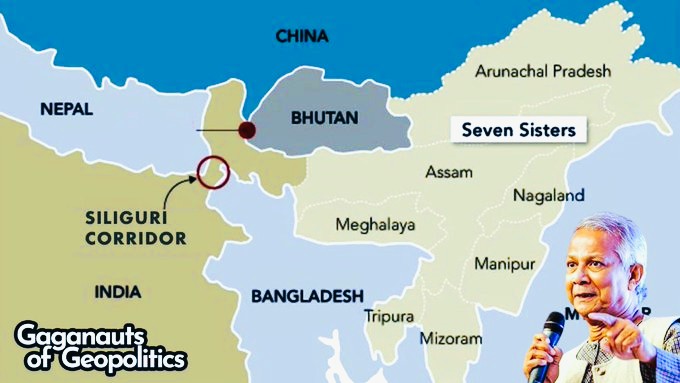
This evolving scenario is further complicated by the impending expiration of the Ganga water-sharing agreement in 2026. In a region where water security is tightly interwoven with livelihoods and geopolitics, political flux in Bangladesh could derail delicate negotiations with far-reaching consequences. A stable, cooperative neighbour is not just desirable—it is vital to regional equilibrium and India’s long-term planning.
Nepal’s recalibrated foreign policy, marked by assertive territorial claims and increasing proximity to China, adds another layer of strategic complexity. This shift signals Kathmandu’s intent to enhance bargaining power through triangulation. For India, this necessitates a diplomatic realignment—balancing firmness with engagement to safeguard national interests without alienating a culturally and historically close partner.

In the southeast, Myanmar’s escalating internal unrest and the protracted Rohingya crisis pose serious cross-border implications. India’s north-eastern states, sharing ethnic and cultural affinities with affected communities, are particularly susceptible to the spill over effects. This demands a carefully crafted response that honours humanitarian obligations while securing national interests—striking a difficult yet essential balance.

Sri Lanka’s economic fragility and political churn have rendered it a strategic pivot in the Indian Ocean. As China deepens its infrastructure footprint on the island, India must act decisively to bolster bilateral cooperation, offering sustainable and mutually beneficial alternatives. Sri Lanka’s geographic location—adjacent to major sea lanes—makes its stability a central concern in India’s maritime doctrine.
Perhaps most critically, the Siliguri Corridor—India’s slender land bridge to its north-eastern region—remains perilously exposed. Often termed the nation’s “jugular vein,” it represents a strategic chokepoint vulnerable to disruption from hostile or unstable neighboring zones. Securing this corridor is not just a regional imperative; it is essential to the integrity of the Indian Union.
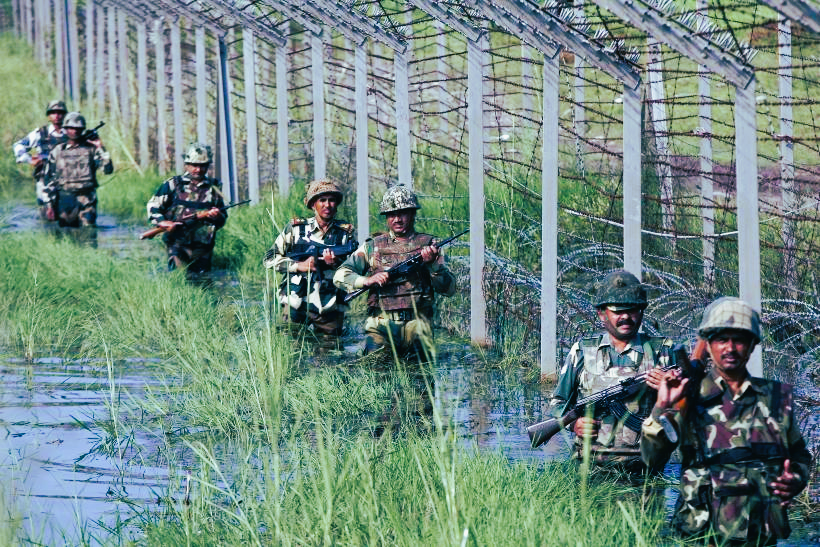
Confronted with this matrix of interconnected challenges, India must transition from reactive posturing to proactive, integrated strategic planning. This includes substantial investments in surveillance systems, intelligence architecture, border infrastructure, and force readiness. Diplomacy must evolve in tandem with military preparedness, ensuring a cohesive approach to national and regional security.
Prime Minister Modi’s recent diplomatic engagements, including leadership in forums like BIMSTEC, reflect a conscious effort to construct resilient regional coalitions grounded in shared prosperity and collective security. As South Asia contends with volatility, India’s emergence as a stabilizing force becomes increasingly consequential. Dialogue mechanisms, strategic partnerships, and economic interdependence must form the backbone of this endeavour.
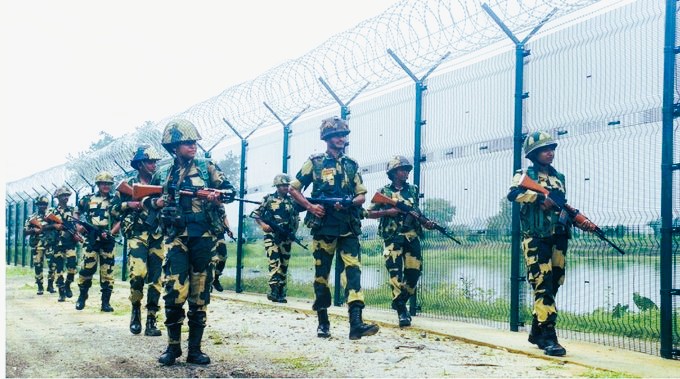
To this end, economic diplomacy should be wielded with greater assertiveness. Countries such as Bangladesh, Nepal, and Myanmar are at strategic crossroads—facing competing influences where India’s credible alternatives in trade, investment, and infrastructure can shift the balance. These efforts not only strengthen bilateral relations but also project India as the partner of choice in regional development narratives.
Simultaneously, military modernization must be pursued with urgency, particularly in augmenting naval and air capabilities in the eastern and southern theatres. Establishing forward logistics hubs, enhancing rapid deployment capabilities, and embracing advanced technologies will be pivotal to reinforcing deterrence and ensuring swift, effective responses to emerging threats.
Looking ahead, India’s ascent as a leading South Asian power hinges on its capacity to manage its immediate neighbourhood with agility, foresight, and strategic resolve. The imperatives of a comprehensive 360-degree defense framework—integrating conventional military strength with deft diplomacy and robust economic engagement—have never been more evident.

In sum, India’s geography is not just a backdrop—it is a defining strategic reality. Surrounded by dynamic political shifts and evolving threats, the nation must adopt a multi-layered, future-ready security architecture. Only through decisive, coordinated action across defense, diplomacy, and development can India safeguard its national interests and ensure a stable, prosperous regional order in an increasingly unpredictable world. The moment demands unwavering clarity, strategic composure, and a relentless pursuit of resilience.
Visit arjasrikanth.in for more insights
 SOCIAL PERSPECTIVES