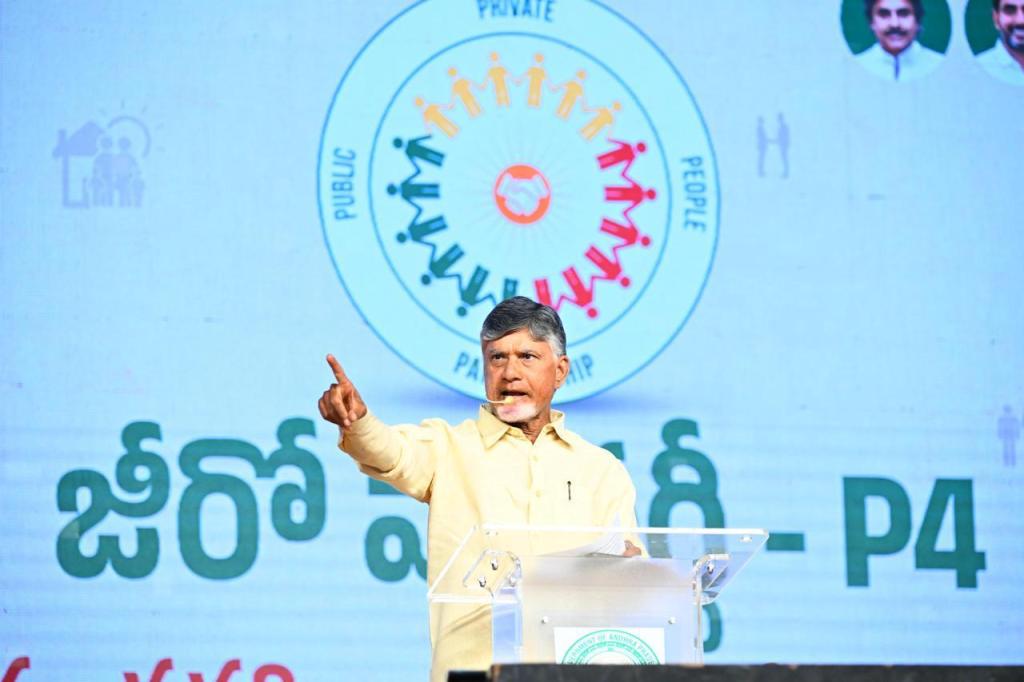
Chandrababu Naidu: The Visionary Architect of Andhra Pradesh’s Future, Crafting a Legacy of Prosperity with P4!!
In the grand theatre of governance, where most leaders are content playing the present, Chandrababu Naidu is one of the rare visionaries who plays the future. With a political career spanning nearly five decades, his foresight has not only transformed urban landscapes but also redefined economic and social paradigms. From his audacious ‘Vision 2020’ that propelled Andhra Pradesh into an IT powerhouse to his latest ‘Vision 2047’ that promises to eradicate poverty through the revolutionary P4 initiative, Naidu’s governance is nothing short of a time machine—constantly transporting the state into the future.
The P4 initiative, standing for Public-Private-People Partnership for Poverty Alleviation, is not just a scheme; it is a grand vision. Launched on the auspicious Telugu New Year, Ugadi, this initiative aims to eliminate poverty through a structured, participatory model that actively involves affluent individuals in supporting the underprivileged. Naidu, known for his calculated and futuristic governance, believes that P4 will not only uplift the needy but will redefine social responsibility in India.
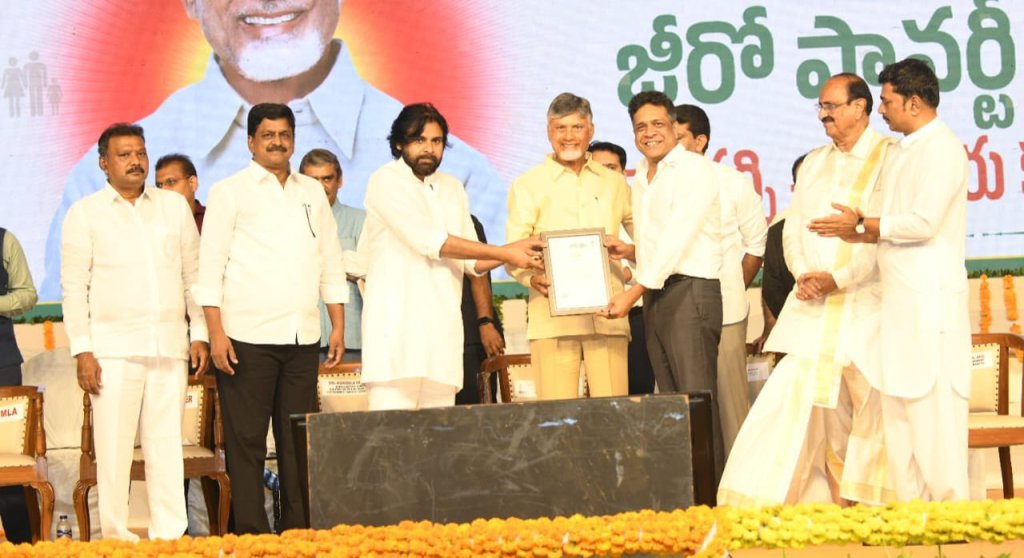
This initiative is more than just a government scheme—it is a movement, a paradigm shift in the approach to poverty eradication. Unlike traditional welfare programs that rely solely on government funding, P4 introduces a new dynamic where individuals, industrialists, and the global diaspora actively participate in transforming lives. The fundamental principle is simple yet profound: the wealthiest 10% of society will adopt and mentor the bottom 20% in a structured and accountable manner. This, Naidu believes, is the key to sustainable social upliftment.
The launch event in Amaravati was a testament to the initiative’s potential. Underprivileged families were invited on stage to share their aspirations, and successful entrepreneurs were asked how they could help fulfil those dreams. The response was immediate and promising. One business leader proposed covering school fees and transportation costs for children from a disadvantaged family, demonstrating how direct engagement can change lives. This approach sets P4 apart from traditional corporate social responsibility (CSR) models, which often focus on infrastructure and technology rather than direct human development.

P4 is designed to ensure transparency and accountability at every level. Beneficiaries, referred to as ‘Bangaru Kutumbams’ (Golden Families), will be selected through a rigorous and transparent process in Gram Sabhas and Ward Sabhas, preventing political bias and ensuring that help reaches those who need it the most. Meanwhile, the mentors, termed ‘Margadarsis’ (Guides), will provide not just financial support but also mentorship, career guidance, and life skills to help families become self-reliant.
Naidu, ever the strategist, has ensured that the initiative is deeply integrated with digital governance. A real-time dashboard will track progress, displaying key metrics such as the number of families supported, the kind of assistance provided, and the overall impact. This level of accountability sets P4 apart from other poverty alleviation programs that often struggle with inefficiencies and lack of oversight.
Beyond poverty alleviation, Naidu’s vision extends to economic growth and long-term prosperity. He has set an ambitious goal of increasing Andhra Pradesh’s per capita income from Rs 2.98 lakh to Rs 5.42 lakh by 2028-29 and ultimately reaching Rs 55 lakh by 2047. Such exponential growth may seem aspirational to some, but for a leader who once envisioned Hyderabad as India’s next tech hub—and succeeded—such goals are within the realm of possibility.

Deputy Chief Minister Pawan Kalyan and Prime Minister Narendra Modi have also lent their support to this initiative, underscoring its national significance. Kalyan, in particular, has emphasized the importance of collective action, stating that the initiative is not about government handouts but about empowering people to rise above poverty through community-driven solutions.
Naidu’s governance has always been about calculated, long-term planning rather than populist quick fixes. His approach to industrialization, IT development, and urban infrastructure has proven his ability to predict and shape the future. P4 is no different—it is not a stopgap measure but a sustainable model for economic upliftment.
Critics may argue that such an initiative requires significant financial backing, and they are right. But Naidu’s governance model has always thrived on partnerships—between the government, industry, and people. The P4 model institutionalizes this approach, creating a replicable and scalable framework that could serve as a blueprint for poverty eradication across India.
This is not the first time Naidu has envisioned a transformed Andhra Pradesh, and it will certainly not be the last. His ‘Vision 2020’ set the foundation for a new-age economy, and now ‘Vision 2047’ aims to position the state as a model of economic inclusivity. The P4 initiative is the bridge that will take Andhra Pradesh from a growing economy to a fully developed society.
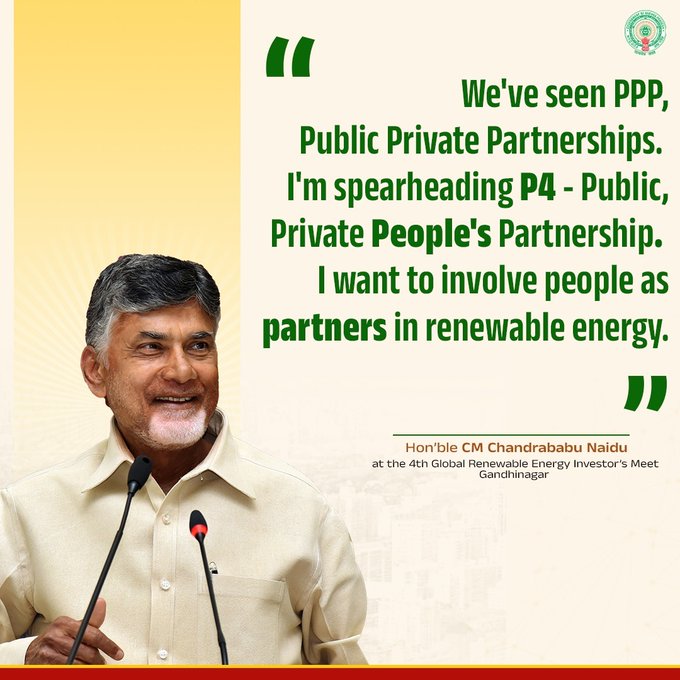
As the world watches, Andhra Pradesh stands at the precipice of a historic transformation. If executed with the same precision and commitment that Naidu has demonstrated throughout his career, P4 could become one of the most significant poverty eradication programs in India’s history. In a nation where policy execution often falls short of grand promises, Naidu’s track record offers hope that his latest vision will indeed become reality.
The future, it seems, has already arrived in Andhra Pradesh. And once again, Chandrababu Naidu is leading the way.
Visit arjasrikanth.in for more insights
 SOCIAL PERSPECTIVES