
When Digital Governance Collides with Electoral Freedom, What Price Do We Pay?
In a world racing towards digitization, where algorithms dictate social narratives and governance is increasingly intertwined with technology, a new storm is brewing. The proposal to link Electoral Identity Cards with Aadhaar has ignited fierce debate, setting off alarms among citizens and democracy advocates alike. Touted as a move to streamline the electoral process by eliminating duplicate entries, the plan appears noble on the surface. But beneath its façade lurks a fundamental question—are we, in the pursuit of efficiency, jeopardizing the very essence of democracy?
The Election Commission’s push for this linkage stems from the persistent issue of duplicate voter entries, a problem most visible in states like West Bengal and Gujarat. The rationale is simple: integrating Aadhaar with voter databases will reduce redundancy and enhance electoral transparency. But at what cost? Traditional verification mechanisms, such as block-level officers conducting physical verifications, have ensured electoral integrity for decades. The sudden pivot to an untested digital system, rife with potential flaws, invites scepticism. If the current methods are effective, why abandon them for a technological experiment that might compromise the sanctity of the democratic process?

Supporters of the UID system argue that biometric identification can eliminate fraudulent entries, bolstering electoral credibility. Yet, this argument ignores the glaring limitations of Aadhaar itself. The database has faced relentless scrutiny over issues of biometric failures, data inconsistencies, and even cases where marginalized communities have been excluded from government benefits due to authentication failures. If Aadhaar has struggled to ensure seamless access to essential services, can it be trusted with something as crucial as voting rights?
Beyond logistical concerns, the implications of this proposal extend deep into the realm of fundamental rights. Voting is not a privilege; it is a constitutional right, an instrument through which citizens shape governance. By integrating voter IDs with Aadhaar—an unverified and often-contested database—the government risks weaponizing data collection, creating an Orwellian scenario where digital footprints dictate electoral participation. The fear of disenfranchisement looms large, especially for communities that have historically been side-lined. What happens to those whose biometric authentication fails? Will they be denied the right to vote based on a system that has already proven to be fallible?
Privacy concerns further muddy the waters. The Unique Identification Authority of India (UIDAI), tasked with managing Aadhaar, has been dogged by allegations of data breaches and unauthorized access to personal information. The prospect of linking voter IDs with Aadhaar raises troubling questions about mass surveillance and political profiling. Can we trust a system where citizens’ voting choices could potentially be manipulated through targeted interventions? In an era where data is power, the ability to track electoral behavior opens Pandora’s box, enabling an unprecedented level of state control.
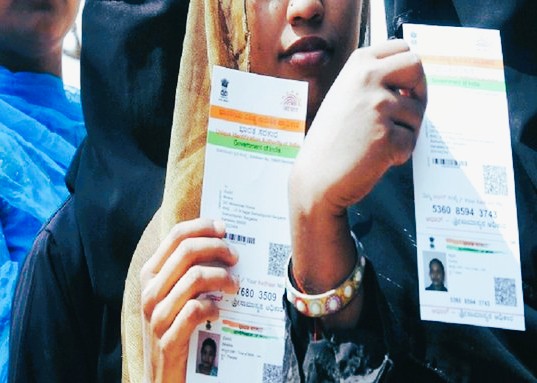
The voluntary-versus-mandatory debate surrounding this linkage adds another layer of complexity. While the Election Commission insists that the integration is optional, the ground reality suggests otherwise. When government benefits were linked to Aadhaar, citizens were initially given a choice—until they weren’t. The pattern is familiar: voluntary today, coercive tomorrow. The mere perception that failing to link Aadhaar with voter ID might result in losing one’s franchise is enough to push people into compliance. In a democracy, participation should be driven by agency, not by fear.
Addressing electoral fraud is undoubtedly important, but the methods employed must align with democratic principles. Rather than relying on a centralized digital identity fraught with vulnerabilities, why not strengthen traditional verification mechanisms? Empowering election officials, refining ground-level verification, and investing in better voter education can address duplicate entries without compromising privacy or autonomy. A system that has stood the test of time should not be dismantled in favour of an unproven alternative.
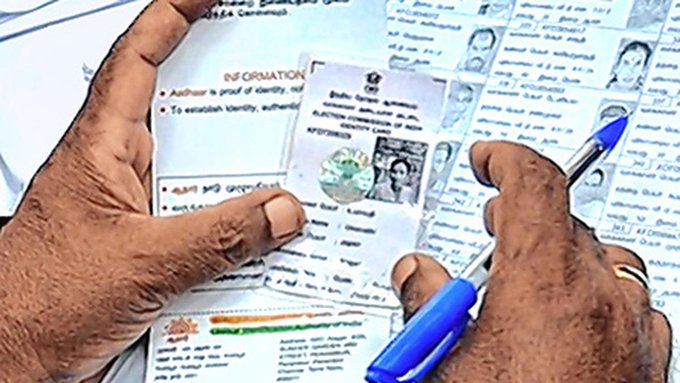
India’s electoral machinery has long been regarded as one of the most robust in the world. The Election Commission has meticulously built trust through decades of transparent, well-organized elections. Undermining this legacy by handing over voter verification to a digital database with a questionable track record is not just a technical shift—it’s a philosophical one. It signals a move towards an impersonal, mechanized democracy where technology, not the people, dictates electoral outcomes.
The broader implications of this move stretch far beyond administrative efficiency. Democracy thrives on representation, accountability, and public trust. The right to vote is more than a procedural act—it is the very foundation of self-governance. When technology begins to dictate who gets to participate in this process, democracy ceases to be a system of the people and becomes a controlled mechanism of the state. The transition from paper ballots to electronic voting was a technological leap, but it did not fundamentally alter the nature of electoral participation. Linking voter IDs with Aadhaar, however, introduces an element of exclusion and control that threatens the very ethos of universal suffrage.
The Election Commission’s proposal has ignited a crucial debate about the future of democracy in the digital age. As we move forward, the discourse must be driven by citizen rights, not bureaucratic convenience. Transparency, public trust, and constitutional guarantees must take precedence over data-driven governance. The need for electoral integrity is undeniable, but it must not come at the cost of disenfranchising voters or eroding privacy. The push for a digitized electoral roll cannot supersede the fundamental principles of democracy.
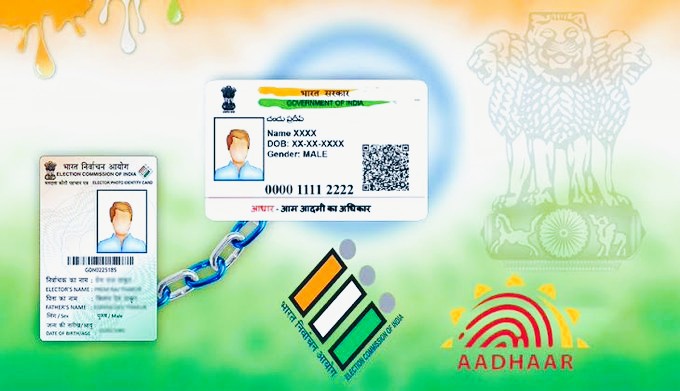
At this critical juncture, the choice before us is stark: Do we allow technological efficiency to dictate our democratic rights, or do we insist that technology remain a tool in service of democracy rather than its master? The path we choose will define the future of electoral participation in India. The time to act is now—to question, to resist, and to reaffirm that democracy is not about control but about empowerment. In the face of digital encroachment, reclaiming our agency is not just a necessity; it is our duty as citizens of the world’s largest democracy.
Visit arjasrikanth.in for more insights
 SOCIAL PERSPECTIVES