
The Naidu Doctrine, Amaravati’s Burden, and the High-Stakes Gamble for Inclusive Growth
Rebuilding Andhra Pradesh is a monumental challenge that requires strategic vision, efficient execution, and unwavering commitment. Years of economic instability, administrative inefficiencies, and political uncertainties have left the state at a crossroads. The current administration faces the arduous task of revitalizing the economy, strengthening governance, and ensuring balanced regional development. While the commitment to transformation is commendable, the path ahead is fraught with challenges that demand pragmatic solutions and well-structured policies.

The focus on Amaravati as the capital city remains a key point of contention. While the ambition to develop a world-class urban centre is valid, an overemphasis on Amaravati risks overshadowing other crucial economic sectors. The financial burden of land pooling, with an annual annuity payout of nearly ₹200 crore, strains government resources. Meanwhile, industries such as aquaculture, maritime trade, and agriculture—which form the backbone of Andhra Pradesh’s economy—require urgent attention. A holistic development approach that prioritizes diverse economic hubs across the state is imperative to ensure inclusive growth.
Over the past nine months, the government has undertaken extensive efforts to rectify the financial and administrative mismanagement of previous years. Welfare initiatives, including subsidized food programs and LPG cylinder distribution, have been launched to alleviate the economic strain on lower-income groups. However, these efforts must be supplemented with structural reforms that prioritize long-term economic stability. Excessive reliance on technological interventions in governance must be balanced with practical, on-ground solutions that enhance efficiency and service delivery.

Investor confidence is a critical component of Andhra Pradesh’s economic revival. While infrastructure projects worth ₹55,000 crore have been proposed, their execution depends on creating a conducive investment climate. The prevailing political uncertainty and the absence of a robust investor-friendly policy framework continue to deter potential stakeholders. Nearly a year into the new administration, concerns about governance stability persist. A strategic shift that fosters enthusiasm among investors, simplifies business regulations, and ensures streamlined approvals is essential for sustained economic growth.
Environmental and climatic conditions present additional challenges. The extreme temperatures in Vijayawada, for instance, impact the city’s long-term viability as a business and residential hub. A well-planned investment strategy must take into account regional strengths, climate resilience, and adaptive infrastructure to create a sustainable economic ecosystem.
Infrastructure development remains a double-edged sword. The government’s focus on national highways, extensive road repairs spanning 20,000 kilometers, and sustainable energy projects is commendable. However, the state continues to grapple with a significant inherited debt burden. The question remains: Can Andhra Pradesh achieve financial self-sufficiency without substantial external assistance? Shifting from a reliance on borrowings to sustainable revenue streams is imperative. Enhancing tax administration, fostering industrial growth, and leveraging the state’s strengths in fisheries, ports, and renewable energy are potential solutions. A long-term fiscal strategy that balances developmental aspirations with financial prudence is critical for sustainable progress.

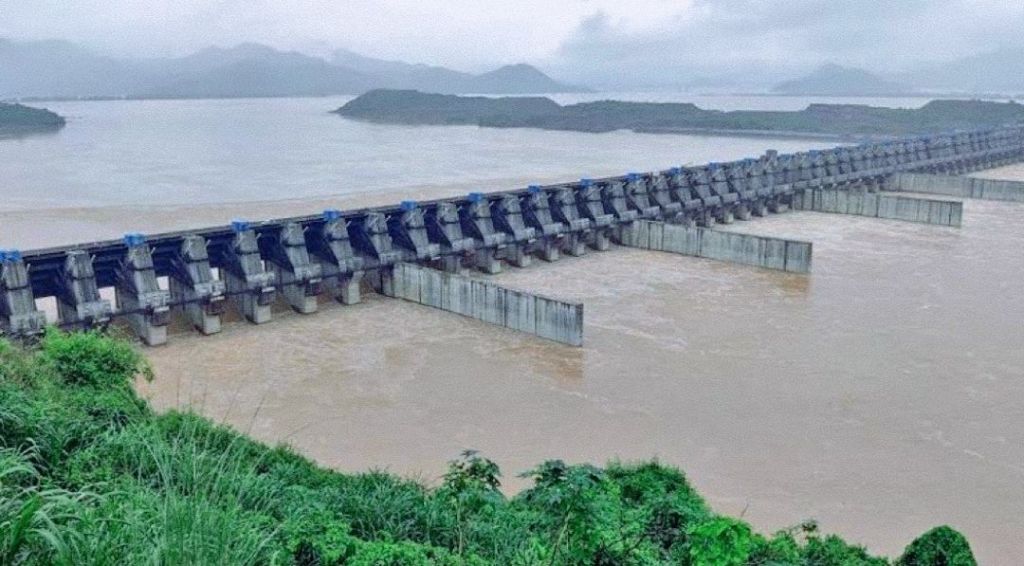
Collaboration with the central government plays a crucial role in securing financial and policy support for key projects, including the Polavaram irrigation initiative, Amaravati’s infrastructure, and industrial incentives. While political alignments may influence these negotiations, the state’s ability to present viable, well-structured proposals remains the determining factor in securing central aid. Engaging proactively with policymakers and aligning developmental objectives with national priorities can enhance the likelihood of obtaining necessary support.
The administration’s ambitious ‘Swarnandhra 2047’ vision aims for a 15% increase in Gross State Domestic Product (GSDP). While this long-term roadmap is promising, its execution faces formidable challenges. District collectors have been entrusted with key responsibilities, but without an integrated and sector-specific strategy, achieving these ambitious targets remains uncertain. A more pragmatic approach would involve fostering public-private partnerships, developing industry-specific policies, and implementing grassroots-level economic development programs. Sustainable models that ensure equitable growth are preferable to broad, ambitious visions without clear implementation pathways.

The self-financing model proposed for Amaravati’s development is being positioned as a transformative approach. However, concentrating financial and administrative resources on the capital city may create economic disparities, neglecting critical sectors such as fisheries, agrarian industries, and coastal economies. Ensuring balanced regional development requires immediate policy interventions and inclusive planning to prevent economic fragmentation across the state.
Governance complexities are further compounded by the coalition nature of the government. With multiple stakeholders advocating diverse interests, the risk of decision-making bottlenecks increases. Political negotiations may impede the swift execution of developmental initiatives, potentially slowing the progress needed for effective state rebuilding. Despite these challenges, some notable policy decisions have been taken, including the much-anticipated Mega DSC notification for 16,000 teaching posts, expected to attract over 300,000 applicants. Strengthening the education sector is critical for long-term economic development, and proactive steps in this direction signal a commitment to human capital investment.
Social welfare measures such as increased pensions, enhanced housing assistance, and tax exemptions on essential commodities demonstrate an effort to improve living standards. However, the success of these initiatives depends on transparent implementation and efficient governance. Without accountability and streamlined execution mechanisms, these policies risk becoming unfulfilled promises rather than tangible benefits for citizens.
As Andhra Pradesh navigates its rebuilding journey, a crucial question remains: Will the government successfully realize its vision for Amaravati while ensuring balanced state-wide development? The administration’s goals are ambitious, but their success hinges on effective policy execution, coalition stability, and a governance model that integrates technology with practical administrative strategies. Time is a decisive factor. The state must adopt a governance framework that prioritizes long-term economic growth over short-term political gains. If the government recalibrates its priorities, moves beyond rhetoric, and takes concrete action to foster inclusive development, Andhra Pradesh has the potential to emerge as a model of progressive governance. Otherwise, the dream of a thriving and prosperous state may remain unrealized.
Visit arjasrikanth.in for more insights
 SOCIAL PERSPECTIVES