
From Messages to Money – The New Tax Bill That Turns Everyday Transactions into Government Surveillance
In an era where digital transactions dominate financial activities, governments worldwide are tightening regulations to curb tax evasion and illicit financial practices. However, a new income tax bill has raised significant concerns over privacy and governmental overreach. This proposed legislation grants tax authorities unprecedented access to personal digital data without prior consent, effectively turning ordinary citizens into subjects of surveillance. Critics argue that such measures amount to “tax terrorism,” fostering an environment of fear and uncertainty among taxpayers.

The bill empowers tax agencies to leverage digital footprints as investigative tools, extending scrutiny beyond traditional financial records. This includes accessing WhatsApp messages, social media activity, and geolocation data, purportedly to identify tax fraud, undisclosed income, and unreported cryptocurrency transactions. By broadening the scope of surveillance, authorities claim they can dismantle complex tax evasion networks and enhance compliance. However, this approach raises significant ethical and legal questions about the balance between security and individual rights.
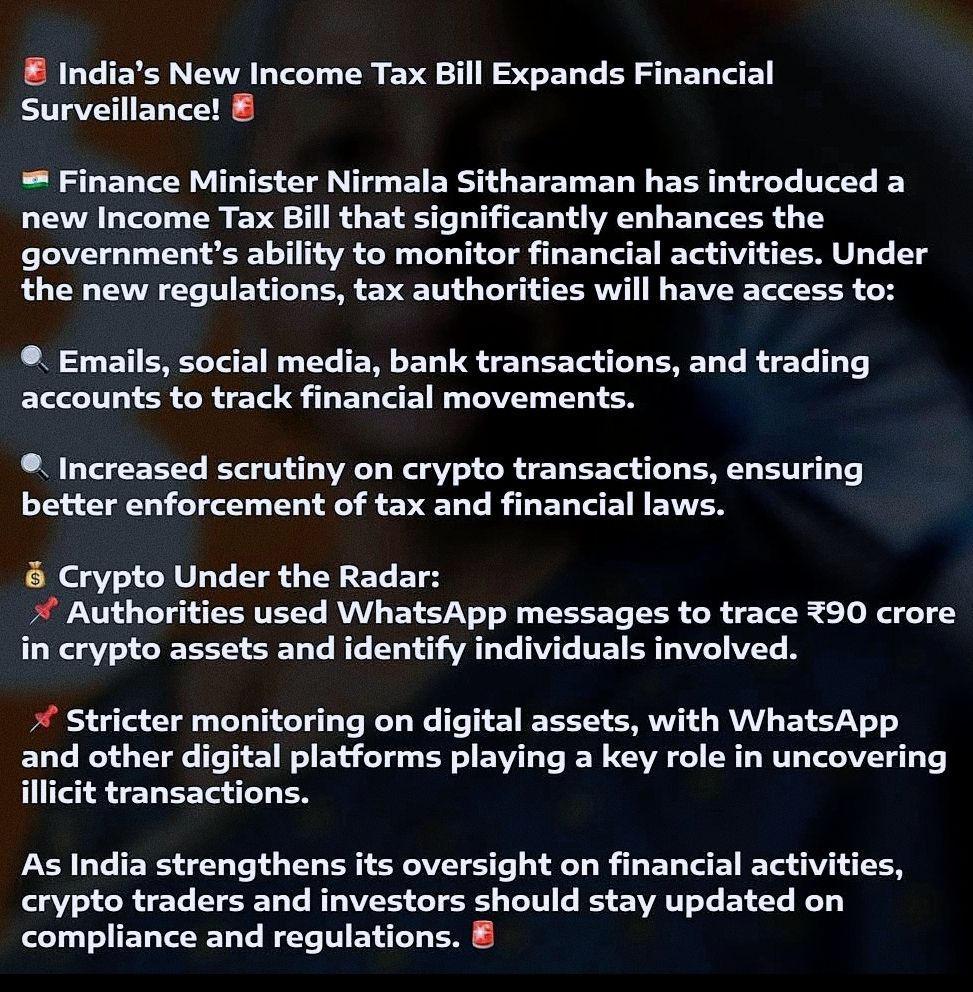
A particularly contentious aspect of the legislation is the potential use of private conversations as evidence in tax investigations. Authorities indicate that incriminating details found in digital communications could be admissible in legal proceedings, uncovering fraudulent schemes and financial misconduct. The prospect of having private exchanges scrutinized without explicit consent has led to widespread apprehension. Many fear that this level of intrusion erodes fundamental privacy rights and sets a dangerous precedent for government surveillance.
Proponents of the bill argue that stricter monitoring mechanisms are essential to deter tax evasion and recover lost revenue. They assert that a small fraction of individuals exploit legal loopholes to conceal wealth, necessitating robust investigative measures. However, the expansive nature of this legislation has raised alarms about the potential for overreach. Instead of targeting specific offenders, the government appears to be casting a wide net, placing even law-abiding taxpayers under intense scrutiny.

Adding to the controversy is the bill’s redefinition of digital searches, encompassing cryptocurrencies and other virtual assets. This shift effectively subjects digital wealth to heightened regulatory oversight, with authorities monitoring transactions to detect suspicious activity. While regulatory bodies argue that such measures are necessary to prevent money laundering and illicit financial flows, privacy advocates warn of unintended consequences. The erosion of financial confidentiality could deter legitimate investments and impede economic innovation.
The Finance Ministry has defended the bill, emphasizing the need for modern regulations in an increasingly digital economy. Officials claim that enhanced monitoring will only target deliberate tax evasion, ensuring that honest taxpayers remain unaffected. Despite these assurances, concerns persist regarding potential misuse of power. The absence of stringent oversight mechanisms raises fears of arbitrary enforcement, disproportionately impacting individuals who inadvertently fall under suspicion.
Beyond digital surveillance, the bill also expands the authority of tax agencies to conduct physical searches. This provision has heightened anxiety among citizens, as tax officials could initiate inspections based on digital evidence. The intersection of virtual and physical investigations blurs the lines between regulatory enforcement and invasive scrutiny. Without clear limitations, such powers could be misapplied, leading to undue harassment and erosion of civil liberties.

The implications of this bill extend beyond taxation, touching on broader issues of governance and personal freedom. In a climate where data privacy is already under threat, granting authorities unchecked access to digital communications sets a troubling precedent. The potential for politically motivated targeting adds another layer of complexity. Critics caution that expanded surveillance capabilities could be exploited to suppress dissent and silence opposition, undermining democratic principles.
As the bill moves through the legislative process, legal experts emphasize the importance of safeguards to prevent abuse. Any measures that grant extensive powers to tax authorities must be accompanied by clear guidelines, judicial oversight, and mechanisms for redress. The principles of legality, necessity, and proportionality must be upheld to ensure that tax enforcement does not come at the cost of fundamental rights.
Public sentiment on the issue is divided. While some acknowledge the need for stringent tax compliance measures, others view the bill as a gateway to excessive state control. The debate underscores a fundamental dilemma: how to balance financial transparency with the right to privacy. Without transparent implementation and strict regulatory checks, the fear of mass surveillance may overshadow the intended benefits of curbing tax evasion.
The broader implications of this legislation cannot be ignored. If passed without adequate safeguards, it risks creating a culture of self-censorship and fear. Citizens may feel compelled to alter their online behavior, avoiding certain discussions or transactions to evade potential scrutiny. Such an environment stifles free expression and weakens societal trust in government institutions.

In light of these concerns, it is imperative for stakeholders to engage in constructive dialogue. Policymakers must consider alternative approaches that enhance tax compliance without infringing on personal freedoms. Leveraging artificial intelligence for targeted audits, strengthening international cooperation on financial crime, and increasing voluntary disclosure incentives are potential solutions that align enforcement with ethical governance.
Ultimately, the passage of this bill will determine the future trajectory of digital privacy and financial regulation. If enacted responsibly, it could serve as a model for balancing transparency and individual rights. However, if implemented without restraint, it may pave the way for an era of unprecedented surveillance. The challenge lies in ensuring that tax enforcement remains just, proportional, and respectful of the fundamental liberties that define a democratic society.
Visit arjasrikanth.in for more insights
 SOCIAL PERSPECTIVES
One response to “The Taxman’s Watchtower: Your Digital Life Became an Open Ledger!!!”
A compelling and balanced analysis of the fine line between tax enforcement and personal liberty. The article rightly urges for transparency, judicial oversight, and ethical governance in the digital age. Safeguarding privacy while promoting compliance is essential to preserving democratic values.
LikeLike