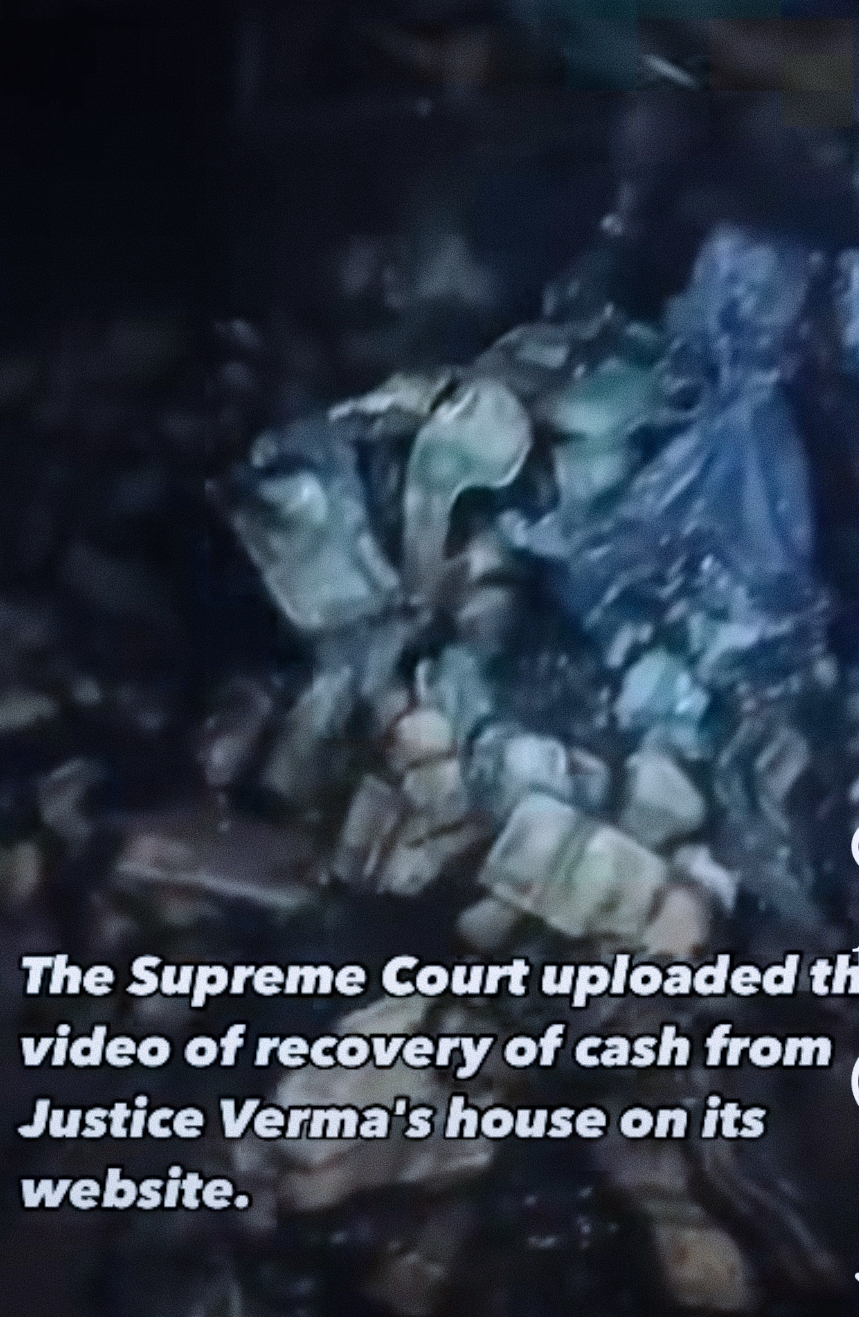
Bundles of Controversy: The Shocking Cash Discovery at a Delhi High Court Judge’s Residence
In an astonishing turn of events, the corridors of justice have been shaken, exposing a deep blemish that has set the nation abuzz with speculation and concern. A recent incident has cast a long shadow over the sanctity of our judicial institutions, raising grave questions about fairness, integrity, and public trust. The tranquillity of a judicial enclave was shattered on the night of March 14, 2025, as flickering flames consumed part of a judge’s residence, revealing a scandal that threatens to redefine perceptions of judicial probity.
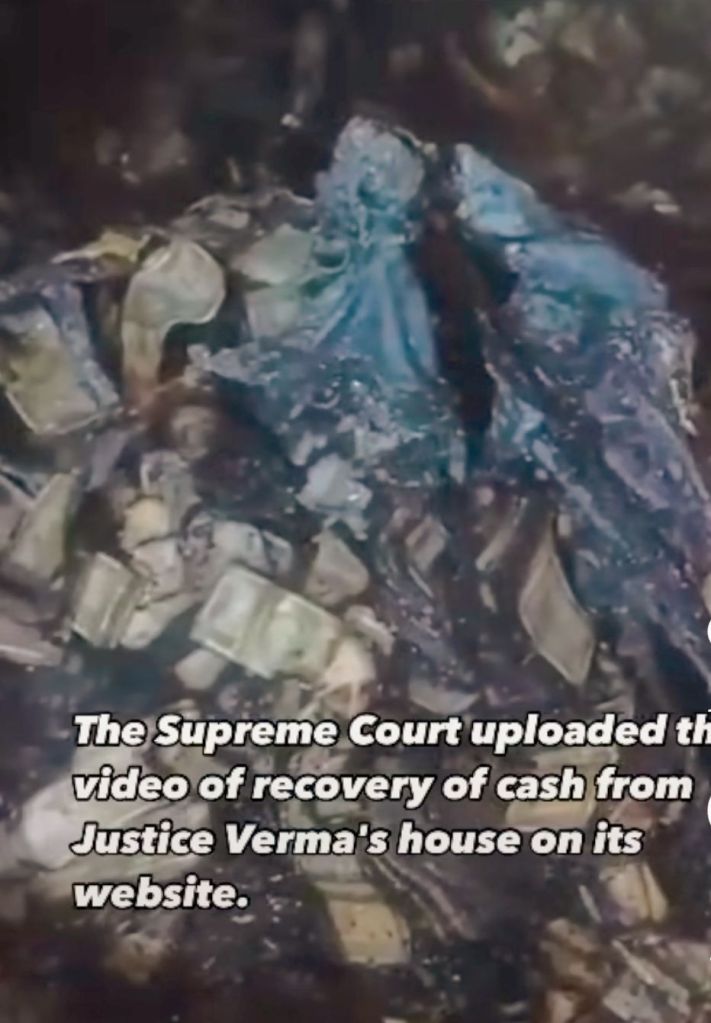
When the smoke finally dissipated, what emerged was nothing short of shocking—a substantial sum of money, unaccounted for and partially charred, concealed within the judge’s quarters. The discovery sent shockwaves through the legal fraternity, raising unsettling concerns about accountability and ethical conduct within one of the nation’s most revered institutions. The implications of such a revelation are profound, forcing an urgent reckoning with the principles of justice and impartiality that form the bedrock of the legal system.
In the wake of the incident, the judiciary’s highest authorities swiftly launched an investigation, meticulously piecing together the circumstances that led to this alarming discovery. The official report chronicled a disturbing sequence of events, revealing discrepancies that hinted at the possibility of foul play. Far from being an internal matter confined to administrative corridors, the findings were made public in an unprecedented act of transparency. The release of video footage and images of the burnt cash underscored the gravity of the situation, signalling a decisive moment in the pursuit of judicial accountability.

The judge at the centre of the controversy has vigorously defended his innocence, categorically denying any wrongdoing. He has maintained that the room where the money was found was a mere storeroom, accessible to household staff and used for keeping unused items. However, in a twist that deepens the intrigue, the room was reportedly located near the security quarters and remained locked, accessible only to a select few. This contradiction fuels speculation and intensifies the demand for clarity—who had access to the keys, and how did such a large sum of money find its way into the judge’s residence?
This unfolding saga strikes at the heart of the public’s faith in the judiciary. Citizens rely on the courts as the ultimate arbiters of justice, upholding fairness and protecting the rule of law. The very notion of a judge—one entrusted with dispensing justice—being embroiled in such a controversy undermines this foundational trust. Whether or not the money belonged to the judge, its very presence raises unavoidable questions about the integrity of those who serve in the highest echelons of the legal system. The judiciary, long perceived as a bastion of righteousness, now finds itself under an unrelenting spotlight.
In response to the scandal, an independent investigative panel has been formed, tasked with unravelling the layers of secrecy surrounding the incident. Their role extends beyond merely identifying culpability; they must also restore public confidence in an institution that is supposed to be above reproach. As the panel sifts through evidence and conducts interviews, the very credibility of the judicial framework hangs in precarious balance, dependent on the ability to confront uncomfortable truths and implement necessary reforms.

Beyond the immediate controversy, this incident compels a broader reflection on the judiciary’s relationship with the public. The shocking revelation of unaccounted-for cash, coupled with the bizarre coincidence of a fire revealing its existence, serves as a stark reminder of the fragility of institutional trust. This is not merely an isolated lapse but a cautionary tale that demands systemic introspection. If such incidents can occur within the highest levels of the judiciary, what does this imply about the checks and balances designed to uphold its integrity? The nation is left grappling with a troubling paradox—how does one place unwavering faith in a system that itself stands accused of opacity and possible corruption?
The burden of restoring judicial credibility now rests not just on the investigative panel but also on the judge at the centre of the controversy. The expectation is clear: justice must not only be served but must be seen to be served. The judiciary’s role extends beyond legal adjudication; it must also embody moral leadership. Any failure to address this crisis with the utmost transparency and accountability risks irreparable damage to an institution whose legitimacy is crucial to democratic governance. The nation watches with bated breath, awaiting the outcome of the inquiry and hoping for a resolution that reaffirms the judiciary’s commitment to fairness and ethical conduct.
In summation, the scandal that has emerged from this disturbing episode underscores the urgent need for greater vigilance, accountability, and ethical fortitude within the judiciary. As the investigation unfolds, it is imperative that the legal system rises above individual interests and partisan pressures to uphold its noble mandate. The judiciary must not only weather this storm but emerge stronger, proving that justice remains untainted by corruption. In this critical moment, the nation looks to its courts to reaffirm the values upon which democracy stands—truth, fairness, and the unwavering pursuit of justice.
Visit arjasrikanth.in for more insights
 SOCIAL PERSPECTIVES
One response to ““Burnt Cash, Broken Trust: Justice Itself Stands Trial”
A deeply thought-provoking exposé on a moment that challenges the moral backbone of India’s judiciary. This incident calls for urgent introspection, transparency, and systemic reform to restore public faith. The judiciary must rise above this crisis with integrity and resilience. Only through unwavering accountability can justice remain the cornerstone of our democracy.
LikeLike