
Code, Clicks, and Chaos: Can Andhra Pradesh’s Tech Dreams Bridge the Real Gap?
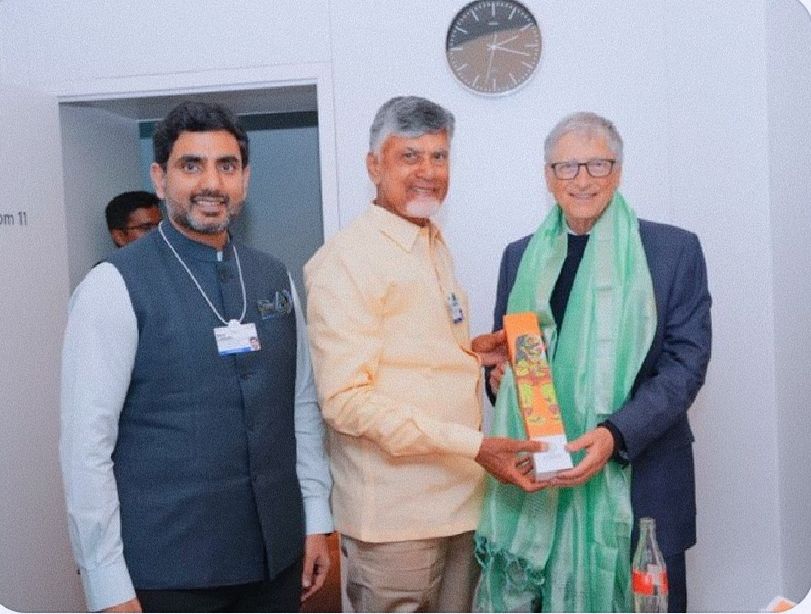
Andhra Pradesh is scripting an ambitious narrative of governance powered by technology. The recent MoU between the Government of Andhra Pradesh and the Gates Foundation is a testament to the state’s commitment to leveraging AI, digital platforms, and cutting-edge solutions to redefine public service delivery. Yet, as the state gears up to expand its WhatsApp-based governance initiative, ‘Mana Mitra,’ from 200 to 500 services, the fundamental question remains: Does technology alone translate into effective governance?
The grand vision is awe-inspiring. AI-driven predictive analytics in healthcare, satellite-powered precision farming, and seamless digital governance inspired by global pioneers like Estonia and Singapore are no longer theoretical aspirations but tangible goals. QR-coded digital documents are expected to eliminate bureaucratic inertia, while AI chatbots will offer human-like assistance to citizens, bringing governance to their fingertips. The government’s push to train legislators and integrate Tirumala Tirupati Devasthanams (TTD) services into digital governance reflects its commitment to a tech-first approach.

However, governance is more than an interface. The real challenge lies in ensuring that these digital transformations translate into tangible benefits at the grassroots level. The irony of governance in the digital age is that while technology can cut red tape, the final mile of service delivery still rests on human efficiency, financial allocations, and administrative willpower.
The ‘Mana Mitra’ initiative has facilitated over 51 lakh transactions, proving that citizens are ready for digital governance. But readiness does not equate to effectiveness. The success of governance does not hinge on the number of chatbot conversations or automated document verifications but on how many lives are genuinely improved. When an AI-driven system predicts a health crisis, does the ground-level healthcare infrastructure have the resources and personnel to act upon it? When a farmer receives an AI-generated advisory on optimal crop cycles, does he have access to affordable credit and quality inputs to implement the advice? These are the questions that technology alone cannot answer.
Take the education sector, for instance. The Andhra Pradesh government has raised concerns over the alarming decline in academic standards. The previous administration’s unstructured reforms led to a sharp drop in student reading proficiency, as reflected in ASER reports. Now, while AI-powered learning modules and smart classrooms might seem like an easy fix, the crux of the problem lies elsewhere. The issue is not the absence of technology but the misallocation of resources, inadequate teacher training, and excessive political interference in education administration. A chatbot cannot replace a competent teacher, nor can a QR-coded certificate substitute for genuine academic rigor.
Similarly, while AI-powered healthcare diagnostics are revolutionary, their effectiveness hinges on last-mile medical intervention. The MoU with the Gates Foundation emphasizes cost-effective, AI-based healthcare solutions, but the bigger question is: Can the state’s public health infrastructure accommodate the scale of digital transformation? Can a digital prescription be fulfilled if there is no doctor at the local clinic? Can a predictive analytics-driven intervention reduce maternal mortality rates if there is no skilled birth attendant available in remote villages?

Agriculture, too, is a sector where technology offers immense promise but faces systemic roadblocks. Precision farming and satellite-based advisory systems are incredible advancements, but their success depends on farmer literacy, access to affordable technology, and market linkages. The Gates Foundation partnership will enable AI-driven advisory platforms, but how effectively will these insights be disseminated to the average farmer, many of whom still struggle with access to basic credit and irrigation facilities?
Even in the realm of governance itself, the success of digital services is contingent upon a responsive administrative ecosystem. The government’s ambitious vision of delivering services within 10 seconds is commendable, but unless bureaucratic efficiency and financial backing match the technological advancements, the digital façade may simply mask the cracks in real-world governance.
The Andhra Pradesh model has garnered national attention, with states like Maharashtra drawing inspiration. However, the replication of a digital governance model must be accompanied by a deeper analysis of its effectiveness beyond numbers. While 51 lakh transactions may indicate adoption, the real metric of success should be the number of grievances resolved, the number of underprivileged communities uplifted, and the number of livelihoods enhanced.

This is where Andhra Pradesh must recalibrate its approach. The push for technology in governance should not merely be about digitization but about holistic service enhancement. Efficiency is not a function of AI alone; it is an interplay of financial prudence, skilled human capital, and an accountable administrative structure. If the state truly wants to be a model for digital governance, it must address these underlying issues with as much urgency as it is embracing AI and automation.

In the final analysis, Andhra Pradesh stands at the crossroads of becoming either a digital governance pioneer or a cautionary tale of technological over-reliance. The difference will not be in the number of AI-powered transactions but in how well the government ensures that these digital interventions actually make a difference in people’s lives. The ultimate measure of good governance is not the speed of digital service delivery but the depth of impact it creates. For Andhra Pradesh, the journey from high-tech aspirations to high-impact governance will be determined not by how smart the system is, but by how effectively it serves its people.
Visit arjasrikanth.in for more insights
 SOCIAL PERSPECTIVES