
Delhi’s Liquor Policy: A Masterclass in Policy Loopholes, Corruption, and the Art of Benefitting the Few!
In a spectacle that could rival any gripping political thriller, the newly formed BJP government in Delhi, led by Chief Minister , recently unveiled a startling report from the Controller and Auditor General (CAG) that unravels the complexities of the city’s liquor policy. This comprehensive 180-page document paints a vivid picture of how a seemingly innocuous policy designed to streamline the liquor trade spiralled into a chaotic playground of corruption and monopolistic indulgence, all while costing taxpayers a staggering ₹2002 crores. As the dust settles on this political drama, the revelations inherent in the CAG report beg the questions: How did this unfold? And can minor alterations in policies avail themselves to the corrupt?

The Delhi liquor policy was touted as a robust framework aimed at limiting the number of wholesalers from 77 to a mere 14, which ostensibly intended to promote fair competition and regulate the liquor market. However, instead of fostering competition, it birthed a fertile ground for monopolistic practices, handing overwhelming control to a select few. These new wholesalers developed tight-knit relationships with various manufacturers and importers, effectively stifling competition and ensuring that the intended regulatory spirit of the policy was drained away.
The CAG report doesn’t fall short of revealing that this decision made under the aegis of the Aam Aadmi Party didn’t merely miss the mark; it created significant loopholes that virtually invited corruption and deceit. The report, while refraining from outright calling these actions illegal, urges further investigation into possible bribes, kickbacks, and other forms of corruption that might have seeped into this policy reform’s execution. With allegations swirling around influential figures, this report illuminates the need for accountability, dissecting a liquor policy that, while designed for good, instead became a breeding ground for shady dealings.
What’s particularly intriguing about the developments surrounding the Delhi liquor policy is how a minor adjustment in legislation can so dramatically shift the balance of power towards the unscrupulous. In this case, the liquor policy was supposed to stem monopolistic behavior, yet the CAG’s findings heavily criticized it for instead exacerbating the very issue it sought to address. With the new policy creating an environment where only a handful of wholesalers can thrive, the true power dynamics are laid bare. This serves as an alarming reminder that a slight tweak in policy can pave the way for the corrupt to manoeuvre, meddling at the highest levels while ordinary citizens sip their overpriced drinks, blissfully unaware of the machinations at play.
Delving deeper, the CAG report exposes how the liquor pricing structure also became a casualty of this policy shift. The dynamics established by the government allowed a significant increase in the profit margin for retailers, elevating it from a meagre 5% to a hefty 12%. This imbalance raised eyebrows and led to broader discussions regarding fairness and transparency in the pricing of Indian Made Foreign Liquor (IMFL). Consumers, who have long been accustomed to hitting neighboring states like Gurgaon or Noida for cheaper liquor, found themselves caught in a convoluted web where government interventions had ramifications that reverberated through their wallets.
The CAG’s findings have sparked intense debate among political analysts and economists, igniting a deeper examination of the scandal’s far-reaching implications. Intellectuals and policy experts are meticulously dissecting the political fallout and legal ramifications stemming from the government’s oversight and failure to vet license applications. Disturbingly, the report reveals that several entities with no financial credibility were granted licenses—some reporting zero income yet inexplicably manoeuvring through the opaque corridors of the liquor trade.
In light of these revelations, the overarching governance question remains: how did such a glaring conflict of interest and a plethora of inefficiencies make it through? The CAG report suggests that the machinery designed for checks and balances may have been hindered or, worse, tampered with. With multiple agencies such as the Central Bureau of Investigation (CBI) and the Enforcement Directorate (ED) now involved in the unraveling of this scandal, we are left pondering the broader implications of this troubling saga. Will there be accountability? Or will this just be another chapter in the book of political misadventures where a few rise while the many pay the price?
The liquor policy debacle in Delhi offers a stark illustration of how even the most well-intentioned policies can be manipulated, moulding a sound framework into a tool of subversion that benefits only a select group of individuals. As the investigation unfolds, and possibly more dirt is dug up, it will be imperative for citizens and analysts alike to closely watch the actions of those in power, ensuring that corruption does not become entrenched or overlooked in the dance of politics. As the curtain falls on this episode, one thing is clear: the rules of engagement in policy-making must undergo a metamorphosis to shield the system from the corrupting influence of those willing to exploit loopholes for their gain.
The CAG report highlighted severe financial and procedural irregularities in Delhi’s excise policies. It claimed that former Deputy CM Manish Sisodia ignored an expert panel’s recommendations while formulating the new excise policy. Due to a lack of timely permissions for liquor vends in non-conforming areas, the government incurred a revenue loss of ₹941.53 crore. Additionally, ₹890.15 crore was lost due to the surrender of licenses and failure to re-tender. A ₹144 crore waiver during the pandemic was deemed irregular.
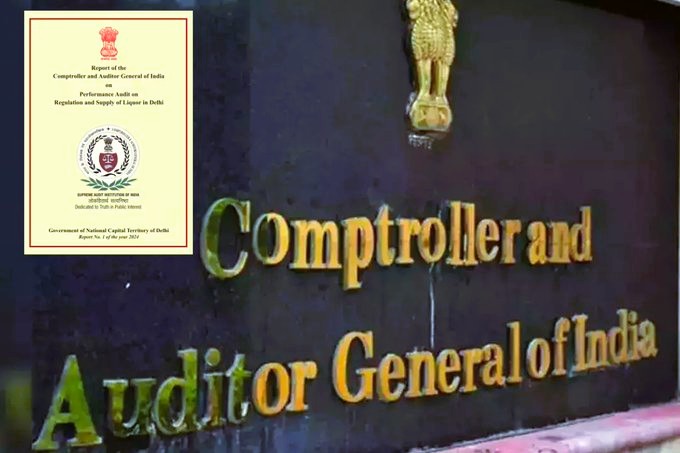
The report also flagged quality control lapses, where wholesalers failed to submit BIS compliance reports. Financial discrepancies in ESCIMS resulted in undue payments of ₹24.23 crore. The audit found unauthorized barcode payments worth ₹24.23 crore. Other issues included non-transparent pricing, unverified license approvals, and ineffective enforcement against liquor smuggling. The 2021-22 policy allegedly favoured private wholesalers, bypassed regulatory approvals, and enabled market monopolization, raising concerns over governance and transparency.
The CAG report revealed that Delhi suffered losses exceeding ₹2,000 crore due to flaws in the AAP government’s 2021-22 liquor policy. It highlighted major policy lapses, procedural violations, and ignored expert recommendations. Former Deputy CM Manish Sisodia allegedly disregarded key suggestions and approved an irregular ₹144 crore waiver despite objections. The failure to obtain permissions for liquor vends in non-conforming areas led to ₹941.53 crore in losses. Additionally, 19 zonal licensees surrendered, and no re-tendering was conducted, worsening revenue losses. The BJP has accused AAP of corruption, leading to arrests of key leaders following a CBI probe.
Visit arjasrikanth.in for more insights
 SOCIAL PERSPECTIVES