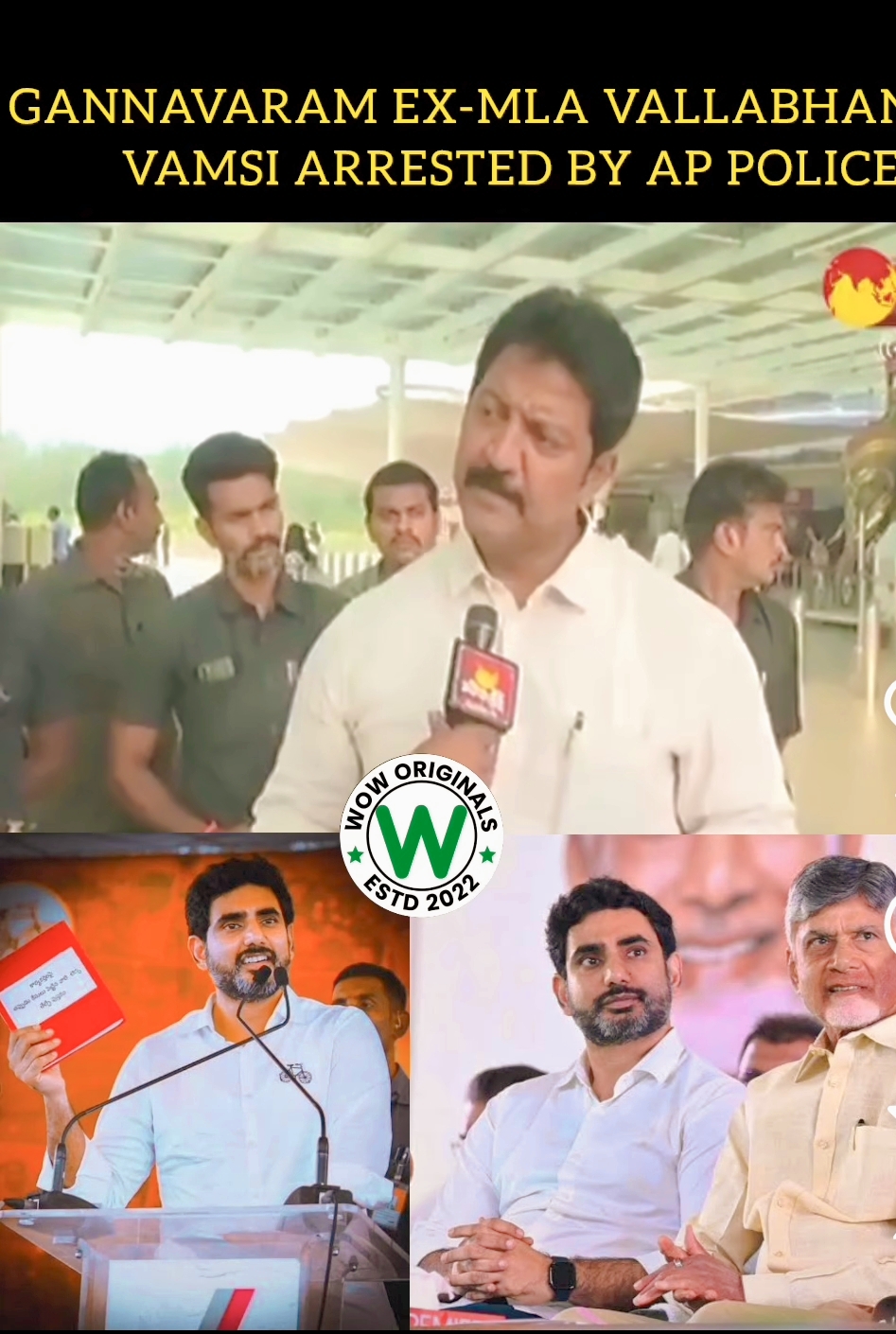

From Capital Dreams to Political Nightmares—A Saga of Vendettas, Vanishing Legacies, and Unforgiving Voters
The last decade in Andhra Pradesh has unfolded like a high-stakes thriller, replete with shifting allegiances, grand visions, crushing betrayals, and a political landscape constantly teetering on the edge of chaos. The dream of building a world-class capital in Amaravati began with great promise, but the harsh realities of caste-driven politics and localized vested interests quickly smothered its potential. While the ruling establishment aligned itself with the central government to bring rapid development, a cocktail of self-serving policies and deep-seated communal divisions limited progress, creating an atmosphere of stagnation and growing public resentment.
Amid this brewing dissatisfaction, a new government swept into power, led by a leader with a tainted past and a penchant for vendetta politics. This was no ordinary transition; it marked a seismic shift in governance philosophy, replacing developmental ambition with a ruthless approach to political dominance. What followed was a period of aggressive financial redistribution masked as social welfare, while the underbelly of the system thrived on dubious liquor policies and cash flows that fattened private pockets. The administration’s support base relied not on progress but on populist appeasement, leaving the economic framework hanging by a thread.

However, the intoxication of unchecked power often leads to overreach. The leadership’s reliance on belligerence and derogatory political discourse alienated even its staunchest supporters. The public, long accustomed to the rough-and-tumble of state politics, had never witnessed such blatant personal attacks, the dragging of family members into the political arena, and a complete erosion of decorum. The electorate, quietly seething, did the unthinkable—the unseating of a government wielding an overwhelming legislative majority. The magnitude of the ruling party’s defeat sent shockwaves throughout the state, marking one of the most dramatic electoral upsets in recent memory.
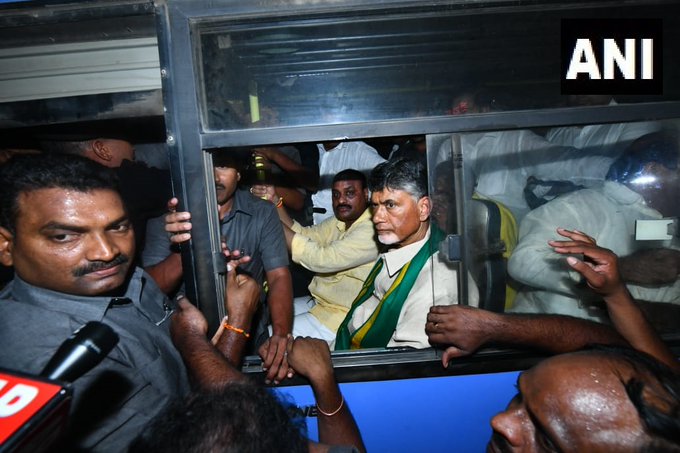
The second tenure of governance, instead of reflecting on its failures, doubled down on suppression. A series of high-profile arrests, including that of seasoned politician Chandrababu Naidu, signalled a new low in statecraft. What was once considered the spirited clash of political ideologies descended into a police-driven crackdown, where dissenting voices faced relentless harassment. Reports of custodial intimidation and even physical abuse became rampant, cementing the ruling party’s reputation for brute-force governance. Political leaders, in a desperate bid to maintain control, abandoned all semblance of civility, indulging in mudslinging that exposed their desperation rather than their strength.
Among the architects of this chaos, Vamsi Vallabhaneni, an outspoken leader from the ruling YSR Congress Party, became the face of this descent into political barbarism. His repeated incendiary remarks against Chandrababu Naidu’s family turned him into a lightning rod of controversy. Public sentiment, already volatile, exploded as his antics further tarnished the credibility of the administration. The once-silent electorate, now emboldened by digital media and social platforms, became more than just passive observers—they turned into a force that would exact electoral revenge when the opportunity arose.
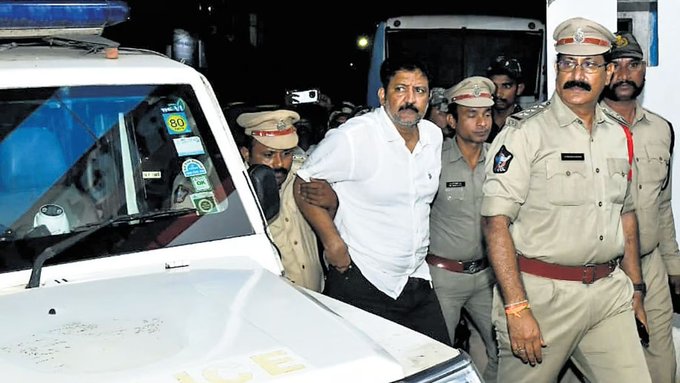
The drama reached its peak when Vallabhaneni Vamsi himself found his name entangled in criminal proceedings. His arrest on February 13, 2025, in connection with the 2023 attack on the Gannavaram TDP office, painted a poetic picture of political irony. Charged with kidnapping, witness intimidation, and coercion, Vamsi’s downfall underscored the cyclical nature of Andhra Pradesh’s politics—where one day’s aggressor becomes the next day’s casualty. The wavering testimony of eyewitness Mudunuri Satyavardhan, initially manipulated under pressure, revealed the terrifying grip of fear that plagued political dissenters. But in a twist befitting this chaotic saga, retracted statements and renewed allegations only fuelled public fury, proving once again that vendetta politics has a short shelf life.
In the age of real-time information and viral outrage, political thuggery has lost its effectiveness. Voters in Andhra Pradesh, like their counterparts in Telangana, Karnataka, and Odisha, are no longer willing to tolerate outright abuse of power. The electorate, battered by one cycle of vendetta after another, now demands governance that transcends personal rivalries and focuses on sustainable progress. But therein lies the problem—the state’s political arena remains a choice between the devil and the deep blue sea, with voters forced to navigate between a limited set of options, none of which inspire confidence.

As Andhra Pradesh barrels toward another chapter in its tumultuous political history, one question looms large: will the state break free from the grip of revenge-driven governance, or will it remain a battleground for leaders more invested in settling scores than in leading? The people have already demonstrated their power once—whether they will continue to shape their destiny or be dragged back into the vortex of vendetta remains the ultimate question. One thing, however, is certain: Andhra Pradesh’s political rollercoaster is far from over, and the next turn promises to be just as unpredictable as the last.
Visit arjasrikanth.in for more insights
 SOCIAL PERSPECTIVES