

The Accountability Mirage: Government Performance Must Be a Priority in Modern Governance
In an era defined by rapid change and rising expectations, the call for accountability and transparency in government performance has never been more urgent. Yet, as failures across multiple ministries come to light, the political narrative often prioritizes inflated achievements over genuine responsibility. This dissonance between promises and realities raises critical questions about the effectiveness of governance today.
A stark example of this disconnect emerged in February 2021 when an ambitious vision for a world-class railway station in the national capital was unveiled. The railway minister proudly showcased artist impressions of the project, promising to revolutionize travel and decongest the area. Bold claims about enhancing India’s global stature accompanied these grand plans, stirring public excitement. However, mere days later, a catastrophic stampede at the same station shattered these aspirations. Lives were lost, and the incident exposed glaring deficiencies in crowd management—an essential aspect of any large-scale public infrastructure.

The tragedy, preventable and devastating, sparked public outrage. People questioned how such a disaster could occur despite officials supposedly monitoring crowd dynamics in real time. The incident revealed a harsh truth: while leaders celebrated progress, the basic mechanisms ensuring public safety were grossly inadequate. This irony—boasting of advancement while neglecting fundamental responsibilities—highlights a serious flaw in the current governance model.
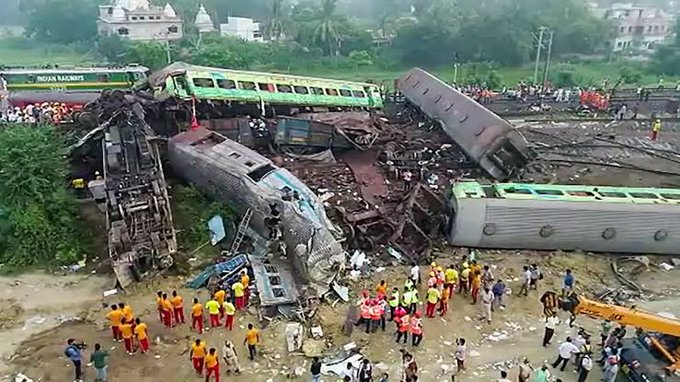
What’s particularly troubling is the recurring pattern of evading accountability after major incidents. Historical precedents reveal a culture where resignations are rare, even in the wake of catastrophic failures. Ministers often retain their positions despite disasters like the Balasore Odisha triple train crash and the Kanchanjunga Express collision. Investigations typically shift blame onto lower-level officials, allowing higher authorities to remain insulated while systemic failures go unaddressed. This selective accountability not only shields decision-makers but also perpetuates a cycle of impunity, where negligence is overlooked, and meaningful reforms are sidestepped. As a result, public trust erodes, and the very progress that leaders promise remains an illusion, undermined by a governance model more focused on optics than genuine responsibility. Without holding those at the top accountable, such tragedies risk becoming recurring headlines rather than catalysts for lasting change.

This lack of accountability extends far beyond the railway sector, reflecting a broader pattern of negligence and mismanagement across various ministries. Ambitious initiatives, such as skill development programs, pledged to create millions of internships and cultivate a highly skilled workforce, setting an annual target of 20 million. However, the reality has been starkly different, with fewer than one lakh youth actually trained. Despite these glaring discrepancies, public admissions of failure remain rare. When they do surface, they often appear as superficial attempts to placate public outrage rather than sincere efforts to address systemic flaws or commit to meaningful reforms. This persistent evasion of responsibility not only undermines public trust but also stalls the very progress these programs were designed to achieve.
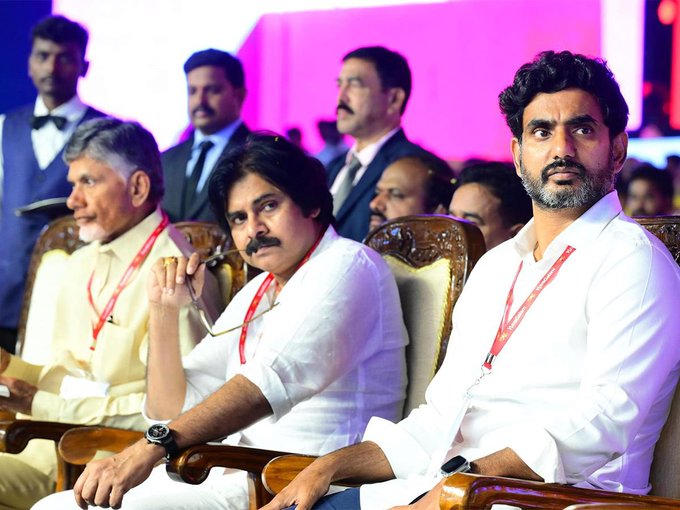
In this landscape of evasion and unfulfilled promises, N. Chandrababu Naidu stands out as a leader who has championed accountability in governance. He implemented a systematic feedback mechanism that ranks ministers based on performance, using technology and citizen input to ensure transparency and measurable outcomes. This approach shifted governance from public relations exercises to a focus on tangible results. Naidu notably ranked himself 6th and his Deputy CM, Pawan Kalyan, 10th, showcasing a commitment to fairness and self-assessment. By making these rankings public, he fostered a culture where ministers felt compelled to be more responsible and responsive to public concerns, promoting continuous improvement.
The need for transparent feedback mechanisms in governance is evident. Empowering citizens to voice their experiences and hold leaders accountable creates a dynamic where performance truly matters. This shift from a one-sided narrative to an inclusive dialogue between government and the public could transform the political landscape, ensuring that ministers are evaluated based on their actual contributions rather than curated media portrayals.
The recent tragedies and failures within various ministries underscore the urgent need for a cultural shift toward accountability. Political leaders must understand that their legitimacy depends not only on communicating successes but also on confronting failures head-on and implementing corrective measures. A governance model valuing transparency over rhetoric, where ministers are scrutinized by the very people they serve, is essential.
The illusion of progress, propped up by exaggerated achievements, must give way to a governance culture rooted in accountability and transparency. As citizens demand more from their leaders, the focus should shift toward genuine engagement, responsiveness, and a willingness to address shortcomings. By adopting successful governance models and fostering a culture of accountability, governments can restore public trust and build a more effective and responsive system that serves everyone’s interests. It’s time to move beyond political loyalty overshadowing responsibility and embrace a future where governance is truly answerable to the people.
Visit arjasrikanth.in for more insights
 SOCIAL PERSPECTIVES