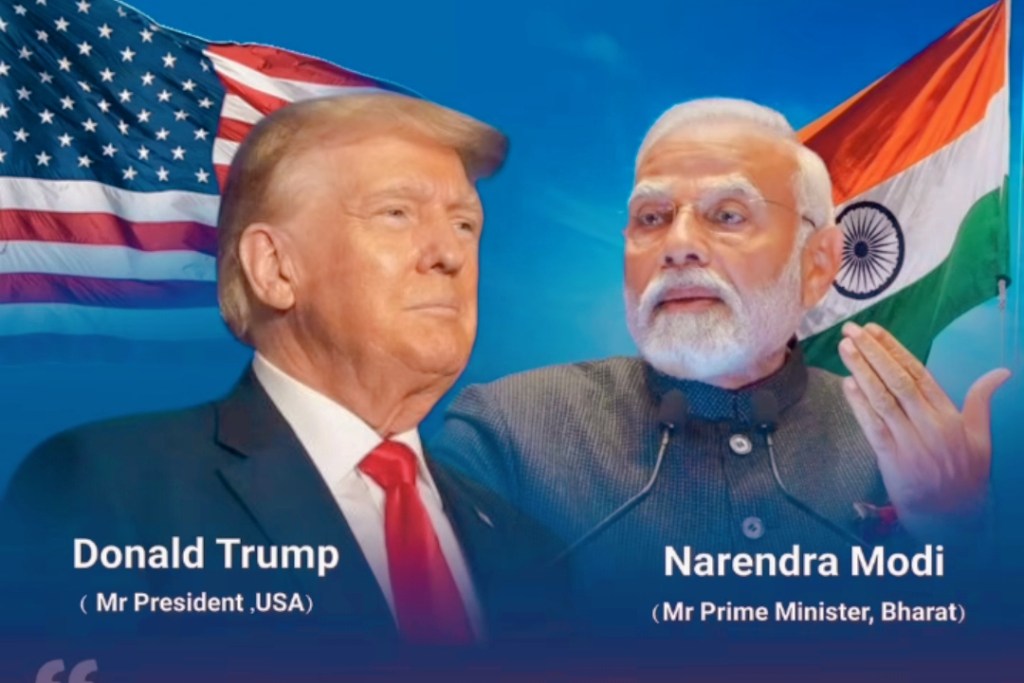

A Ground-breaking Summit That Transformed Trade, Security, and Strategic Alliances in the Dead of Night.
At precisely 2 AM, Saturday, in India, the world remained oblivious, wrapped in slumber, but history was unfolding in Washington, D.C. Prime Minister Narendra Modi and President Donald Trump, two of the planet’s most formidable leaders, sat across from one another in the heart of American power, navigating a conversation that would not only shape the future of their nations but reverberate across global power dynamics for decades to come. This was no ordinary diplomatic summit; it was an extraordinary convergence of ideologies, ambitions, and strategies—one that could redefine Indo-American relations in a rapidly shifting geopolitical world.
In the world of global politics, few relationships are as critical as the one between India and the United States. Yet, what made this summit distinct was the high-stakes nature of the dialogue. Trade imbalances, defense priorities, and the future of global security were all on the table. This was not a mere ceremonial exchange of pleasantries, but a pragmatic, high-octane negotiation designed to recalibrate the relationship between two of the world’s largest democracies.
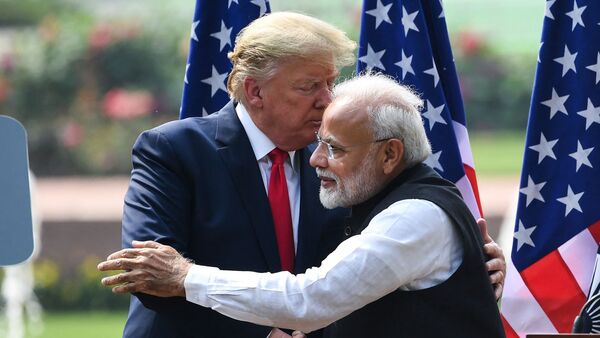
For Trump, whose rhetoric had long been centered on America’s trade imbalances, India had become a new focal point. The United States, plagued by its large trade deficit with China, had seen India as another nation that needed to open its doors wider to American products and reduce trade barriers. India, under Modi’s leadership, had long maintained a protective economic stance, shielding its industries with high tariffs. Yet, the winds of change were blowing across the Indian subcontinent, and Modi understood the gravity of the moment. He wasn’t just there to defend India’s policy but to create a pathway for the two nations to forge a future of mutual growth, with fair and balanced trade as the cornerstone.
What emerged from this summit was nothing short of ground-breaking. The 36-point joint statement that followed was not a dry bureaucratic document but a bold declaration of intent—a roadmap for a new economic reality. India, a nation once known for its protectionist economic policies, signalled a shift. The commitment to lower tariffs, facilitate trade, and open new markets marked a seismic shift in India’s economic approach. The reduction in import duties on motorcycles, particularly on American-made Harley-Davidsons, was symbolic of this newfound willingness to engage in fair trade practices.
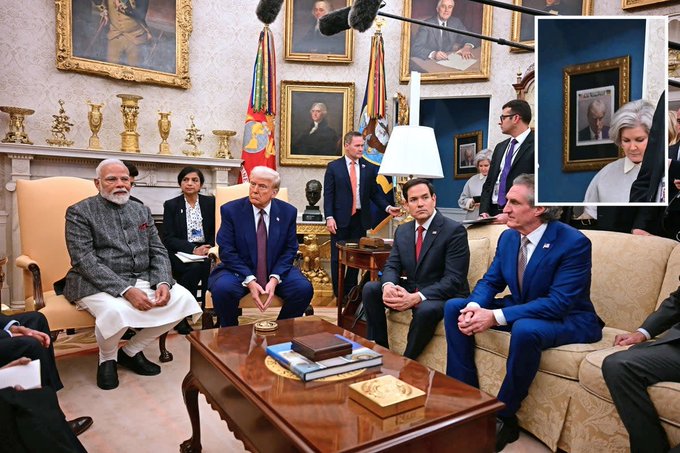
But motorcycles were just the beginning. As the discussions progressed, other industries came under the microscope. The agricultural sector, an area where both nations had long-standing interests, became a focus. India’s decision to lower tariffs on American alfalfa and frozen fish from a staggering 30% to a mere 5% was a strategic move that benefited U.S. agricultural interests. Similarly, India’s dramatic reduction of alcohol import duties from 100% to 50% signalled an eagerness to facilitate smoother trade between the two nations.
As the economic conversations unfolded, it became clear that the scope of this summit went far beyond trade. The world was changing, and so were the defense priorities of the two nations. In an era of rising global tensions, particularly with China asserting its military presence in the Indo-Pacific, India and the U.S. found common ground in defense. The summit laid the foundation for an ambitious ten-year defense framework that would see the two countries cooperate on cutting-edge military technologies, joint weapon production, and advanced naval cooperation. This wasn’t just about military hardware—it was about securing a shared future in a region that was becoming increasingly volatile.
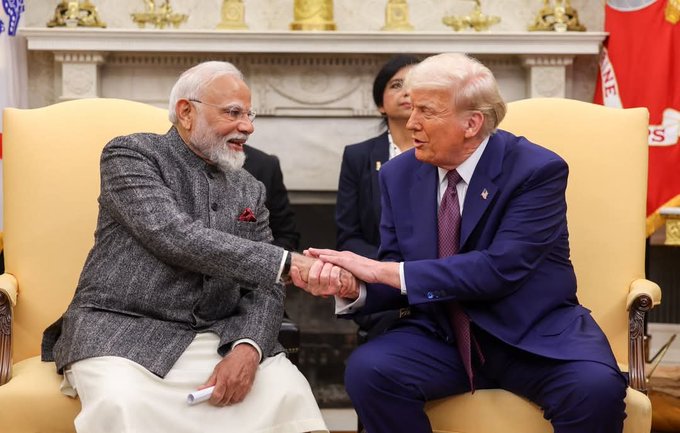
Terrorism, a long-standing issue for India, was another focal point of the summit. Both leaders took a strong stance on countering radical Islamic extremism, with the joint statement calling out terror organizations such as Jaish-e-Mohammed and Lashkar-e-Taiba by name. The U.S. also took a significant step forward by agreeing to extradite Rana, a key accused in the 2008 Mumbai attacks. This wasn’t just a symbolic gesture—it was a sign of tangible cooperation in the global fight against terrorism, with both nations aligning their interests in combating a common threat.
Yet, even as defense and security dominated much of the discussion, the summit also recognized the importance of technological collaboration. As the world hurtles into an era dominated by artificial intelligence, autonomous systems, and cybersecurity, the two nations acknowledged the need for a robust technological alliance. India’s burgeoning tech sector, combined with America’s leadership in innovation, holds the potential to shape the industries of the future. From advancing military capabilities to revolutionizing global commerce, the partnership could very well reshape how the world operates in the coming decades.
But perhaps what truly set this summit apart was the recognition of the intangible, yet immensely valuable, aspect of Indo-American relations: people-to-people ties. The movement of students between the two nations has long been a linchpin in fostering strong bilateral relations. By committing to expand educational exchanges and cultural cooperation, Modi and Trump reinforced the idea that the future of their partnership goes beyond trade and defense—it extends into the realm of intellectual exchange and mutual understanding.
As the summit drew to a close, the significance of the meeting became undeniable. Modi and Trump weren’t just two leaders having a meeting—they were architects of a new geopolitical landscape. The 36-point joint statement wasn’t just a series of policy directives—it was a declaration of shared vision and purpose. It was clear: India and the U.S. were no longer just navigating their differences; they were crafting a future together.
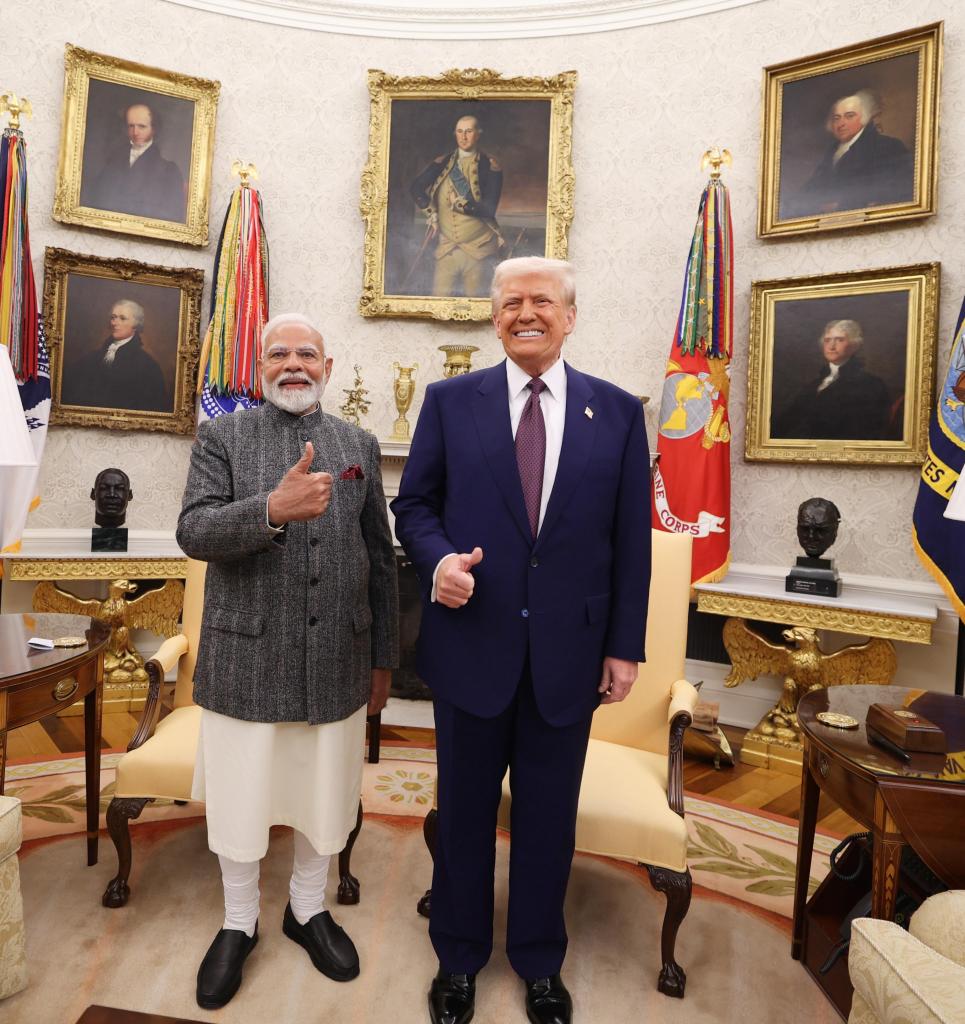
In an era where global alliances are constantly in flux, the Indo-American partnership stands as a powerful example of what can be achieved when two democracies, each with their own set of challenges and ambitions, come together to confront the future. The ripples from this summit will be felt around the world, and the trajectory of international relations may very well pivot, thanks to the strategic decisions made in those early hours of the morning. The world may have been asleep when this summit took place, but the shifts it set in motion will keep global policymakers awake for years to come.
Visit arjasrikanth.in for more insights
 SOCIAL PERSPECTIVES