
Hyderabad & Bangalore’s IT Boom Promised Progress—But Can They Escape the Urban Chaos That’s Slowing Them Down ?
Hyderabad and Bangalore, India’s premier IT hubs, have transformed into thriving metropolitan giants over the past two decades. Both cities attract top technology firms, startups, and skilled professionals, earning them the title of India’s Silicon Valleys. Yet, alongside their meteoric rise, they share a glaring problem—unmanageable traffic chaos. Explosive urbanization, poor infrastructure planning, and weak political will have turned daily commutes into endurance tests. Ironically, both Telangana and Karnataka are governed by the Congress party, which has shown little urgency in tackling this crisis. As gridlocks worsen and public frustration grows, the question remains: will these cities ever see a real solution?
Hyderabad and Bangalore owe their success to their booming IT industries. With lucrative job opportunities, the influx of migrants has been relentless, leading to skyrocketing vehicle ownership. Both cities boast cosmopolitan lifestyles, luxury malls, and thriving nightlife. However, their road infrastructure has failed to keep pace with this growth, making daily commuting a nightmare.

Real estate has also expanded dramatically, with massive projects on the outskirts—flats in Magadi Road and villas in Bannerghatta in Bangalore, and sprawling gated communities in Gachibowli and Kukatpally in Hyderabad. Yet, inadequate transport networks mean that reaching these locations is a struggle. The lack of a reliable public transportation system forces residents to rely on private vehicles, further exacerbating congestion. In the absence of stringent urban planning regulations, developers continue to build large-scale residential and commercial projects without proper road connectivity, worsening the daily commute for millions.
Bangalore’s traffic woes are legendary, ranking it among the most congested cities in Asia. The Outer Ring Road, MG Road, and Electronic City are virtual parking lots during peak hours. Despite the city’s tech-savvy reputation, traffic management remains archaic. The metro rail, while a step in the right direction, has failed to cover major IT corridors, leaving professionals dependent on private vehicles. Uncoordinated road works and slow infrastructure development have further aggravated the issue, making even short distances take hours to traverse. While startups have introduced app-based carpooling and shuttle services, they remain insufficient in the face of rapidly growing commuter demand.
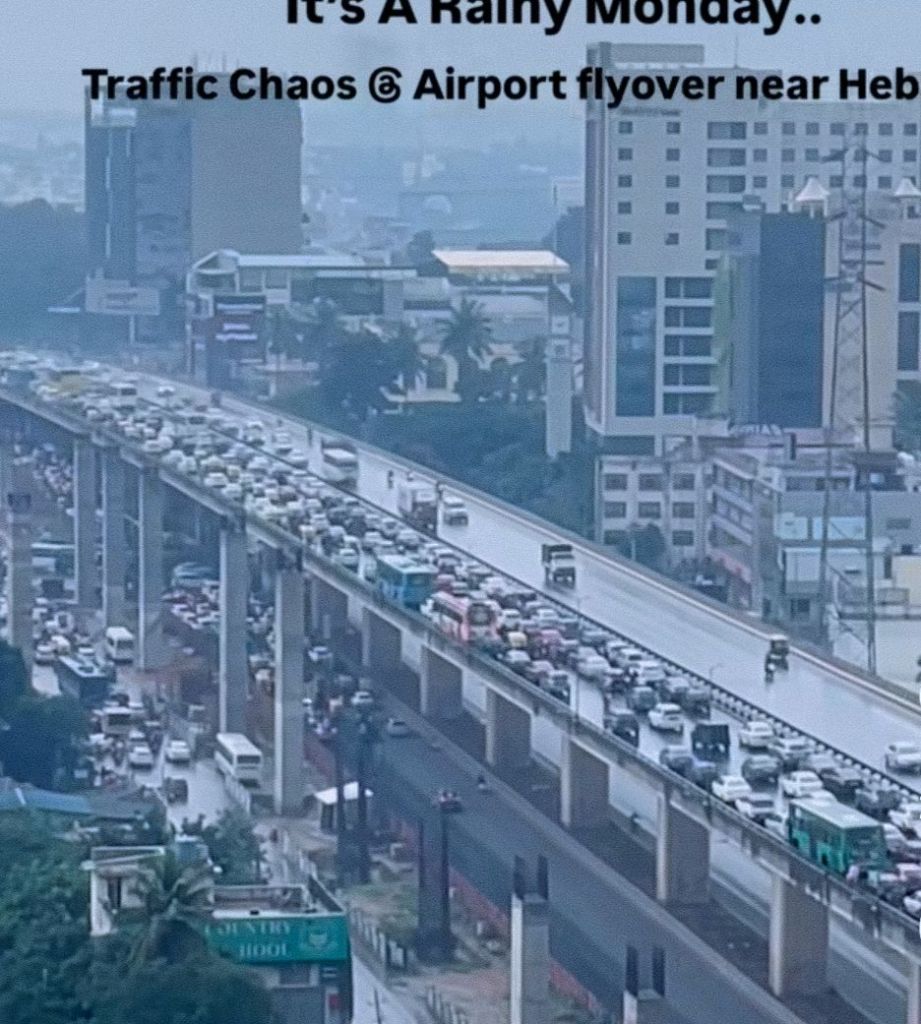
Hyderabad, once praised for its well-planned roads, is now mirroring Bangalore’s congestion nightmares. Key hotspots like Chaderghat, Begumpet, and Charminar are plagued by gridlocks, worsened by poor public transport and reckless driving habits. While the Hyderabad Metro has eased congestion in a few pockets, last-mile connectivity remains a major challenge, forcing commuters to rely on autos and personal vehicles. The narrow, poorly maintained roads in old city areas make travel an ordeal, while traffic bottlenecks at major junctions show the glaring lack of forward-thinking urban planning. Unauthorized street vendors, haphazardly parked vehicles, and a general disregard for traffic discipline have made movement within the city increasingly difficult.
Despite public outcry, the state governments have failed to implement long-term urban planning strategies. Infrastructure projects are slow, reactive, and often marred by corruption. Politicians are content with short-term fixes like widening roads instead of holistic solutions like expanding public transport. The lack of accountability has led to delays in metro expansion, bus fleet upgrades, and new flyover constructions. Poor coordination between municipal bodies, transport authorities, and urban planners has resulted in fragmented policies that fail to address the core issue.
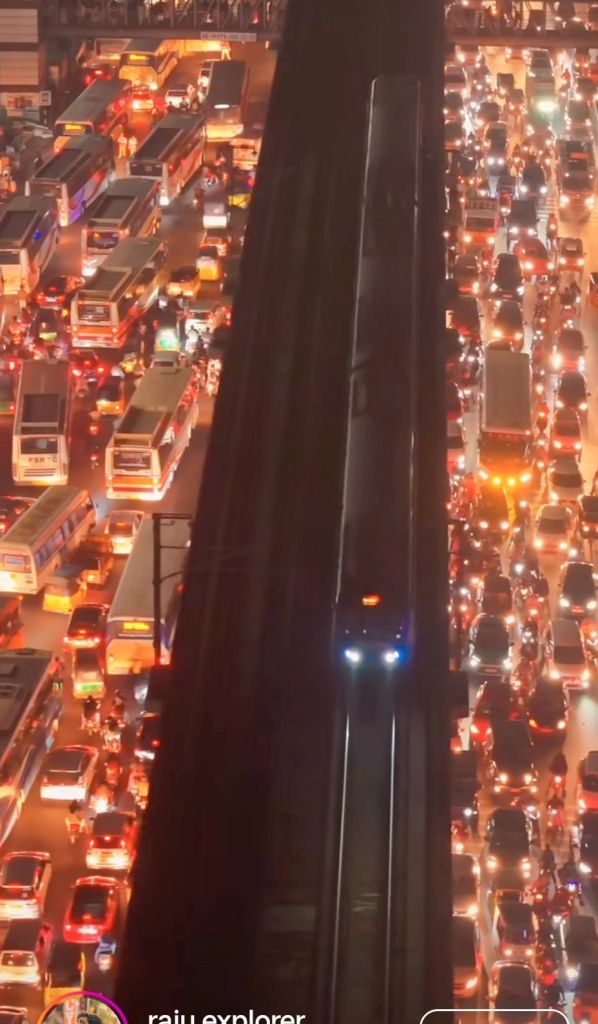
Builders have turned every available plot into high-rise apartments and commercial complexes without considering traffic flow. Unauthorized constructions have encroached upon roads, further shrinking available driving space. Regulatory authorities often overlook zoning laws, allowing commercial establishments to operate in residential neighbourhoods, leading to increased vehicular movement in areas that lack the capacity to accommodate such traffic volumes.
While metro projects have been rolled out in both cities, their reach is limited. Hyderabad’s MMTS (suburban rail) remains underutilized due to infrequent service, while Bangalore’s BMTC buses are unreliable and overcrowded. The lack of seamless connectivity between different modes of transport discourages people from using public transport. Poorly maintained bus stops, lack of punctuality, and safety concerns further deter citizens from opting for these alternatives.
Inefficient traffic policing, lack of proper signal coordination, and poor enforcement of road rules have turned Hyderabad and Bangalore into chaotic traffic jungles. Bribery and political interference allow unauthorized parking, illegal constructions, and encroachments to persist. Traffic signals are often manually controlled, leading to erratic flow patterns. Absence of dedicated lanes for buses and emergency vehicles further compounds congestion, leading to delays and frustration.
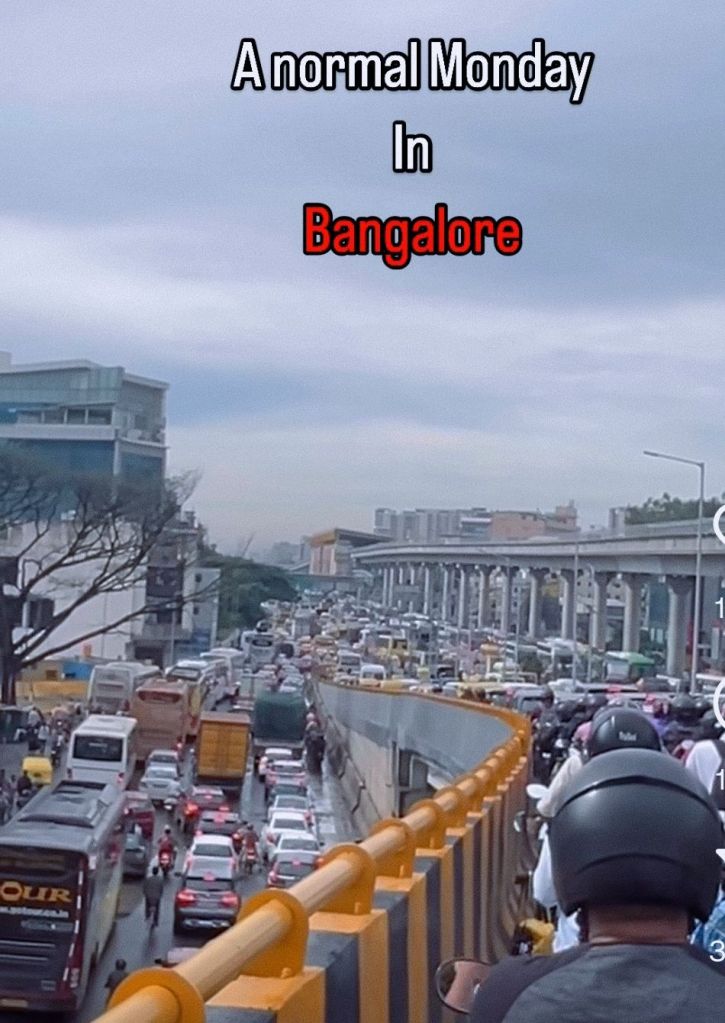
Both cities suffer massive disruptions whenever it rains. Poor drainage leads to flooded roads, malfunctioning signals, and increased accidents. Instead of preventive measures, authorities resort to knee-jerk reactions that offer little relief. Waterlogging further deteriorates already crumbling roads, creating potholes that pose severe risks to two-wheeler riders and pedestrians alike.
Beyond lost productivity, the traffic crisis has serious consequences. Prolonged exposure to pollution increases respiratory diseases, leading to long-term health implications for citizens. Lengthy commutes lead to anxiety, frustration, and burnout, affecting mental well-being. The economic losses caused by traffic congestion impact businesses, reduce efficiency, and lead to missed opportunities. Employees spending excessive hours in transit experience lower productivity, directly impacting the overall economic output of these IT hubs.

To address this crisis, expanding metro coverage with faster execution timelines is crucial. Improving bus networks with better last-mile connectivity can significantly reduce dependency on private vehicles. Promoting carpooling and shared mobility solutions will also help ease congestion. Implementing AI-driven signal coordination to optimize vehicle flow, enforcing stricter traffic rules with higher fines, and introducing dedicated bus and cycling lanes can lead to better traffic management. Sustainable urban planning must focus on stopping unregulated real estate expansion in high-traffic zones, encouraging mixed-use developments where workspaces and residences coexist, and widening roads only where feasible, without destroying green cover.
Governments must set clear deadlines for infrastructure projects and introduce online reporting mechanisms for traffic violations and encroachments. Involving urban planners and experts in decision-making rather than solely relying on politicians will ensure better implementation of policies. The success of global cities in traffic management proves that solutions exist; it is only a matter of political will and execution.
Hyderabad and Bangalore are at a crossroads. Both cities have the potential to become world-class metropolises, but their infrastructure is crumbling under the weight of their success. Despite being governed by the same party, neither Karnataka nor Telangana has shown the urgency required to fix the crisis. Without a radical shift in urban planning, stronger governance, and citizen involvement, these IT hubs risk becoming infamous not for their innovation, but for their endless traffic snarls. The time for half-measures is over—Hyderabad and Bangalore need real solutions, and they need them now.
Visit arjasrikanth.in for more insights
 SOCIAL PERSPECTIVES