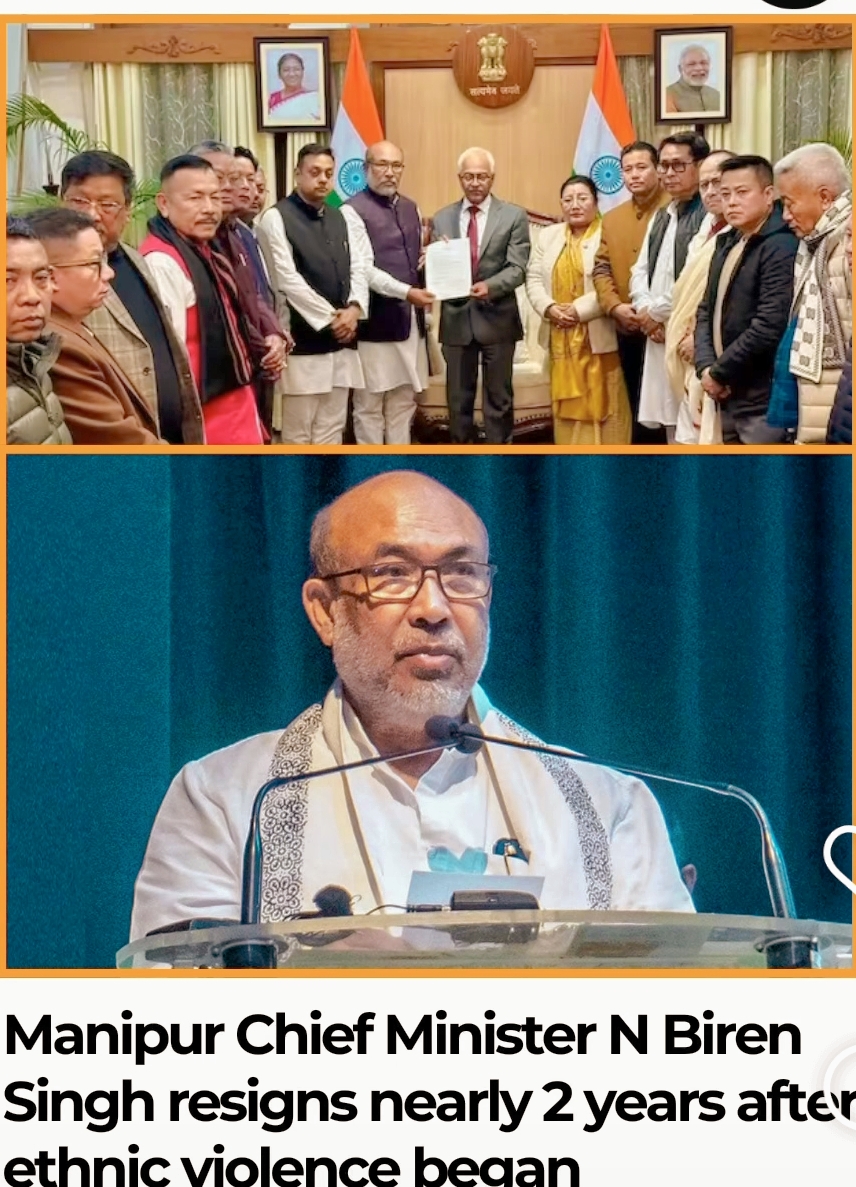
“Biren Singh’s Resignation Ignites a Powder Keg of Tensions, Transforming a Jewel of India into a Battleground of Survival and Solidarity”
In the intricate mosaic of Indian politics, few stories resonate as profoundly as the unfolding saga in Manipur, a tale steeped in ethnic identities, historical grievances, and raw human emotions that drive communities to the brink of conflict. The recent resignation of Chief Minister Biren Singh has sent shockwaves through the region, emblematic of the deep-seated turmoil gripping this north-eastern state. Known as the Jewel of India, Manipur is not just grappling with political instability but a crisis that threatens its very social fabric.
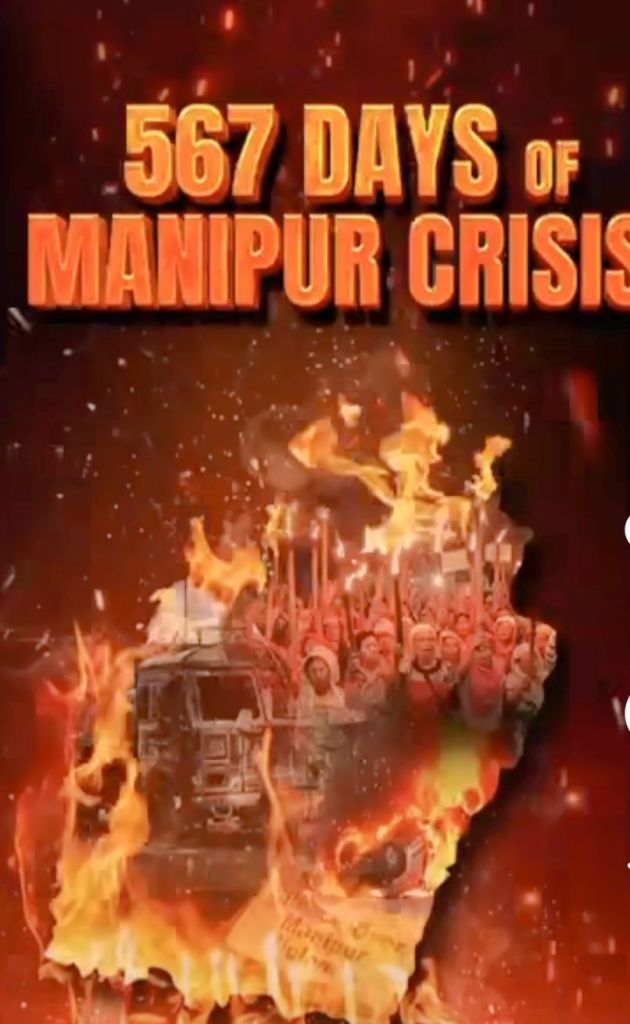
Manipur boasts a complex demographic tapestry woven over centuries, home to various ethnic groups, including the majority Meitei community, as well as the tribal Kukis and Nagas. Yet, this diversity has often proven more divisive than unifying, giving rise to tensions that simmer just below the surface. The current crisis finds its roots in significant events over the past two years, especially since May 2023, when ethnic clashes erupted, leading to widespread violence and a palpable sense of fear across communities.
Biren Singh’s resignation was not merely a political maneuver; it was an acknowledgment of growing discontent amid a chaotic landscape. Under pressure for much of his tenure, his departure raises questions about the stability of leadership in a state already on the edge. Political observers had long speculated that Singh’s position was precarious. The dynamics at play, both local and national, have been key to understanding the events leading to this pivotal moment.
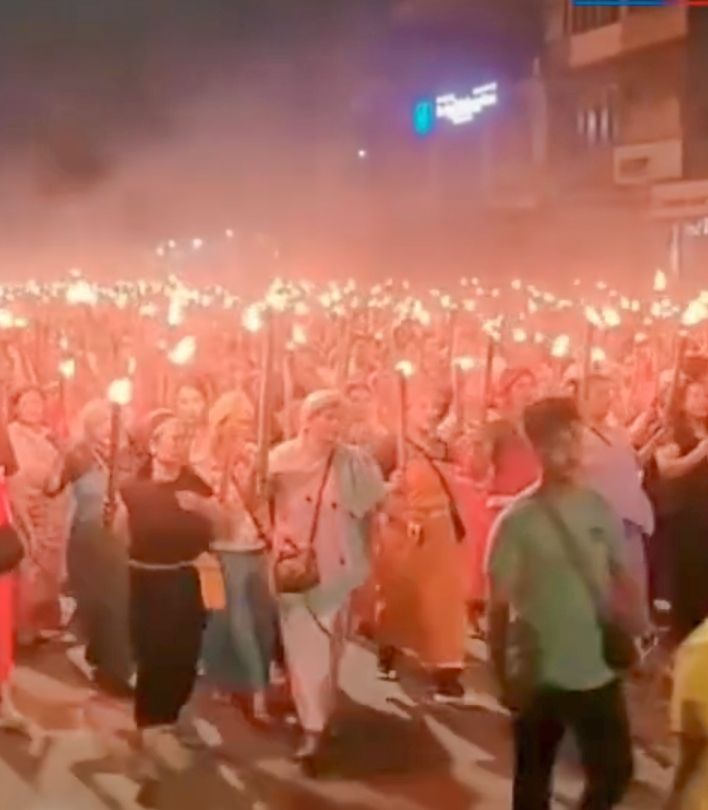
Transforming from footballer to politician, Singh’s ascent was marked by his initial ability to garner support across factions within the state. However, as the ethnic tensions flared, the legitimacy of his leadership came under increasing scrutiny. Simultaneously, the BJP, once confident in its hold on Manipur, encountered severe internal dissent and external pressures that undermined its position.
The ethnic divide in Manipur crystallized when the state morphed into a battleground for rival factions. The introduction of automatic weapons and rocket launchers during community clashes painted a grim reality; this was no mere struggle for political power. It was a fight for survival and identity, shaking the very foundations of society. Central forces, including the Army, were left struggling to maintain a fragile line of control between warring factions.
In the wake of escalating violence, Manipur witnessed a mass exodus from conflict zones, where ethnic cleansing became a grim reality. Communities were uprooted from their homes, fleeing to safer territories, further entrenching divides. The Imphal Valley, home to the majority, became a focal point of this demographic upheaval, while tribal communities relocated to the hills, highlighting the stark separation between the Meitei’s and their tribal counterparts.
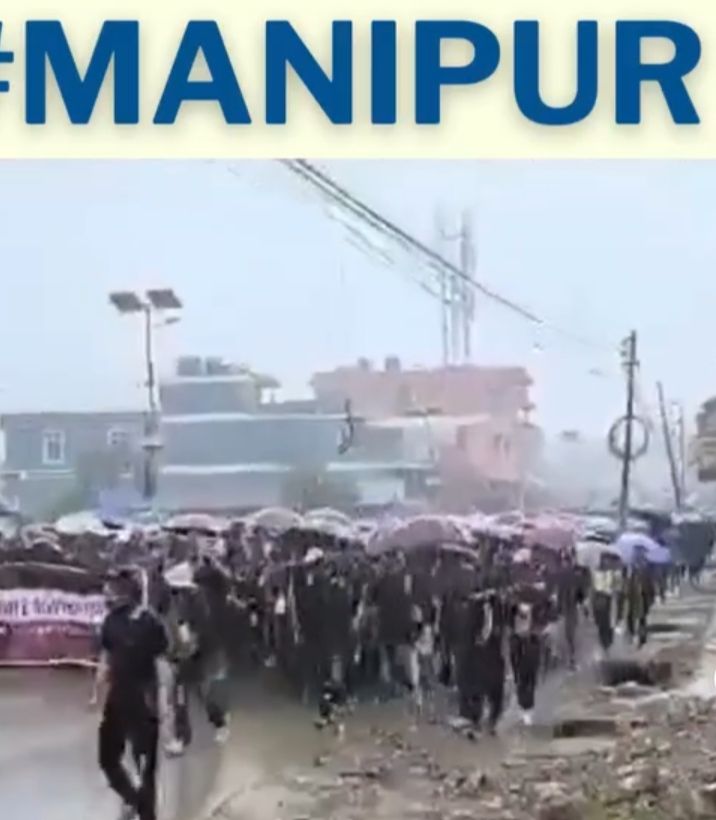
Manipur’s geographical and political significance only adds to the alarming nature of its situation. Located in the north-eastern corner of India along the Myanmar border, it represents a strategic concern for both security and trade. The ongoing civil strife in Myanmar adds another layer of complexity, with the potential for spill over effects complicating Indian authorities’ responses. The porous borders and historical ties between ethnic groups across these boundaries deepen the crisis, as cross-border dynamics come into play, challenging the already tenuous peace.
Criticism of the BJP government’s handling of the crisis has intensified, especially as members and security agencies within the state repeatedly warned of the deteriorating situation. Central leadership hesitated to take decisive actions, ultimately undermining Singh’s authority and fostering a perceived loss of control over law and order. The lack of a coherent strategy in addressing the crisis has drawn ire from political commentators and civil society groups, who argue that the state’s governance was left in limbo at a time when strong, decisive leadership was most needed.
The implications of Singh’s resignation are manifold, raising questions about Manipur’s future governance. The prospect of President’s Rule looms large, which could further complicate an already fragile state of affairs. For the BJP, any potential successor will face immense challenges: rebuilding trust among diverse communities, stabilizing the region, and addressing the grievances that sparked this crisis.
Beyond politics, the human cost of this turmoil cannot be ignored. The lives disrupted by violence, the countless displaced individuals, and the growing humanitarian crisis demand urgent intervention. Relief efforts have struggled to keep pace with the needs of those affected. Civil society organizations, along with religious and cultural groups, have attempted to mediate and provide aid, but their efforts remain insufficient against the sheer scale of the crisis. Schools, businesses, and everyday life have been upended, and the long-term psychological scars on the population, particularly the youth, could be profound.
The calls for greater autonomy and recognition of ethnic identities will likely resonate, pressing new leadership to adopt a more inclusive approach. The situation in Manipur serves as a stark reminder of the complexities woven into India’s federal structure; it underscores the necessity for nuanced policies that acknowledge the unique cultural contexts of each state. While the government grapples with short-term stabilization measures, the long-term approach must involve sustained dialogue between communities, economic empowerment initiatives, and perhaps even structural reforms in governance to prevent future conflicts.
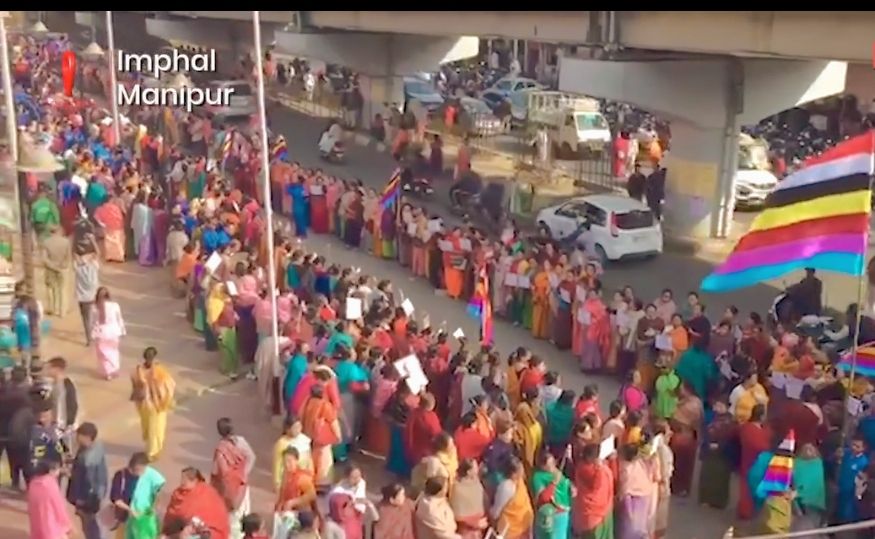
Further complicating matters is the role of social media in fuelling tensions. In a state already rife with rumours and distrust, the rapid dissemination of misinformation has exacerbated animosities. Efforts to regulate incendiary content have had limited success, and in some cases, internet blackouts have been imposed to curb the spread of violence-inciting rhetoric. However, these measures have also hindered genuine communication and relief coordination, creating a paradox where digital tools are both a catalyst for discord and a potential means of reconciliation.
Looking ahead, the road to peace and stability in Manipur will be long and arduous. Restoring normalcy will require not just political will, but also sustained community engagement and grassroots efforts to heal wounds that run deep. Religious leaders, educators, and civil society organizations will have to play a pivotal role in fostering reconciliation, promoting dialogue, and ensuring that grievances do not fester into further conflicts.
As citizens of Manipur confront an uncertain future, the resignation of their Chief Minister marks only a chapter in a narrative that remains unresolved. With a mixture of hope and trepidation, they must navigate a path ahead that requires not only courage and resilience but also a commitment to unity amid challenges. The eyes of the nation—and indeed the world—are focused on Manipur, waiting to see how this delicate tapestry of lives will be woven anew in the face of adversity. The stakes are high, and the outcome could well set a precedent for similar regions battling the intricacies of governance, identity, and peace in a rich but fractured nation.
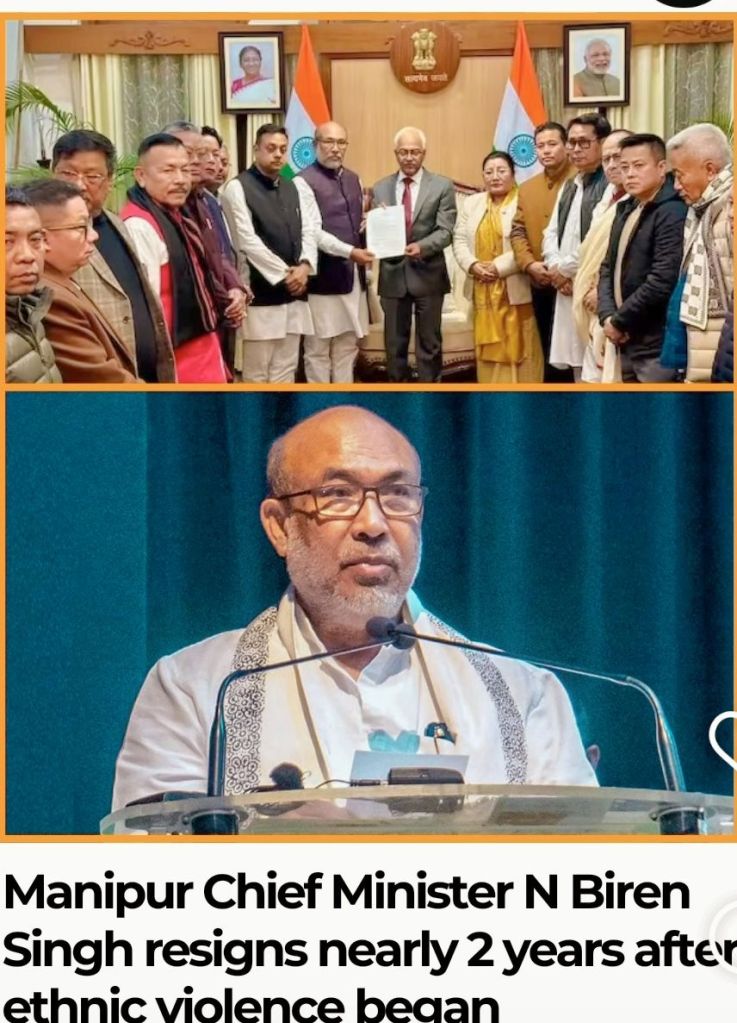
Ultimately, Manipur’s crisis is a reminder that beneath the political manoeuvrings and ethnic strife lie human stories—of loss, of hope, and of a yearning for peace. Whether the state can rise from this turmoil and forge a new path forward remains to be seen, but one thing is certain: the decisions made in the coming months will shape its destiny for generations to come.
Visit arjasrikanth.in for more insights
 SOCIAL PERSPECTIVES