

The Rise and Fall of a Legend: Navigating the Stormy Seas of Pakistan-UK Financial Intrigue
In the cacophony of political theatre, where power is both elusive and corruptible, Imran Khan’s saga unfolds as a glaring illustration of the tragic comedy that is Pakistani politics. Once revered as a national hero for his achievements in cricket and later his tenure as the Prime Minister, Khan is now synonymous with a darker narrative that interrogates the very values of governance and integrity. Emerging from the limelight of commendation, he has plunged into the shadows of disgrace, recently being sentenced to 14 years in prison for corruption. His wife, Bushra Bibi, follows closely behind with a staggering 7-year sentence, wrapping their names in the lexicon of political corruption alongside other notable figures in Pakistan’s tumultuous history.

August 5, 2023, was a crucial turning point. Initially sentenced to three years, Khan’s legal battles reflected not just his personal failings but a broader, systemic rot that has festered within the country’s governance framework. His arrest on May 9, 2023—where he was apprehended by the National Accountability Bureau (NAB) inside Islamabad’s High Court—marked the onset of a relentless cascade of legal consequences tied to his stewardship of the Al-Qadir Trust, an entity tied to both his ambitions and questionable dealings. With the dust barely settled from the protests that erupted following his arrest—protests that spanned cities like Lahore and Rawalpindi—it becomes evident that Khan’s political fall is not an isolated incident but part of a deeply entrenched pattern.
In Pakistan, the history of political leaders enveloped in scandal and subsequent incarceration is almost banal. A lineage of leaders emerges—Hussain Shaheed Suhrawardy, Zulfikar Ali Bhutto, Benazir Bhutto, and Nawaz Sharif—all familiar with the harsh realities of power turned against them. Their downfalls resonate eerily, forming a common thread that stitches together the fabric of political turmoil. While Khan now shares this dubious company, it serves as a sobering reminder: the judiciary’s hand has a way of favouring the powerful and influential while letting military dictators evade accountability.
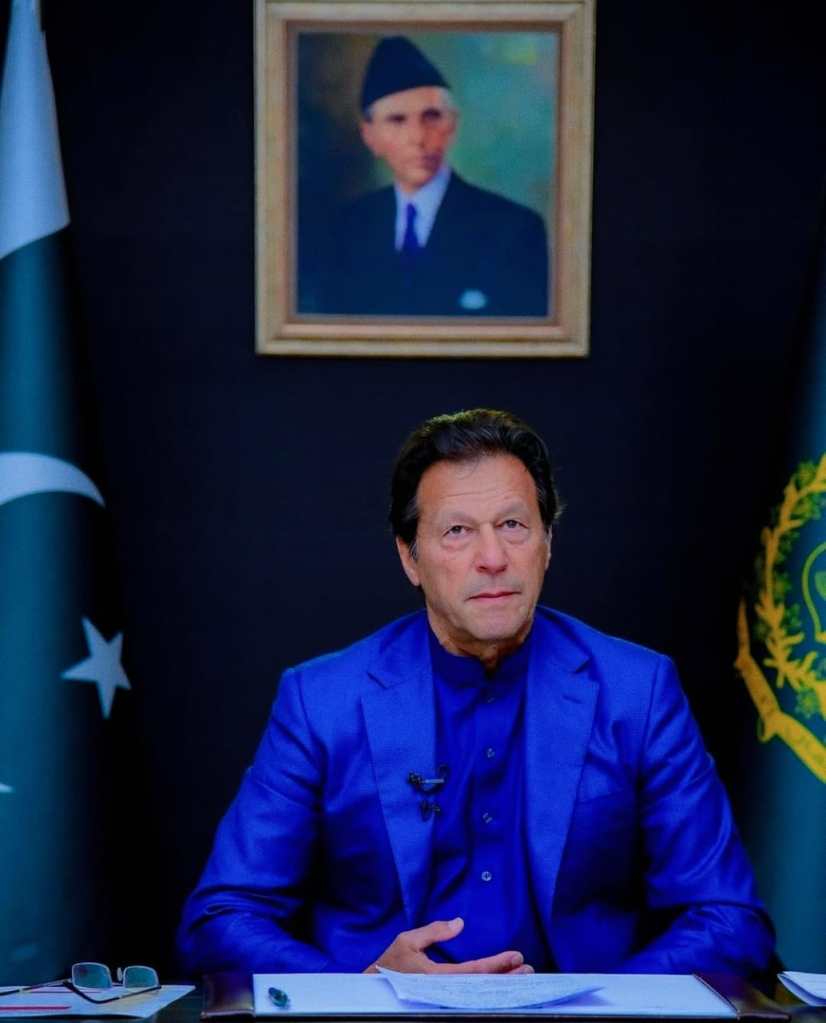
The nature of Khan’s accusations and the subsequent court rulings expose more than simple malfeasance; they unveil a labyrinthine structure of political favouritism, a network rife with conflicts and moral compromises. The events surrounding his sentencing draw attention to a staggering $500 million linked to his family’s financial dealings. Such figures, throwaways in the grand dialogue of political finance, reveal a pervasive trend that underscores the systemic corruption dotted across Pakistan’s governance. Funds intended for public welfare are shuttled into clandestine offshore accounts, transformed from legitimate earnings into vacuous commodities amid international banks—a reality that renders the citizenry unaware and vulnerable.
As Khan navigates this storm, one cannot help but acknowledge the eerie parallels between the lives of the nation’s elite and those of ordinary citizens. The UK’s National Crime Agency (NCA) has activated investigations into financial anomalies, shedding light on how wealth can be manipulated to suit political ambitions. The reality is painful; funds meant to serve the people of Pakistan are instead mobilized in political gambits that only serve to entrench the powerful. Malik Riaz, a prominent real estate magnate, embodies this tragicomic narrative, growing rich through ties with politicians while ordinary people grapple with their dwindling resources.

Imran Khan’s transformation from champion of reform to symbol of betrayal cannot go unnoticed. With aspirations to uproot corruption, Khan ironically embodies the very pitfalls he sought to eliminate. This sharp transition from hope to despair serves as a cautionary tale, where promises dissolved into the murky waters of ambition, exposing a tragic irony that encapsulates the tumultuous experience of leadership in a society yearning for change.
And yet, amid the disarray, the pulse of a restless populace emerges, hinting at the potential for metamorphosis. As Khan’s saga unfolds, a clarion call for accountability rings louder, urging people to unite beyond their political affiliations. It emphasizes the urgency for reform and demands a paradigm shift. For too long, the people of Pakistan have behaviourally resigned themselves to the distortion of democracy and values, but they may now stand at a precipice. The quest for integrity demands more than mere acknowledgment—it requires a bold resistance against the cycles of corruption and collusion that have defined governance.

While Khan presents a stark lesson on the fragility of power, his downfall illuminates critical truths that the citizens of Pakistan must acknowledge. The prevailing culture of impunity must be challenged; the structures that perpetuate inequality must be dismantled. From the ashes of Khan’s fall, there lies a chance for renewal. The voices rising in discontent could indeed find resonance in a collective cry for robust governance and accountability rather than factional loyalty.
As Pakistan grapples with the implications of Khan’s actions, the path forward remains fraught with challenges. The spectre of corruption is a relentless foe in the face of aspirations for democratic freedom, and only through the dedicated engagement of the populace can a brighter future come to fruition. Imran Khan’s story—a narrative of praise turned to shame—serves as a gripping chapter in the ongoing quest for justice, accountability, and ultimately, the hope of a nation willing to eradicate the veils of corruption that have long plagued its political landscape. If justice is to prevail, the moment has arrived for the citizens to foster a genuine culture of transparency, demanding leaders who prioritize the common good over their interests, ensuring that the cycle of despair is finally broken.
Visit arjasrikanth.in for more insights
 SOCIAL PERSPECTIVES