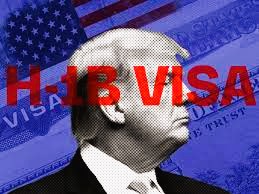
Skilled Immigration Became the Battleground for Innovation, Politics, and National Identity”
In the throbbing heart of America’s tech and innovation landscape, the H1B visa program stands as both a beacon of opportunity and a lightning rod for controversy. Established under the Immigration Act of 1990, this program was designed to bridge the gap in highly specialized fields by granting skilled foreign workers a chance to contribute to the U.S. economy. With an annual cap of 85,000 visas—65,000 for general applicants and an additional 20,000 for those with advanced degrees from U.S. institutions—the program has fuelled America’s technological and economic dominance while simultaneously igniting fierce debate over its implications.
Weeks before the potential return of Donald Trump as U.S. President, a storm has erupted within his political base over the issue of skilled immigration. The controversy gained momentum following the appointment of Sriram Krishnan, a Chennai-born technologist, as Trump’s AI adviser. Krishnan’s outspoken advocacy for increased skilled immigration has drawn the ire of many Trump supporters, reopening old wounds within the “Make America Great Again” (MAGA) movement. While Trump himself has vacillated between criticism and conditional support of the H1B program, this internal conflict underscores the deeper ideological divide among his followers.
The H1B program’s significance cannot be overstated. It allows U.S. employers to hire foreign professionals for specialized roles in technology, engineering, medicine, and other STEM fields. Typically issued for three years, with the possibility of extension to six, these visas are a lifeline for industries facing acute labour shortages. Data shows the unrelenting demand for these coveted slots; in the 2024 fiscal year alone, U.S. Citizenship and Immigration Services (USCIS) received 386,000 applications, approving 119,000 new visas and extending 267,000 more.
However, the program has not been without its critics. Opponents argue that H1B workers undercut American labour, claiming companies use the program to hire cheaper foreign talent. While regulations mandate that H1B employees receive wages comparable to U.S. counterparts, enforcement inconsistencies have fuelled allegations of exploitation. High-profile cases of American workers being forced to train their H1B replacements have further inflamed public sentiment.
The figures tell a compelling story. A mere 19% of applicants secure H1B visas, reflecting intense competition for these opportunities. Despite criticism, the program has undeniably driven innovation, with major corporations like Amazon, Microsoft, and Infosys relying heavily on H1B talent to spearhead research and development initiatives. Proponents argue that without access to global talent, the U.S. risks losing its competitive edge. The National Foundation for American Policy (NFAP) reports that 71% of full-time graduate students in computer science at U.S. universities are international, highlighting the critical role foreign talent plays in the country’s innovation ecosystem.
Economics aside, the debate has profound political and cultural dimensions. During Trump’s first presidency, an executive order tightened the program’s oversight, leading to a spike in rejection rates. Critics viewed this as a populist manoeuvre catering to anti-immigration factions, while supporters praised it as a necessary reform to protect American workers. Yet, despite these measures, the total number of H1B approvals under Trump was comparable to those during Biden’s administration, illustrating the program’s resilience amid political turbulence.
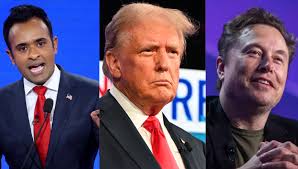
Voices from all corners have weighed in. Tech leaders like Elon Musk have passionately defended the program, emphasizing its importance in attracting the world’s top talent. Musk’s argument for maintaining access to the “top 0.1% of engineering talent” underscores the program’s strategic value in ensuring America’s global leadership in innovation. Vivek Ramaswamy, another prominent figure, has also lent his support, calling for balanced policies that prioritize both American workers and the need for skilled immigration.
Yet, the MAGA movement remains divided. Hardliners call for tighter restrictions, while economic pragmatists argue for a more nuanced approach that balances ideology with the realities of a competitive global market. Trump’s return to power could tilt the scales, with potential policy rollbacks that threaten to undo recent reforms under the Biden administration, which have aimed to modernize the H1B process and alleviate burdens on employers.
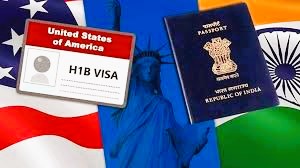
The appointment of Sriram Krishnan as a senior policy advisor on artificial intelligence has reignited discussions around immigration’s role in fostering innovation. As a prominent technologist navigating this fraught landscape, Krishnan epitomizes the complexities of immigration policy in the modern economy. His presence serves as a reminder of the essential contributions H1B holders make to fields critical to national security and economic growth.
The stakes are undeniably high. A hypothetical mass exodus of H1B workers could wreak havoc on industries reliant on their expertise. Imagine the chaos if Indian tech workers, who make up a significant portion of H1B holders, staged a 24-hour strike—corporate productivity would grind to a halt, revealing the fragility of America’s dependence on foreign talent.
Public sentiment on immigration is evolving. While previous debates focused predominantly on illegal immigration, the discourse has broadened to recognize the indispensable contributions of skilled immigrants. A shift in perception could pave the way for more constructive discussions on immigration policy, emphasizing the need to balance economic imperatives with ideological concerns.
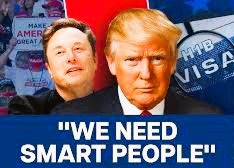
In conclusion, the H1B visa program stands at a crossroads, emblematic of broader tensions within American society. Its impact transcends the realms of immigration and economics, touching on questions of identity, opportunity, and global competitiveness. As policymakers grapple with these complex dynamics, the program’s future will shape the trajectory of America’s workforce and its role as a beacon of innovation. Whether the nation can reconcile its conflicting narratives will determine its ability to thrive in an interconnected, talent-driven world. In this high-stakes tug-of-war, the fate of the H1B program is not just about visas—it’s about the very fabric of America’s future.
Visit arjasrikanth.in / @DrArjasreekanth for more insights
 SOCIAL PERSPECTIVES