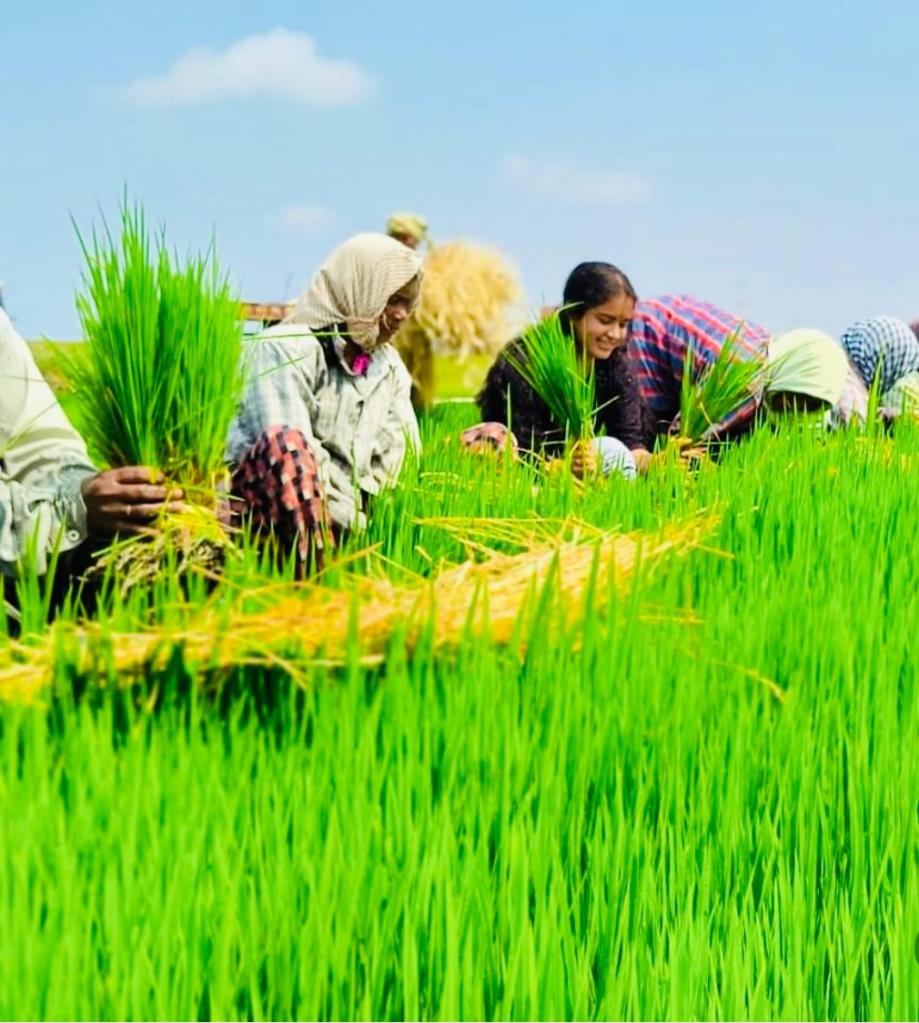
Farming Queens: Women Are Cultivating Change in India’s Agricultural Landscape
In the vast rural expanses of India, a silent revolution is unfolding, largely hidden beneath the massive agricultural sector’s size and complexity. Amid the rustle of crops and the hum of farm machinery, women work tirelessly in the fields, forming the invisible backbone of India’s agricultural economy. These women, integral to the farming community, contribute significantly to the nation’s food production. Yet, despite their indispensable role, they remain largely unrecognized and undervalued. It’s time to acknowledge the critical part they play, not just as participants but as essential forces shaping Indian agriculture.
Women constitute approximately 33% of the agricultural labour force in India and account for nearly half of all self-employed farmers, with even higher representation in certain regions. Despite this substantial presence, their contributions often go unnoticed in official records and agricultural policies. It is estimated that women are responsible for producing up to 80% of the food in India, yet their role remains invisible in many ways. The country’s agricultural progress is intricately tied to these women, who perform various tasks across the agricultural value chain—from planting and harvesting to processing and marketing. These roles are not only crucial to the economic fabric of rural India but also to its social structure.
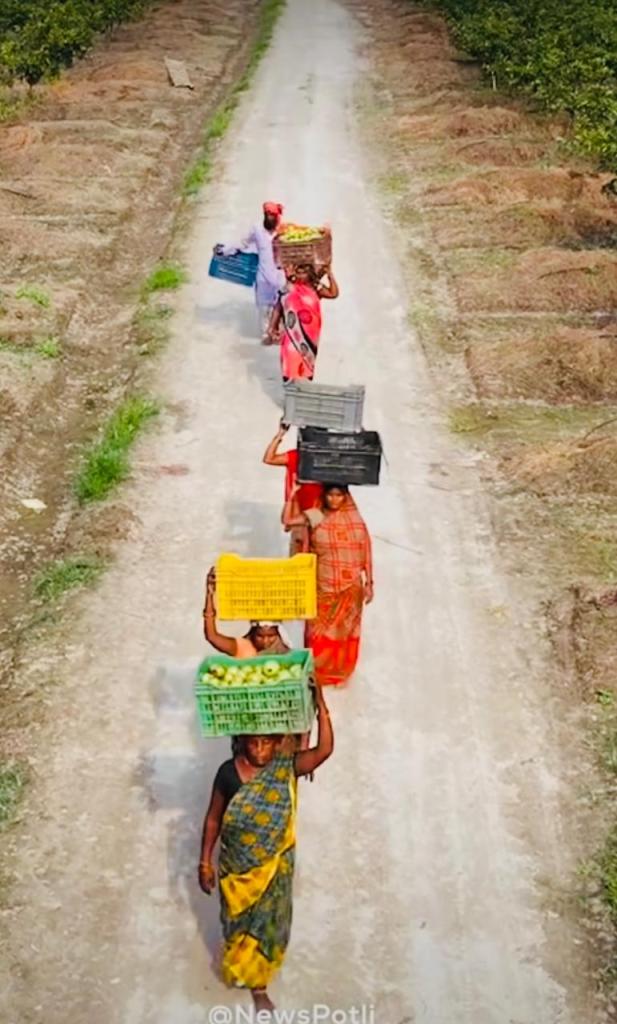
From the moment seeds are sown until the final harvest, women play pivotal roles at every stage of food production. They handle critical tasks such as transplanting seedlings, weeding, and tending to crops, all of which require meticulous attention and intensive labour. Women’s involvement is essential in both subsistence farming, which ensures their families’ survival, and in commercial agriculture, which sustains the broader economy. Additionally, livestock management, another vital aspect of farming, often falls under their domain. Women care for animals, milk livestock, and manage fodder, all crucial to the agricultural cycle. Despite this extensive involvement, their contributions are rarely highlighted in discussions about agriculture—whether in policy forums or media outlets.
One of the most glaring aspects of the lack of recognition for women in agriculture is the issue of land ownership. Land ownership is a significant asset in rural India, where it translates into power and decision-making authority. Despite their overwhelming participation in agriculture, women own only 12.8% of agricultural land in India. This disparity limits their access to crucial resources such as credit, government subsidies, and essential inputs like seeds and fertilizers. Without land ownership, women are often excluded from key decisions regarding farming practices, crop selection, and marketing strategies. Even though they manage daily farm operations, ultimate control of the land—and the decision-making power—rests with male family members, perpetuating a cycle where women are seen as laborers rather than decision-makers.

Gender inequality in agriculture is not only evident in land ownership but also in wages. Women consistently earn significantly lower wages than men for performing the same agricultural tasks. In many cases, their work goes unpaid, as it is often viewed as part of their household responsibilities. This gender pay gap is widespread across India’s agricultural states, leaving women economically disadvantaged. While male farmers are recognized and compensated for their labour, women’s contributions are often dismissed, further entrenching inequality in rural India.
However, women’s roles in agriculture extend far beyond physical labor. They are often custodians of traditional agricultural knowledge, which they pass down through generations. This knowledge includes sustainable farming techniques, organic pest control, and crop management practices that are increasingly critical as climate change affects agricultural yields. Women play a crucial role in maintaining biodiversity on small farms, employing techniques like crop rotation and intercropping to preserve soil health and reduce dependence on chemical inputs. Their strong connection to the land and reliance on local ecosystems make them indispensable actors in promoting environmentally sustainable farming practices.

The environmental crisis caused by the Green Revolution’s emphasis on chemical fertilizers and pesticides, which led to soil degradation and groundwater depletion, underscores the importance of traditional farming practices, many of which are championed by women. Women’s farming techniques, prioritizing sustainability and resource conservation, could hold the key to reversing some of the damage inflicted by decades of unsustainable agricultural practices. Their contributions to soil health, water conservation, and biodiversity preservation are essential for the long-term viability of Indian agriculture.
The roots of gender inequality in agriculture can be traced back to historical developments like the Green Revolution in the 1960s, which transformed India from a food-importing nation to a global agricultural powerhouse. This revolution emphasized mechanization and large-scale commercial farming, primarily benefiting wealthier, male-dominated landowners. Meanwhile, smallholder farmers, many of whom were women, were left behind. The introduction of new technologies and inputs like high-yield variety seeds and chemical fertilizers disproportionately affected women, who lacked the resources to adopt these innovations. As a result, while the agricultural sector became more mechanized, women’s roles remained tied to manual labour, further marginalizing their contributions.

Adding to these historical challenges is the increasing migration of men from rural to urban areas in search of better economic opportunities, leaving women to manage farms on their own. In many rural regions, women now bear the bulk of the responsibility for agricultural production. In fact, women represent 84% of all rural women who depend on agriculture for their livelihood, making up 33% of cultivators and nearly half of the agricultural labour force. Yet, despite these numbers, agriculture is still perceived as a male-dominated sector, and women’s roles are often seen as supplementary.
Women in agriculture face additional challenges due to deeply ingrained patriarchal norms that dominate rural India. They are often burdened with both agricultural work and household responsibilities, leaving little time for education and skill development. This lack of access to education prevents many women from learning about new agricultural technologies or market opportunities that could enhance their productivity and economic status. In farming communities, where illiteracy rates among women range from 52% to 75%, this educational gap further entrenches their disadvantaged position.
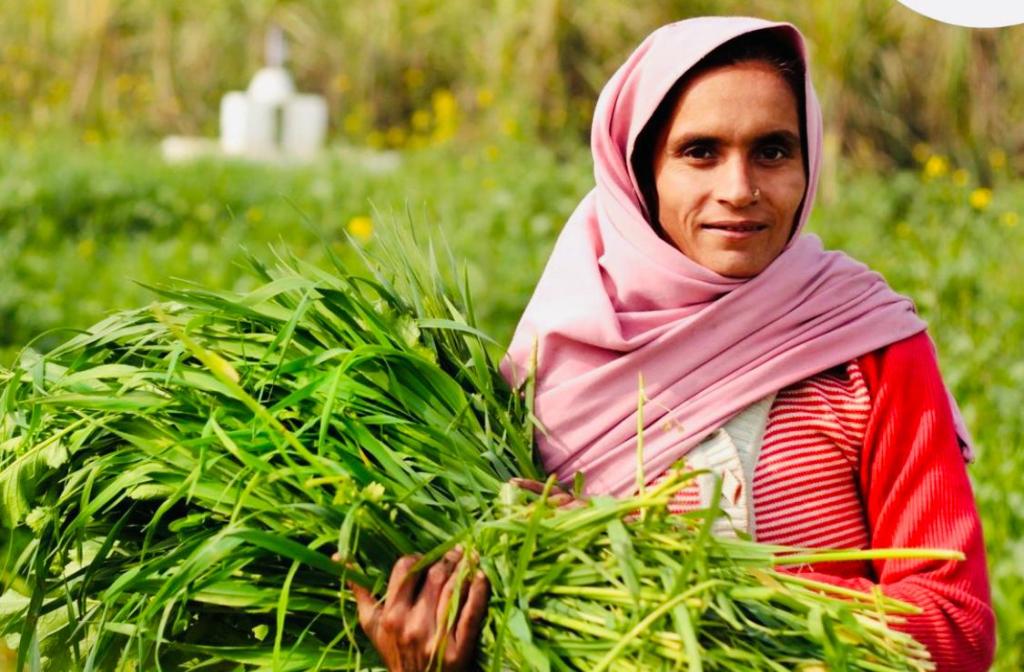
Despite these obstacles, efforts are being made to improve conditions for women in agriculture. The Indian government has implemented several programs aimed at enhancing women’s skills, promoting economic independence, and improving access to resources. Initiatives such as the Prime Minister’s Employment Generation Program (PMEGP), the National Rural Livelihoods Mission (NRLM), and Pradhan Mantri Kaushal Vikas Yojana (PMKVY) focus on skill development and entrepreneurship, empowering women to engage more actively in agricultural and non-agricultural sectors. Other initiatives, such as Beti Bachao Beti Padhao and Pradhan Mantri Matru Vandana Yojana (PMMVY), aim to improve education and healthcare for women, ensuring their well-being and economic participation.
However, these initiatives often fall short of addressing the structural inequities that prevent women from fully participating in agriculture. A more comprehensive approach is needed—one that tackles the root causes of gender disparity, such as unequal land ownership, limited access to credit and markets, and patriarchal norms. Empowering women in agriculture requires financial and educational support, as well as structural reforms that enable them to access resources and participate in decision-making processes.
Closing the gender gap in agriculture is not only a matter of social justice but also an economic necessity. Studies suggest that equalizing access to resources for women farmers could increase agricultural productivity by 2% to 4%, potentially adding billions to the economy. More importantly, empowering women is crucial for achieving food security in India. As women are responsible for the majority of food production, their full participation in agriculture is essential for sustaining the nation’s food supply, especially in the face of climate change.

As India moves forward, it must recognize the indispensable role that women play in agriculture. Their contributions are vital not only for today but also for the future of the sector. Addressing gender inequality and empowering women in agriculture will unlock the full potential of India’s agricultural workforce, ensuring a more sustainable and resilient future for farming communities. Empowering women in agriculture is not just about gender equality—it is about securing the future of Indian agriculture and guaranteeing food security for generations to come.
Visit arjasrikanth.in for more insights
 SOCIAL PERSPECTIVES