
From caramel corn to bureaucratic chaos, a simple snack exposed the absurdities of India’s “Good and Simple Tax”
In the sprawling world of Indian taxation, few topics spark as much debate, confusion, and head-shaking disbelief as the Goods and Services Tax (GST). Once hailed as a revolutionary step toward a streamlined tax system, GST has morphed into a Kafkaesque nightmare. Its latest chapter, born out of a GST Council meeting, only deepened the chaos, proving that what was meant to simplify business has become an exercise in bureaucratic complexity. From fluctuating tax rates to bizarre distinctions between seemingly identical goods, GST is now a comedy of errors—a system that confounds more than it clarifies.
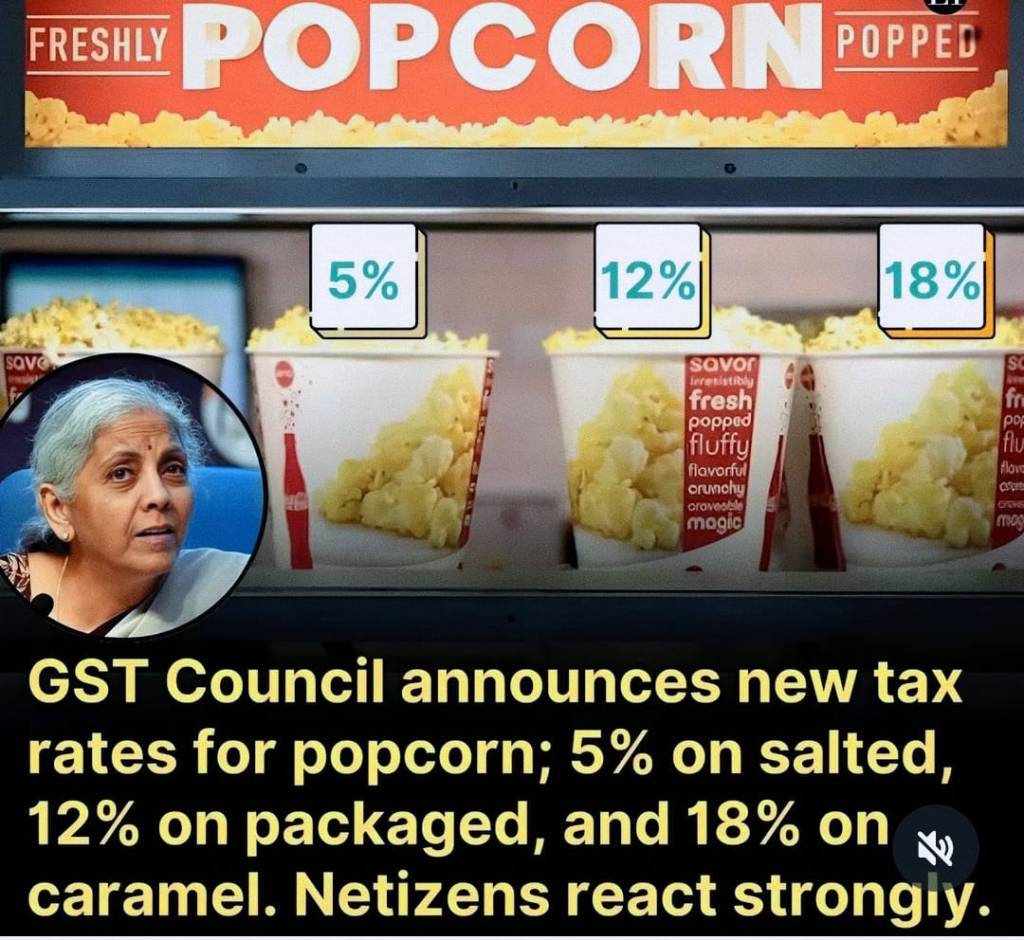
To grasp the absurdity, let’s examine a snack that has somehow become a symbol of GST’s flaws: popcorn. Yes, popcorn—the fluffy, innocent kernel that has unexpectedly turned into a bureaucratic battleground. Salted popcorn? Taxed at one rate. Caramelized popcorn? A different category altogether. Throw in sugar-free varieties with Stevia or Splenda, and you’re staring into the abyss of another tax bracket. This popcorn saga is not just laughable; it highlights a larger systemic issue: the government’s penchant for overcomplicating what could be straightforward.

The roots of this chaos lie in GST’s hasty implementation. Born from a midnight Parliament session with noble intentions, it was rolled out before anyone could fully comprehend its implications. Its mantra of a “Good and Simple Tax” has given way to a labyrinthine structure that leaves even seasoned tax experts baffled. As Sir Humphrey Appleby might have quipped, the genius of bureaucracy lies in making simple ideas sound complicated—a sentiment that perfectly encapsulates GST’s trajectory.
Popcorn is just the tip of this bureaucratic iceberg. If a mere snack can lead to such convoluted classifications, imagine the tax treatment of other products. What happens when someone invents hybrid popcorn—half caramelized, half salted? Does it straddle two tax brackets, or does a bureaucrat’s whim determine its fate? The ambiguity is a playground for exploitation, leaving businesses and consumers at the mercy of tax officials’ interpretations. Worse still, this complexity undermines the trust citizens place in a system that was supposed to make their lives easier.
Critics, once allies of the government, are now raising red flags. Industry stalwarts like former Infosys chief N.R. Narayana Murthy have warned about GST’s growing intricacies, cautioning that such complexities could turn citizens into unwitting victims of poor policy. The real danger lies in rent-seeking behavior, where officials exploit these ambiguities for personal gain. This isn’t just theoretical; it’s a lived reality for countless businesses and consumers navigating GST’s murky waters.
Consider the numbers behind this popcorn fiasco. With sales projected to reach ₹1,700 crores by 2025, taxing popcorn at the highest 18% rate would yield a mere ₹300 crores—a negligible 0.013% of total GST revenue. Is such minuscule revenue worth the administrative chaos it generates? For citizens and businesses, the answer is a resounding no. Yet for bureaucrats, the allure of complexity is irresistible, as it grants them power through discretion and control.

This mess stands in stark contrast to other government successes in simplifying citizen interactions. Initiatives like direct benefit transfers for food grains and subsidies have shown that efficiency and transparency are achievable. Why, then, has GST taken the opposite path? The answer lies in the nature of bureaucracy itself: it thrives on confusion. The more complex the rules, the more indispensable the gatekeepers of those rules become.
Looking beyond popcorn, the broader implications of GST’s design are troubling. Every new guideline, every clarification, inches the system closer to a state of perpetual confusion. Citizens are forced to contend with a treacherous maze of rules that often contradict one another. Digitalization, meant to streamline processes, has ironically compounded the problem. Instead of reducing paperwork, it demands redundant documentation, as if to remind citizens that bureaucracy remains firmly in control.
Globally, the trend has been toward shrinking government interference and cutting red tape. Leaders like Donald Trump in the U.S. and policymakers in Argentina have championed smaller, more efficient governments. Yet India appears to be moving in the opposite direction. The promise of “minimum government, maximum governance” now feels like a distant memory as layers of regulation multiply.
The popcorn saga isn’t just about tax classifications; it’s a microcosm of a larger systemic failure. Ramnath Goenka, the legendary founder of the *Indian Express*, once joked that his mind worked so intricately that a nail hammered in on one side would emerge as a screw on the other. That analogy captures the essence of how GST operates today: a system so convoluted that simple transactions become exercises in absurdity.
Historically, India has seen moments of tax reform that offered clarity and simplicity. The reforms of the early 1990s, spearheaded by visionaries like P.V Narasimha Rao, Dr. Man Mohan Singh , paved the way for economic growth by cutting through bureaucratic red tape. But in the years since, the bureaucratic machinery has regained its grip, turning back the clock on progress. GST, once seen as a crowning achievement, now feels like a misstep in that journey.
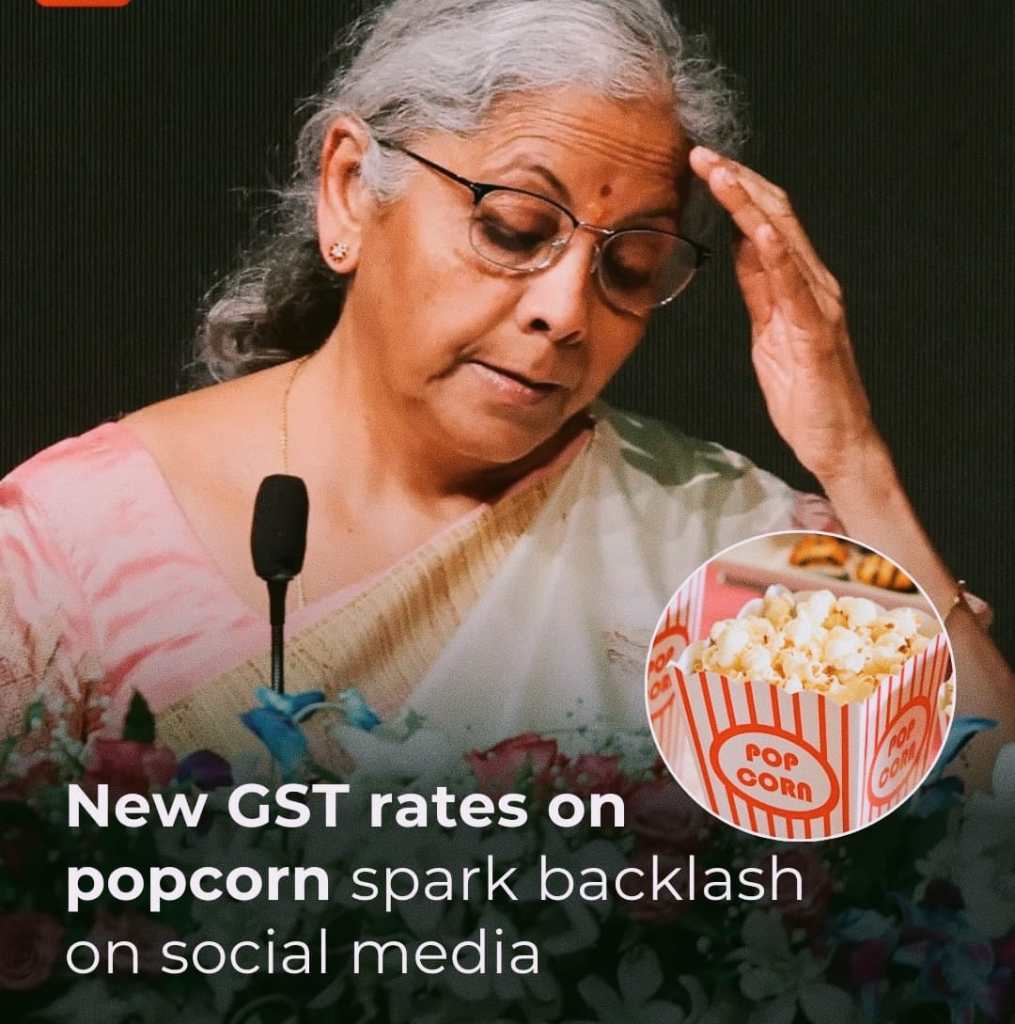
As the popcorn controversy rages on, it forces us to confront a hard truth: GST, in its current form, has strayed far from its original purpose. What was meant to unify and simplify taxation has instead fractured it into a series of arbitrary distinctions that serve no one but the bureaucrats enforcing them. The popcorn debate may seem trivial, but it underscores a fundamental flaw in how policies are crafted and implemented.
The time has come to revisit GST with fresh eyes. Reform should focus on restoring simplicity and efficiency, cutting through the clutter to deliver a system that works for citizens, not against them. Popcorn may be a small part of the story, but it serves as a powerful metaphor for the absurdities plaguing India’s tax system. Only by addressing these issues head-on can we hope to achieve the dream of a truly “Good and Simple Tax.”
Visit arjasrikanth.in / @DrArjasreekanth for more insights
 SOCIAL PERSPECTIVES