
**The Geopolitical Chessboard: How Reliance Industries Mastered the Game with a $13 Billion Energy Deal**
In a bold manoeuvre that intertwines economics with geopolitics, Reliance Industries has secured a monumental deal with Russia’s state oil giant Rosneft. The $13 billion agreement guarantees a decade-long supply of 500,000 barrels of crude oil per day, addressing a significant share of India’s energy needs. This arrangement meets approximately 8 to 10 percent of India’s daily oil consumption of 50 million barrels, but its implications extend far beyond economic gains. It signals India’s strategic intent in achieving energy security, economic resilience, and geopolitical autonomy.
This landmark deal is a response to the evolving global energy landscape, characterized by international sanctions, supply chain disruptions, and shifting trade dynamics. The Russia-Ukraine conflict, which began in February 2022, acted as a catalyst, isolating Russia from its traditional European energy markets. As Western sanctions took hold, Russia sought alternative buyers willing to sidestep political constraints. India, with its growing energy demands and pragmatic foreign policy, seized the opportunity to forge a new partnership, capitalizing on the situation.
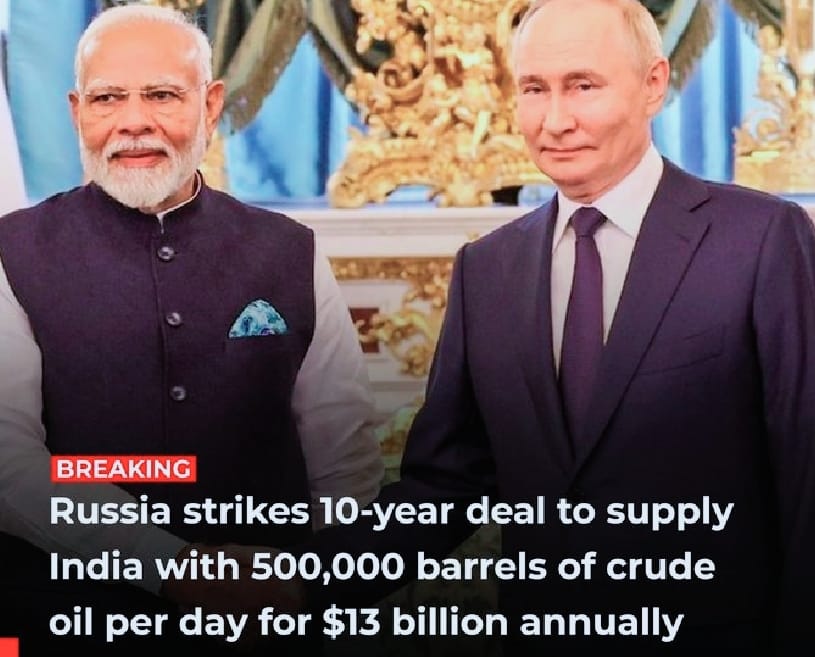
Before 2022, Russia played a minimal role in India’s crude oil imports. However, sanctions-driven price discounts—initially as steep as $30 per barrel—sparked a transformative shift. By 2024, Russia had emerged as India’s largest oil supplier, accounting for nearly 40 percent of the country’s crude imports. Although the price gap has since narrowed to $3 to $4 per barrel, the partnership’s financial and strategic benefits have endured, culminating in the current agreement between Reliance and Rosneft.
Reliance Industries, India’s leading private-sector refiner, showcased exceptional adaptability in navigating the complexities of sanctions and shipping constraints. Western nations, led by the United States, intensified efforts to limit Russian oil exports by targeting shipping networks. Reliance countered these challenges with ingenuity, employing older vessels operating outside Western regulatory frameworks. This strategy ensured a steady flow of Russian crude, safeguarding the company’s refining operations while maintaining compliance with international norms.
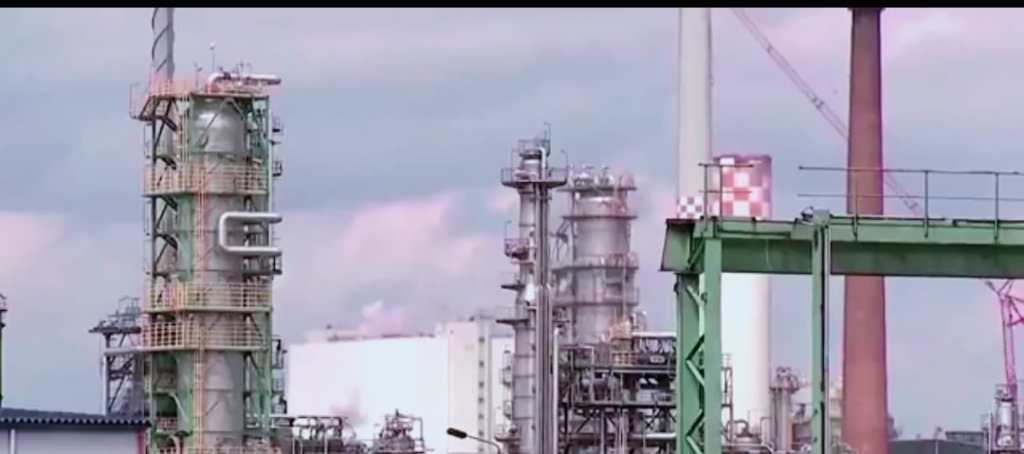
The crude oil procured under this agreement will be processed at Reliance’s Jamnagar refinery complex in Gujarat, the largest such facility in the world. This state-of-the-art complex converts crude oil into essential fuels and petrochemicals, reinforcing India’s industrial base and energy self-sufficiency. The deal’s terms, including annual reviews of pricing and volumes, provide flexibility to adapt to market dynamics, ensuring a mutually beneficial relationship for both parties over the contract’s duration.
Beyond its economic rationale, the agreement is a bold declaration of India’s geopolitical strategy. By deepening its energy ties with Russia, India underscores its commitment to prioritizing national interests over external pressures. While this stance may strain relations with Western nations, it reflects India’s nuanced understanding of global power dynamics, where energy security is intricately linked to economic and political sovereignty.
The timing of the deal is particularly significant. It coincides with Russia’s efforts to diversify its energy exports amidst tightening Western sanctions and aligns with India’s rising influence in global energy markets. As China’s economic growth slows, India’s expanding economy and increasing energy demands are poised to shape global oil consumption trends. The Rosneft-Reliance agreement positions India as a pivotal player in the evolving energy landscape.
This partnership also signals a shift in the global oil market’s power structures. For decades, Middle Eastern producers such as Saudi Arabia dominated India’s energy imports. The emergence of Russia as a major supplier not only diversifies India’s energy sources but also introduces competitive dynamics that could influence pricing and supply stability. This diversification reduces India’s dependence on any single region, strengthening its energy security and negotiating power.

However, the deal is not without its challenges. Aligning with Russia amidst its ongoing conflict with Ukraine could complicate India’s diplomatic relations with Western allies. Additionally, the logistical and operational complexities of transporting and refining Russian crude, which differs in composition from Middle Eastern grades, require continuous innovation and investment. These challenges demand a careful balancing act between economic interests and diplomatic imperatives.
Despite these hurdles, the benefits of the deal are substantial. It ensures a stable supply of affordable crude, mitigating risks associated with volatile global markets. It enhances the competitiveness of Indian refiners, enabling them to produce high-quality fuels and petrochemicals at reduced costs. Furthermore, it underscores India’s ability to navigate a multipolar world, leveraging its economic and strategic clout to achieve favourable outcomes.
Reliance’s agreement with Rosneft exemplifies a larger trend in India’s energy policy. As the country transitions toward a more sustainable energy mix, it recognizes the continued importance of crude oil in driving economic development. This pragmatic approach balances the imperatives of energy security and environmental sustainability, laying the foundation for a resilient and diversified energy future.
Moreover, the deal highlights India’s strategic foresight in adapting to global energy shifts. As traditional alliances and supply chains face unprecedented disruptions, India’s proactive engagement with Russia demonstrates its readiness to explore unconventional partnerships. This adaptability positions India as a formidable player on the global stage, capable of shaping the future of energy trade.

Reliance’s $13 billion pact with Rosneft is more than a business deal; it is a masterstroke of strategic vision. It encapsulates the intricate interplay of economics, diplomacy, and energy policy, offering valuable lessons in navigating complex global challenges. By securing this agreement, India has not only bolstered its energy security but also reaffirmed its role as a decisive and independent actor in the international arena.
As India’s energy demands continue to grow, partnerships like this will be instrumental in ensuring the nation’s strength, security, and sustainability in an increasingly uncertain world. The Rosneft-Reliance deal serves as a testament to the power of strategic collaboration, laying the groundwork for a future where India’s energy ambitions align seamlessly with its economic and geopolitical aspirations.
Visit arjasrikanth.in / @DrArjasreekanth for more insights
 SOCIAL PERSPECTIVES