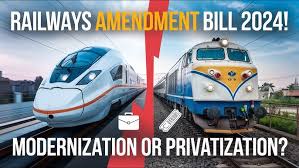
The Railway Amendment Bill 2024 – Is it the Fast Track to Modernization or Just Old Tracks in a Shiny New Train
On December 13, 2024, the Indian Parliament passed the Railway Amendment Bill, 2024, amidst much debate and controversy. Introduced by Union Railways Minister Ashwini Vaishnaw on August 9, 2024, the bill proposed sweeping reforms to the existing framework established by the Railway Act of 1989. This legislation itself was built upon the foundation laid by the Railway Board Act of 1905. While proponents have hailed the bill as a transformative step, sceptics argue that it represents little more than “old wine in a new bottle,” repackaging familiar promises without addressing core issues.
Indian Railways, an integral lifeline of the nation, presents a paradoxical picture. It showcases its modernity through flagship Vande Bharat trains but simultaneously struggles with the deteriorating quality of its once-iconic services like the Rajdhani, Shatabdi, and Garib Rath. Despite the ambitious goals of the Railway Amendment Bill to streamline operations and centralize governance, it fails to address critical concerns such as safety, workforce morale, and effective decentralization. With recurring accidents, an increasingly demotivated workforce, and a governance structure that promises more than it delivers, Indian Railways today embodies a legacy of grandeur weighed down by persistent mismanagement.

To fully appreciate the context of the Railway Amendment Bill, it is essential to trace the evolution of Indian Railways’ administrative framework. The Railway Board, established in 1905, served as the backbone of a rapidly expanding railway network, steering its operations and governance. By 1989, the Indian Railways Act sought to modernize these operations, blending centralized planning with a degree of localized execution. Over the decades, however, this system became encumbered by layers of bureaucracy, inefficiency, and political interference, hindering its capacity to evolve with the times.
The 2024 bill seeks to repeal the Railway Board Act of 1905 and merge its provisions into the 1989 framework, ostensibly to simplify governance. This allows the central government to dictate the Railway Board’s composition and delegate powers more effectively. While this may seem like an effort to streamline administration, critics argue it is a superficial reshuffling of responsibilities that fails to tackle the deeper, systemic inefficiencies embedded in the organization.

One of the most glaring contrasts within Indian Railways lies in its service offerings. The Vande Bharat trains have been widely marketed as symbols of modernization and efficiency. However, this emphasis on high-profile projects has diverted attention from the declining standards of other essential services. The Rajdhani Express, once synonymous with premium rail travel, now grapples with outdated infrastructure and lacklustre maintenance. Shatabdi trains, another flagship service, are frequently criticized for delays and reduced punctuality. Garib Rath, envisioned as an affordable alternative for the middle class, has been marginalized in a market increasingly skewed toward high-end ventures. While the amendment bill aims to enhance operational efficiency and expedite the approval process for new services, these steps fall short of addressing the need for substantial investment in infrastructure, passenger amenities, and workforce development.
The bill’s stated objective of decentralization, aimed at granting greater autonomy to Railway Zones, appears hollow in practice. Instead of empowering zonal authorities, the increasing centralization of decision-making has further diluted their authority. Zonal and divisional officers, who are best placed to address localized challenges, find themselves constrained by excessive bureaucratic oversight. Opposition MPs raised this concern during parliamentary debates, emphasizing the need for an independent Railway Board free from undue government interference. Without genuine autonomy, decentralization remains an empty promise, reducing innovation and leaving critical issues unaddressed at the grassroots level.

Safety remains one of the most pressing and contentious issues confronting Indian Railways. Despite a series of devastating accidents attributed to human error, outdated infrastructure, and insufficient maintenance, the 2024 amendment bill barely touches upon safety concerns. While it includes provisions for an independent regulator to oversee tariffs, safety, and private sector participation, the details of implementation remain ambiguous. Public confidence in the Railways hinges on its ability to provide safe and reliable services, and this glaring omission undermines the credibility of the bill’s claims of modernization.
Another critical yet overlooked aspect of the Railway Amendment Bill is workforce motivation. Indian Railways employs one of the largest workforces in the world, yet its employees are often demotivated and overburdened. Years of centralized control have eroded their decision-making autonomy, while frequent policy changes and political interference have exacerbated their frustrations. Without prioritizing the welfare, training, and empowerment of its workforce, even the most forward-looking reforms are unlikely to yield meaningful results.

The debates surrounding the bill in Parliament reflected these concerns, with opposition MPs voicing strong reservations. They criticized the legislation for failing to address deeper systemic issues and questioned the inclusivity of the Railway Board. Many called for merit-based appointments rather than politically motivated selections, emphasizing the importance of expertise and professional qualifications. Additionally, MPs expressed skepticism about the bill’s ability to resolve the multifaceted challenges faced by Indian Railways, including safety lapses, inefficiencies, and poor service quality. This dissent underscores a broader apprehension about whether the bill can deliver substantive reforms or is merely a cosmetic exercise.
The danger of cosmetic reforms is that they create the illusion of progress while perpetuating existing inefficiencies. The Railway Amendment Bill, despite its ambitious rhetoric, risks falling into this trap. Structural adjustments, no matter how well-intentioned, cannot substitute for tangible action on critical issues like safety, service quality, and workforce morale. For genuine reform, Indian Railways must adopt a collaborative approach that empowers stakeholders across the board—from policymakers and Railway Board members to frontline workers and passengers.
Indian Railways stands at a crossroads, grappling with its legacy as a national symbol of unity and modernity while contending with the harsh realities of neglect and inefficiency. The glamour of Vande Bharat trains cannot mask the declining standards of its other services or the erosion of public trust due to frequent accidents. The Railway Amendment Bill, in its current form, offers little reassurance that these pressing issues will be addressed.
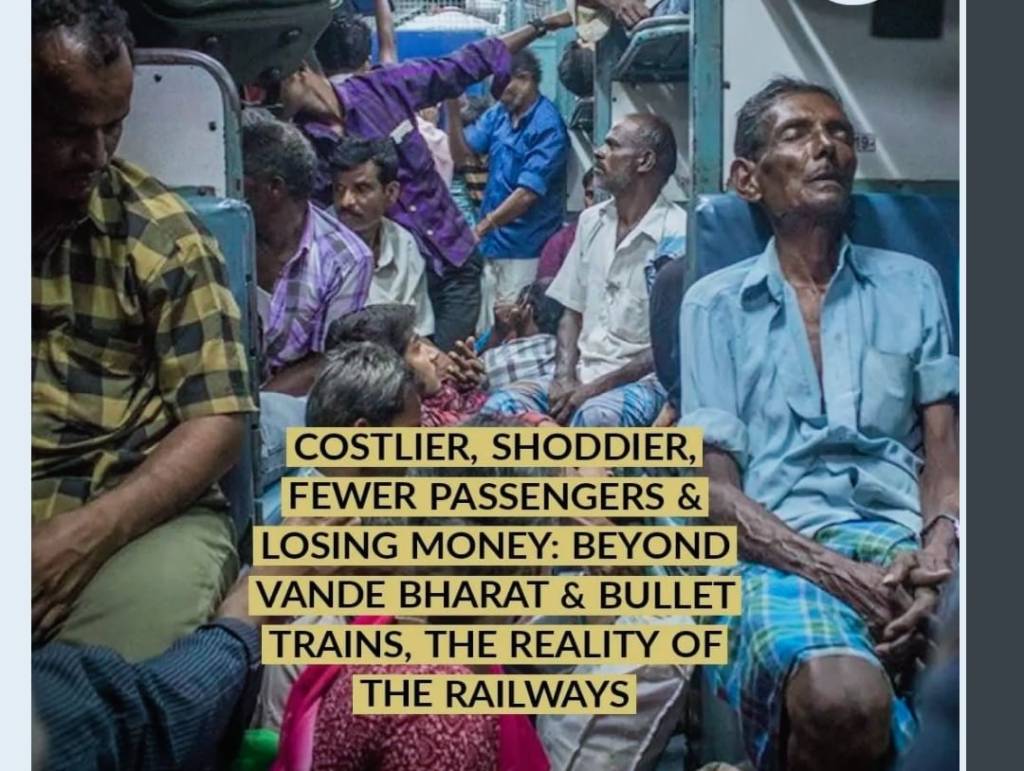
In conclusion, while the Railway Amendment Bill 2024 has been heralded as a landmark legislative reform, it falls short of addressing the core challenges plaguing Indian Railways. Its emphasis on centralization and governance reforms overlooks critical areas such as safety, service quality, and workforce empowerment. The Railways must prioritize substance over symbolism, safety over speed, and people over politics if it is to reclaim its position as the lifeline of the nation. Without meaningful and comprehensive reform, the promises of modernization will remain unfulfilled, and Indian Railways will continue to operate on tracks burdened by inefficiency and neglect.
Visit arjasrikanth.in / @DrArjasreekanth for more insights
 SOCIAL PERSPECTIVES