
“Breaking Barriers, Building Futures: The Unstoppable Wave of Female Empowerment Reshaping Industries and Societal Norms”
In an era of monumental change, women are rewriting the rules of leadership and finance, stepping boldly into arenas long dominated by men. For decades, the industrial and financial landscapes were marked by a glaring absence of female representation at the top. Today, that narrative is rapidly shifting, fuelled by determined leaders and trailblazing investors who are redefining India’s economic story.

The formation of the Startup Professional Forum (SPF), spearheaded by Shweta Rajpal Kohli, exemplifies this transformation. This non-profit initiative aims to unite startups, policymakers, and regulators, giving women an active role in shaping the future of India’s entrepreneurial ecosystem. Kohli’s vision embodies a growing realization: women are no longer bystanders but key architects of economic transformation. Her efforts echo a broader trend of women leading industrial associations, navigating regulatory frameworks, and driving investment opportunities with unparalleled vigour.
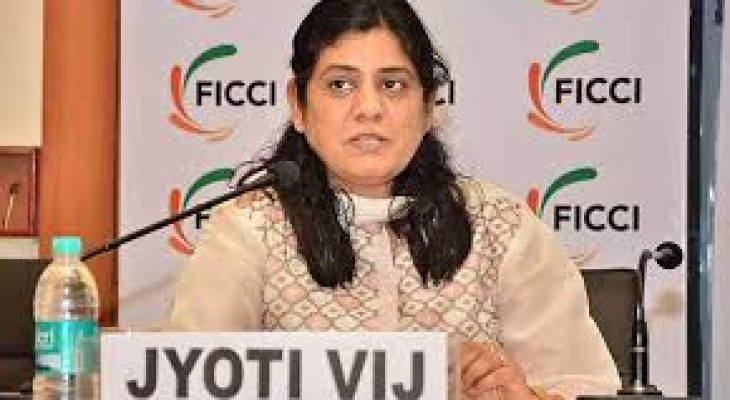
Consider the seismic shift within the Federation of Indian Chambers of Commerce and Industry (FICCI). Once a bastion of male leadership, it now celebrates Jyothi’s appointment as Director General—a milestone for an institution over a century old. Her rise symbolizes the power of loyalty, perseverance, and sheer competence in breaking entrenched gender barriers. Similarly, Sugandh Saxena’s role as CEO of the Fintech Association for Consumer Empowerment (FACE) highlights the importance of visionary leadership in navigating governance and customer empowerment in a complex financial ecosystem.
The Confederation of Indian Industry (CII) presents another compelling example of evolving leadership dynamics. Historically steeped in patriarchal tradition, CII now boasts women in senior positions poised to ascend even further. This transformation builds on the groundwork laid by leaders like Tarun Das and Amit Mitra during India’s post-liberalization era, proving that progress honors the legacies of the past while challenging its limitations.
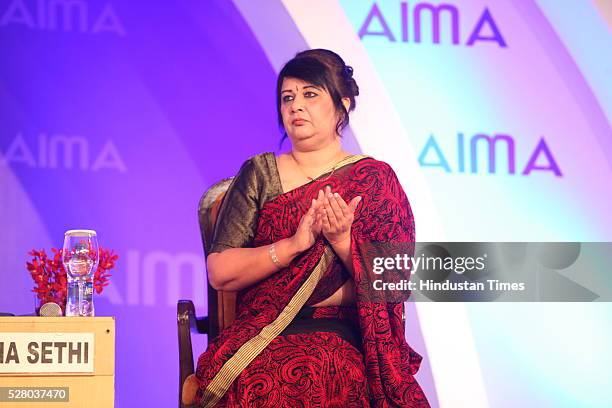
This cultural pivot toward inclusivity has been accelerated by policy interventions like the Securities and Exchange Board of India’s (SEBI) 2013 mandate requiring at least one woman on the boards of listed companies. This directive catalyzed a gradual yet profound change in corporate boardrooms, where women are now carving out influential roles. Rekha Sethi, Director General of the All India Management Association (AIMA), reflects this shift, crediting the rule for fostering a new cadre of female leaders ready to meet the challenges of a modern economy.

Across industries, women are shattering the proverbial glass ceiling, excelling in leadership roles in technology, family businesses, and philanthropy. Figures like Naina Lal Kidwai, Jyotsna Suri, Sangeeta Reddy, and Shobana Kamineni illustrate women’s capacity to shape strategic visions and cultivate impactful relationships within secretariats and industrial bodies. Their achievements underscore the untapped potential women bring to the table and demonstrate how diverse perspectives drive innovation and growth.

Public affairs, a traditionally overlooked sector, have also emerged as fertile ground for female leadership. The rise of figures like Vinita Sethi at the Public Affairs Forum of India (PAFI) underscores the importance of loyalty and long-term relationship-building in advocacy roles. Shweta Rajpal Kohli’s SPF, emphasizing gender-sensitive frameworks and policy innovation in artificial intelligence and emerging technologies, further showcases how women are leading inclusivity efforts in dynamic fields.

As women ascend to leadership positions, their growing participation in financial markets adds another compelling dimension to this revolution. Traditionally a male-dominated domain, financial markets are now experiencing a quiet transformation led by female investors. No longer confined to conservative options like gold and fixed deposits, women are increasingly active in stock markets, mutual funds, and exchange-traded funds (ETFs). This shift reflects not only greater financial literacy but also a bold embrace of risk-taking and wealth creation.
Women now account for 22% of India’s stock market investors, with younger demographics leading the charge. Nearly 40% of female investors begin their financial journeys in their twenties, signalling changing attitudes toward independence and financial planning. By prioritizing long-term investments and adopting diverse portfolios, these women are challenging stereotypes and inspiring future generations to embrace financial empowerment.
The financial industry itself is witnessing a rise in women fund managers. Their numbers have more than doubled since 2017, with these professionals overseeing assets worth over ₹6.66 lakh crore. Their performance demonstrates not only their competence but also the value of diverse perspectives in achieving market stability and growth.
Despite these advances, challenges remain. Societal expectations, household responsibilities, and interrupted career trajectories often limit women’s access to capital and leadership roles. Yet, these barriers are gradually eroding as financial institutions and regulators adopt inclusive strategies. Digital platforms and targeted programs are empowering women, particularly in rural and semi-urban areas, to participate in markets that were once inaccessible.

The empowerment of women as leaders and investors is not just a moral imperative—it is a strategic necessity for a nation poised to become a $10 trillion economy. As women ascend in leadership and finance, they redefine not just industries but societal norms. Their growing influence heralds a future where gender equality is no longer an aspiration but a foundational pillar of India’s economic narrative.
India’s women leaders and investors are reshaping the contours of industrial and financial landscapes, breaking barriers and inspiring generations. Their rise underscores a larger cultural transformation, where inclusivity drives innovation and growth. With each step forward, they affirm a simple yet powerful truth: when women lead, everyone prospers. Their revolution is not just changing faces—it’s redefining futures.
Visit arjasrikanth.in / @DrArjasreekanth for more insights
 SOCIAL PERSPECTIVES