
“From ‘Varahi Declaration’ to the Sanatana Dharma Protection Board, a Vision for Secular Justice and Cultural Revival”
In the vibrant tapestry of India, where diverse threads weave a rich cultural and spiritual narrative, Sanatana Dharma stands as the cornerstone of the nation’s identity. This ancient tradition, symbolizing continuity and timelessness, has profoundly influenced the ethos of the Indian subcontinent. From its philosophical depth to its vibrant rituals and festivals, Sanatana Dharma has been integral to shaping Indian civilization. Yet paradoxically, Hindus, who form the majority of the population, often find themselves navigating a hostile landscape where their temples, traditions, and rituals face persistent threats. This glaring contradiction raises critical questions: How can the majority faith, foundational to India’s heritage, find itself vulnerable in a secular democracy?
The Indian Constitution enshrines secularism as one of its core principles, guaranteeing equality for all religions. However, the lived reality diverges sharply from this ideal. Minority communities enjoy robust protections, special provisions, and significant state support, while Hindus frequently encounter bureaucratic hurdles and institutional biases. This imbalance undermines their ability to freely practice their religion and preserve their heritage. Secularism, conceived as a unifying principle, has often been wielded as a double-edged sword, marginalizing Sanatana Dharma. This has led to the unfortunate portrayal of Hindu traditions as regressive or politically inconvenient, diminishing their rightful place in India’s pluralistic framework.
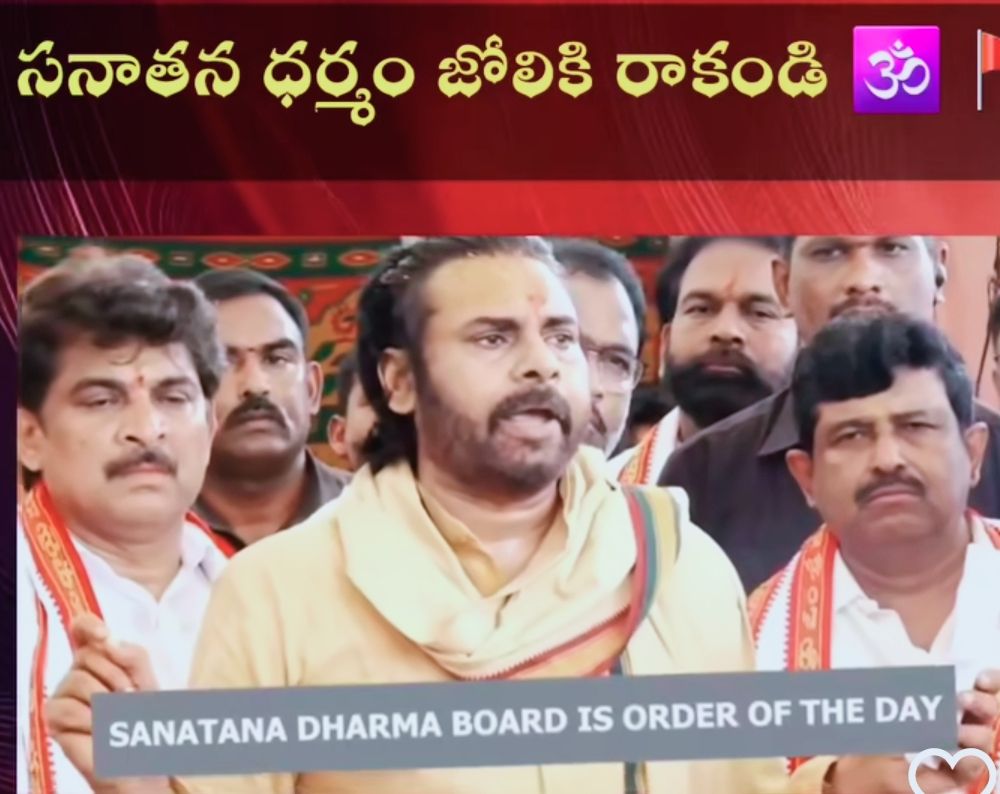
Amidst this backdrop, actor-turned-politician Pawan Kalyan, now Deputy Chief Minister of Andhra Pradesh, has emerged as a resolute advocate for Hindu rights. His impassioned efforts to preserve and protect Sanatana Dharma resonate with millions of Hindus across India. At a public rally in Tirupati, Kalyan unveiled the Varahi Declaration, a bold manifesto aimed at reclaiming the rights of Hindus and fortifying their cultural identity. This declaration outlines a comprehensive vision to safeguard the religious, cultural, and spiritual aspects of Hinduism, which are increasingly under threat from both internal and external forces.
Central to Kalyan’s vision is the establishment of a Sanatana Dharma Protection Board, operating at both national and state levels. This body would be tasked with preserving Hindu temples, rituals, and properties, offering protection comparable to safeguards enjoyed by other religious communities. The board’s creation marks a vital step toward institutional support for Hinduism, ensuring that it receives the attention and care it deserves in a country where it is often sidelined.

Another cornerstone of the Varahi Declaration is the introduction of a Sanatana Dharma Certification system, designed to oversee the sanctity of temple rituals and offerings. This initiative addresses longstanding controversies surrounding temple governance, including the mismanagement of temple properties and the declining quality of religious services. By enforcing adherence to traditional practices, the certification system would safeguard against corruption, restore trust among devotees, and ensure that temples remain centres of genuine spiritual practice rather than commercialized institutions.
Kalyan has been an outspoken critic of pseudo-secular ideologies that selectively deride Hindu traditions while shielding other faiths from scrutiny. He challenges the tolerance levels of such narratives, asking pointedly, “Would the same leniency exist if similar criticism were directed at other religions?” This question underscores the selective outrage dominating India’s public discourse. By confronting political figures like opposition leader over dismissive remarks about Hindu traditions, Kalyan has exposed the cultural insensitivity embedded in political narratives. His statement—“You might hate Modi ji, hate us, but don’t dare to hate Lord Ram”—resonates deeply with Hindus who feel their spiritual beliefs are under constant attack.

Kalyan’s advocacy transcends rhetoric, calling for a unified Hindu community that rises above caste, region, and language divisions. In his vision, solidarity is essential for reclaiming the rightful place of Hindus in India’s political and cultural landscape. To this end, he proposes a National Ministry for Religious Affairs, aimed at minimizing governmental interference in Hindu matters and ensuring cohesive policies for preserving Hindu traditions. This ministry would address issues like temple property mismanagement and governance inefficiencies, providing a structured approach to protecting Hindu heritage.
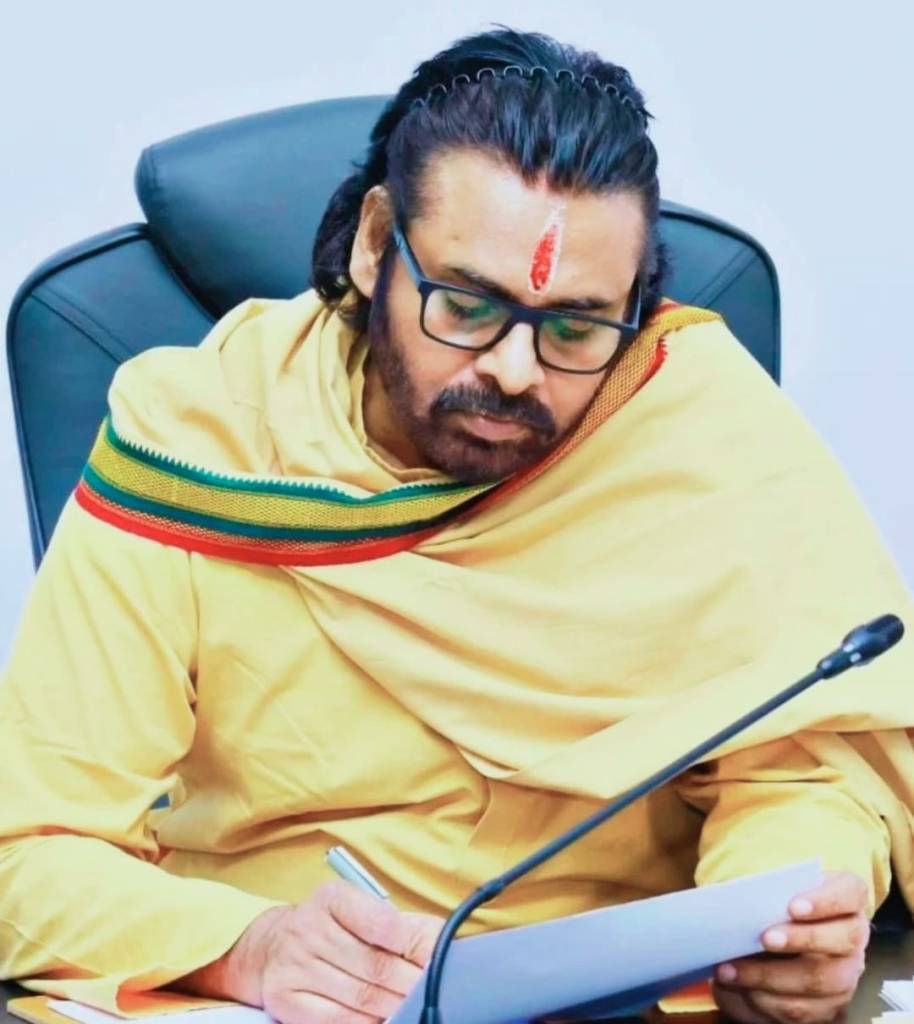
Kalyan envisions temples as more than places of worship; he sees them as community hubs fostering education, art, culture, environmental stewardship, and economic development. This holistic approach reclaims the ancient role of temples as centres of knowledge and social welfare, ensuring they contribute to the broader well-being of society.
One of the most pressing challenges Kalyan addresses is the systemic bias against Hindus under the guise of pseudo-secular ideologies. He argues that these narratives embolden anti-Hindu rhetoric while silencing Hindu voices, creating an environment where Hindu religious practices are scrutinized or vilified. Kalyan’s critique extends to the judiciary, which he accuses of unequal treatment in addressing attacks on Hindu traditions. “The law appears weaker toward the strong and stronger toward the weak,” he observes, highlighting disparities in justice application.
Kalyan’s scrutiny of the Tirumala Tirupati Devasthanams (TTD) serves as a case study for the lack of transparency in temple governance. He has condemned the mismanagement of temple assets and called for reforms to ensure accountability. Addressing derogatory remarks likening Sanatana Dharma to a “virus,” Kalyan likened such attacks to futile attempts to diminish the grandeur of the Himalayas, reaffirming the enduring strength of Hindu traditions.
The plight of Hindus in India, despite their majority status, underscores the urgent need to protect their rights, rituals, and cultural heritage. The selective application of secularism undermines the equality enshrined in the Indian Constitution, creating a hostile environment for the majority community. Kalyan’s visionary proposals—from the Sanatana Dharma Protection Board to the National Ministry for Religious Affairs—offer a comprehensive roadmap for addressing these inequities. His call for unity, mutual respect among faiths, and genuine secularism presents an inclusive vision for India.

Sanatana Dharma, the timeless spiritual foundation of India, has profoundly shaped its culture and ethos. However, Hindus often face challenges in freely practicing their faith, as secularism sometimes marginalizes their traditions. Actor-turned-politician Pawan Kalyan, Andhra Pradesh’s Deputy Chief Minister, has emerged as a passionate advocate for Hindu rights. His Varahi Declaration outlines initiatives like a Sanatana Dharma Protection Board and Certification System to safeguard temples, rituals, and heritage. Highlighting institutional biases and political insensitivity, Kalyan calls for unity across caste and regional lines. His bold leadership underscores the critical need to preserve India’s spiritual identity and cultural heritage.
Visit arjasrikanth.in for more insights
Also @DrArjasreekanth on X
 SOCIAL PERSPECTIVES