
NASA’s Innovations, Satellite Revolution, and a Thriving Space Economy are Powering Earth’s Future
Imagine an organization that generates three times its budget in revenue. This is not a financial giant like Apple or Amazon, but NASA, the pulse of America’s cosmic exploration. Last year, NASA ignited waves of innovation, created high-paying jobs, and developed technologies that not only reshaped the aerospace industry but rippled across healthcare, telecommunications, and more. Financial experts predict these developments alone might generate $75 billion for the United States—enough to fund Spotify or even match India’s entire defense budget for a year.
So why all eyes on NASA? Because it represents a slice of the broader space economy, a domain poised to become the bedrock of global growth. Forecasts suggest that by 2035, this economy may reach a staggering $1.8 trillion—nearly triple its current valuation. With its boundless expanse and untapped potential, could space be humanity’s next frontier for economic development?
The answer lies in the way space impacts nearly every facet of life on Earth. Beyond the allure of rockets and satellites, the true economic magic of space happens within our own atmosphere. Consider the Global Positioning System (GPS), the backbone of navigation apps like Uber, weather forecasts, and even planning weekend getaways. By 2023, nearly half of the space economy focused on such earthbound applications, and by 2035, this reliance is projected to rise to two-thirds, underscoring our daily dependence on satellite-based technology.

As space’s influence on Earth continues to grow, the world is catching on. Countries and companies worldwide are channelling billions into satellite advancements, often for crucial tasks such as national security, disaster response, and environmental monitoring. Since the early 2000s, the number of space agencies has surged from 40 to 75, with newcomers like the United Arab Emirates joining the elite club with bold projects. The UAE recently sent an astronaut into space and launched a probe to Mars, signalling that space exploration is no longer reserved for superpowers.
One particularly exciting development in this movement is satellite communications. Companies like SpaceX and Amazon are racing to bring high-speed internet to underserved and remote areas through satellites. By 2035, satellite communications could be worth an estimated $218 billion, a leap from its current valuation of $40 billion. This growth could make affordable and accessible internet a reality for millions, democratizing communication and bridging digital divides worldwide.

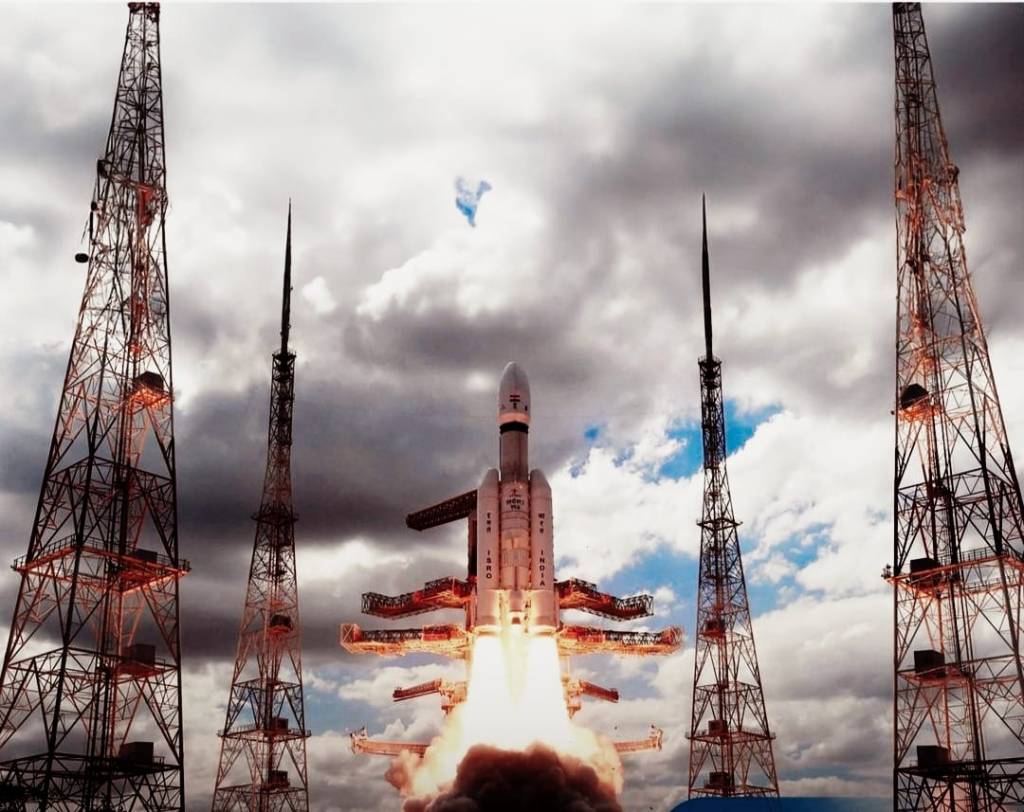
In India, a quieter space revolution is unfolding. Over the past decade, India’s space economy has contributed an impressive $24 billion to the nation’s GDP, largely through satellite launches, exploration, and advancements in communications. India’s space agency, ISRO, now aims for a 10% share of the global space market by 2040, marking a growing understanding that space technology can be an economic catalyst and innovation driver.
But with the immense promise of space comes serious challenges. The surge in satellites raises concerns about space traffic and the risk of collisions. Satellite collisions could generate dangerous debris fields that threaten other operational satellites and future missions. Today, approximately 34,000 pieces of space debris larger than 10 cm drift in orbit, along with 128 million smaller fragments—all posing significant hazards to space operations.
Efforts to tackle these issues are underway. Space agencies and private companies are exploring solutions to minimize and manage space debris through initiatives focused on debris removal, automated collision avoidance, and advanced tracking systems. However, these are only first steps in ensuring the long-term sustainability of space operations.
Besides physical challenges, regulatory issues loom large. As space becomes increasingly crowded, the lack of robust regulations for space traffic management, launch coordination, and international collaboration creates a governance gap. Without effective regulations, new players may find it difficult to enter the market, especially if existing rules favour established companies.
Cybersecurity is yet another pressing concern. Satellites underpin essential sectors like communication, banking, and defense, making them prime targets for cyberattacks. A single successful breach could disrupt banking, internet services, and even national security. As the space economy becomes more integral to daily life, addressing these vulnerabilities is crucial to protecting critical infrastructure.
Equity concerns also come into play as more countries and companies venture into space. Ensuring that the benefits of space technology extend beyond a select few nations and corporations will be key. Inclusive policies and international collaborations will be essential for making space-related resources, knowledge, and opportunities accessible to all, promoting a fairer, more equitable space economy.
Despite these challenges, the future of the space economy remains bright. New regulations should create safe and sustainable practices while encouraging competition and innovation. Although the path forward is filled with obstacles, the collaborative spirit of nations and companies can guide us toward a promising future. Together, they can harness the potential of the space economy to enhance life on Earth and unlock unprecedented opportunities across diverse sectors.
As we look ahead to this vast frontier, it’s essential to remember that space exploration is more than a journey; it’s a platform for creativity, collaboration, and global betterment. The burgeoning space economy has the power to fuel global growth and drive innovation, but realizing this potential requires concerted global efforts to overcome the outlined challenges. By working collectively, we can transform space into a sustainable, equitable, and revolutionary frontier for humanity.

The space economy holds extraordinary promise for global development, opening doors for innovation, collaboration, and economic expansion. Despite obstacles like space debris, cybersecurity risks, and equity concerns, the scale and potential of the space economy are too vast to ignore. With an expected valuation of $1.8 trillion by 2035, this sector could redefine life on Earth, driving technological advances, connectivity improvements, and resource management breakthroughs. As investments and international collaborations continue to grow, the space economy could evolve into a cornerstone of global infrastructure, creating opportunities that benefit all. By maintaining a commitment to safety, regulation, and inclusivity, we ensure that humanity’s journey into the cosmos is as much about uplifting each other as it is about exploring the stars.
Visit arjasrikanth.in for more insights
 SOCIAL PERSPECTIVES
One response to “Galaxies of Gold: NASA, the Space Economy, and the $1.8 Trillion Cosmic Frontier”
excellent. Though indis has succeeded to some extent in this area, much needs to be achieved by making all’ out efforts to match US and China
LikeLike