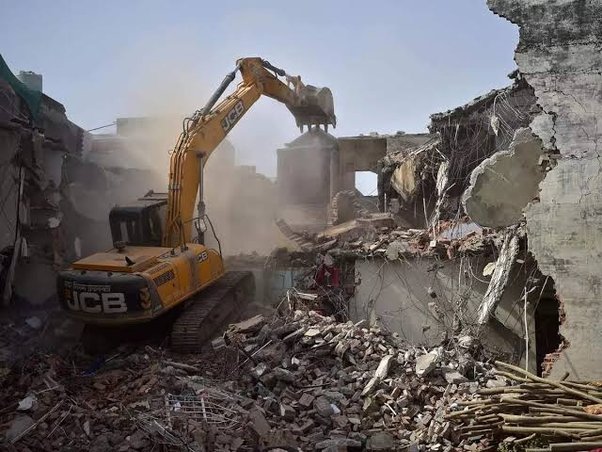
Lives Destroyed, Homes Demolished: The Real Cost of Bulldozer Justice
In the vast and diverse landscape of India, where justice is meant to be a foundational pillar, a disturbing practice has emerged that threatens to upend the very essence of fair governance. The bulldozer, once a tool of construction and development, has evolved into a controversial symbol of authority and punishment, particularly in Uttar Pradesh under Chief Minister Yogi Adityanath’s regime. What began as a measure to curb land mafia activities has transformed into a weapon used by the state to assert its power over citizens, bulldozing properties as a form of retribution for alleged criminal behavior.
This so-called “bulldozer justice” has sparked significant concern, not only about its legality but also about its moral implications. The bulldozer has moved from being a machine for urban development and public safety to one used as an instrument of punishment—its sheer physical force now symbolizing the state’s capacity to strip people of their homes and livelihoods. In a democratic society, where due process is enshrined in the Constitution, the increasing use of bulldozers as a tool for “instant justice” represents a grave shift, one that undermines individual rights and the rule of law.
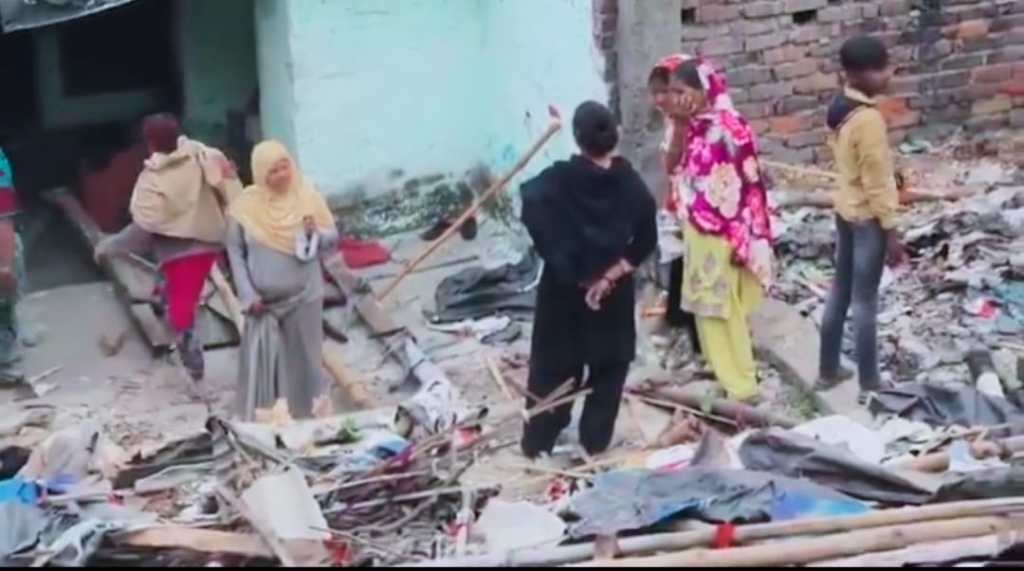
The practice gained considerable traction during the protests against the Citizenship Amendment Act (CAA) and the National Register of Citizens (NRC) in 2019, when CM Adityanath made statements suggesting that those involved in protests would face the state’s wrath. This rhetoric quickly translated into action, with bulldozers being deployed to raze properties linked to individuals accused of protesting or engaging in violence. What started as a means to deal with lawbreakers soon became a tool for political punishment. The bulldozer was no longer just a tool for demolition; it became a symbol of vengeance, used to punish individuals without a fair trial or hearing, operating outside the boundaries of justice.
One of the most significant instances of bulldozer justice occurred in Akbarnagar, Lucknow, where one of the largest demolition drives in Asia displaced over 35,000 people. This case saw bulldozers razing homes, shops, and even a madrassa, all under the claim of alleged encroachments. Only a small fraction—around 1,800 people—were relocated under the Pradhan Mantri Awas Yojana (PMAY), leaving the majority homeless and without recourse. Such actions raise profound questions: is the state’s pursuit of law and order worth the devastating impact it has on marginalized communities, many of whom are caught in the crossfire of political expediency?

The situation reached a critical juncture when the Supreme Court of India intervened, marking a pivotal moment in the ongoing debate over the legality of bulldozer justice. In a landmark ruling, the Court declared demolitions carried out without due process to be “totally unconstitutional.” The judgment emphasized that demolitions based merely on suspicion or accusation violated fundamental rights under Article 21 of the Indian Constitution, which guarantees the right to life and personal liberty. The Court described the demolition of a person’s home without due process as a “chilling sight,” underscoring the inherent dangers of unchecked state power.
The Court’s ruling was a much-needed check on the executive’s power, reinforcing the constitutional principle that no one can be deprived of their property without due process. The ruling mandates that demolitions must be preceded by a “speaking order” from the relevant authorities, detailing the grounds for such drastic action. The affected individuals must also be given at least 15 days’ notice to contest the demolition, ensuring a fair chance to defend themselves before action is taken. Additionally, the Court ordered that video documentation and written notices be provided to maintain accountability. These procedural safeguards are designed to restore balance and prevent the state’s power from overstepping the bounds of justice.
However, the Court’s guidelines are more than mere formalities—they underscore a fundamental democratic principle: the judiciary, not the executive, must determine guilt. The separation of powers is a cornerstone of democracy, and using bulldozers as instruments of punishment bypasses judicial oversight. By assuming the role of judge, jury, and executioner, the state erodes the integrity of the legal system and undermines the rights of citizens. The Court’s intervention aims to restore due process, affirming that accusations must be met with lawful procedures rather than arbitrary state actions.
Perhaps the most troubling aspect of bulldozer justice is its disproportionate impact on marginalized communities, particularly Muslims. While the government insists that these demolitions target illegal land encroachments, reports from several sites indicate that these actions often target Muslim-owned properties. This has fuelled allegations of communal bias, with many viewing the bulldozer as not just a law enforcement tool but a vehicle for political retribution. The case of Shahjil Islam, an MLA from Bareilly, whose petrol pump was demolished after criticizing the Chief Minister, highlights this concern. Such actions deepen the perception that bulldozers are being wielded as tools of political vengeance, targeting those who dare to oppose the ruling government.
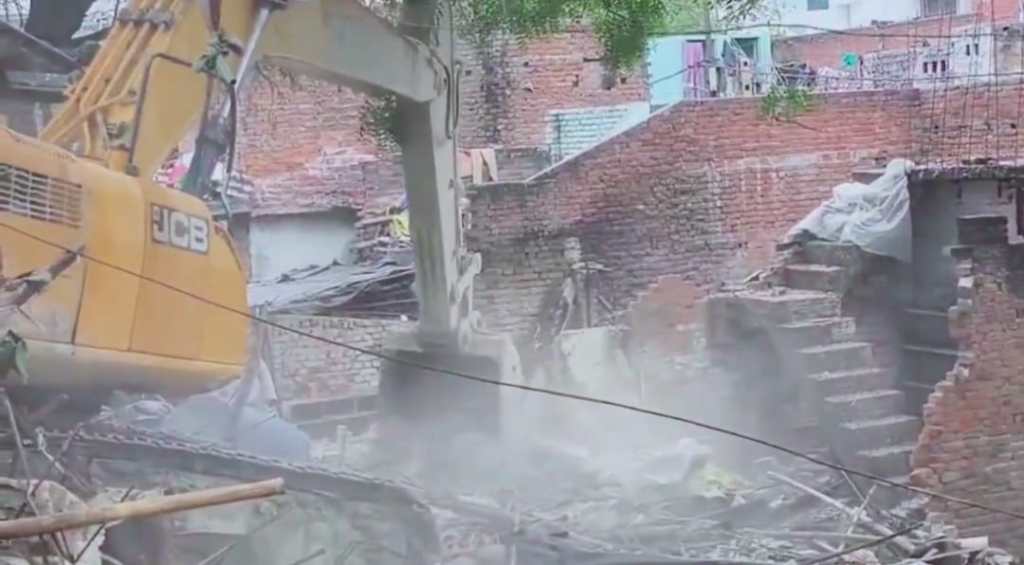
The practice of bulldozer justice has also created a climate of fear and instability. Families whose homes have been destroyed are left homeless and vulnerable, with no legal recourse to challenge the charges against them. In the case of Javed Mohammed, accused of involvement in a violent incident, his home was demolished within days of the allegations, without the opportunity to defend himself or appeal the decision. This swift and unaccountable action raises serious concerns about the human cost of bulldozer justice, with basic rights—shelter, dignity, and security—sacrificed in the pursuit of expedient punishment.
The Supreme Court’s guidelines are a significant step toward holding the government accountable for its use of bulldozers. While the ruling is a victory for human rights, the true test will lie in its implementation. The damage caused by years of unlawful demolitions cannot be undone overnight, and many affected families continue to struggle. The ruling must be enforced on the ground to prevent further injustices and ensure that bulldozer justice remains firmly outside the bounds of the law.
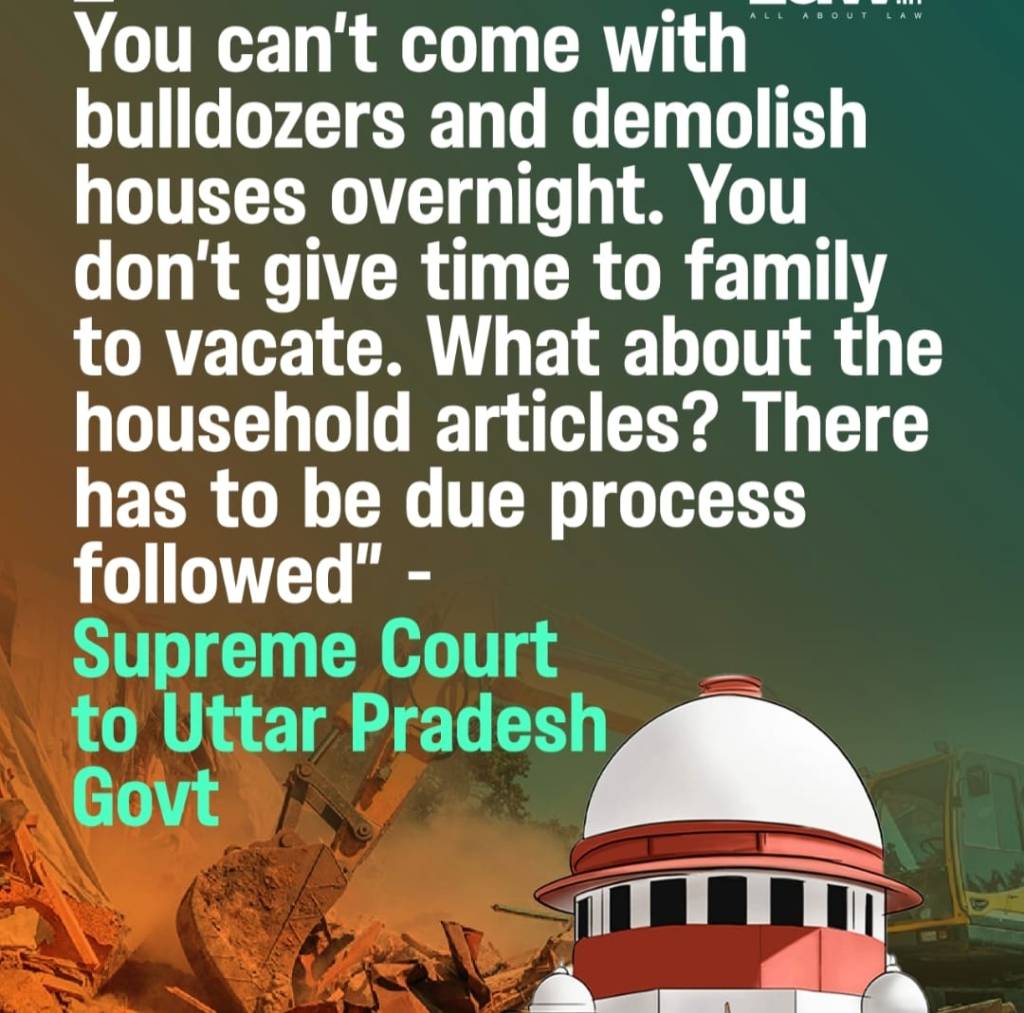
In conclusion, the Supreme Court’s ruling against arbitrary demolitions serves as a stark reminder that justice cannot be dispensed at the whim of the state. The bulldozer may strike fear into the hearts of the public, but it cannot replace the rule of law. The Court’s decision underscores the importance of upholding individual rights, ensuring that justice is not something that can be bulldozed away. It is a victory for the rule of law, transparency, and the dignity of those who had been silenced by the state’s unchecked power. As India moves forward, the government must respect the principles of justice and human rights, lest the bulldozer continue to serve as a symbol of oppression rather than a tool of justice.
visit arjasrikanth.in for more insights
 SOCIAL PERSPECTIVES