
As Andhra Pradesh Faces a Youth Exodus and Europe Grapples with a Migrant Deluge, Both Regions Struggle with Birth-rates, Identity, and Future Stability”
In an age of unprecedented global mobility, migration has become a lifeline for millions seeking better opportunities, yet it also carries deep ramifications. Nowhere is this more visible than in Andhra Pradesh (AP), where a growing number of young people are leaving their homes in search of livelihoods outside the state or abroad. This exodus is not only reshaping AP’s social and economic landscape but is also contributing to a wider demographic shift that could spell long-term challenges for the state. Meanwhile, across Europe, a different but equally concerning demographic trend is taking hold: a declining birthrate coupled with increasing immigration, raising fears of cultural erosion and political instability. These contrasting yet interconnected phenomena highlight how both regions face existential threats tied to their population dynamics.
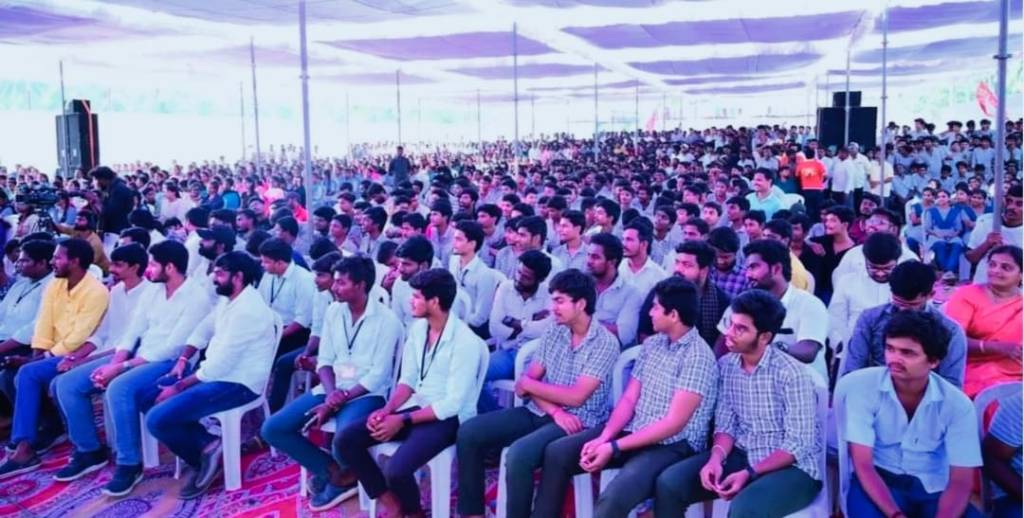
For Andhra Pradesh, migration has become a widespread reality. Similar to other Indian states, AP’s young workforce is packing their bags and leaving their hometowns, driven by a lack of local job opportunities. These individuals seek employment not only within India but across the world, contributing to India’s massive global diaspora. As of 2024, over 35 million Indians live outside the country, with Andhra Pradesh providing a significant portion of this expatriate population. It’s a situation marked by a sense of inevitability—the state’s economic structure has failed to create enough sustainable employment to retain its youth. This growing outflow is causing noticeable shifts, especially in rural areas where elderly parents are left behind, with no one to care for them.

In 2023 alone, India received a record $125 billion in remittances, much of which came from over 15 million Non-Resident Indians (NRIs) spread across key global destinations like the United States, the United Arab Emirates, and Saudi Arabia. While remittances are undoubtedly a lifeline for the Indian economy, these financial flows mask a deeper issue. In Andhra Pradesh, the social fabric is slowly unravelling. The birthrate has fallen below the replacement level, and this trend is worsening as more families adopt a one-child policy to preserve property and wealth. Chief Minister N. Chandrababu Naidu’s observation that the state is heading toward an aging population, with more deaths than births, seems prophetic. AP may soon find itself grappling with the consequences of being a society dominated by the elderly, with few young workers left to support them.
The statistics are concerning. Andhra Pradesh’s birth-rate currently sits at 1.4 children per woman—well below the replacement level of 2.1. This demographic shift signals a future where the state’s economy could be crippled by a lack of manpower. Many of the state’s young people are not just leaving their homes but also delaying or avoiding marriage and family altogether. Some prefer live-in relationships over traditional marriages, reflecting a broader societal shift. The rise in drug addiction among the youth further compounds this issue, impacting reproductive health and contributing to the declining birth-rate. If left unchecked, these converging factors may lead to a demographic crisis where an aging population is left unsupported by a shrinking workforce.
Naidu has been a vocal advocate for reversing these trends, urging families to have at least two children. However, this is easier said than done in a state where migration seems like the only viable option for many. Naidu’s stance is a pragmatic response to the demographic realities threatening AP’s future. Without a course correction, the state may face significant long-term consequences—both economically and politically—as its shrinking population could impact its representation in India’s Parliament.
The challenges faced by Andhra Pradesh mirror those in Europe, albeit with different concerns. While AP struggles with a youth exodus, Europe is grappling with the opposite issue: immigration. Across the continent, birth-rates have plummeted to unsustainable levels. Countries like Italy, Germany, and Spain are witnessing birth-rates far below the 2.1 children per woman needed to maintain their populations. In some regions, the fertility rate is as low as 1.3, signalling a demographic collapse. As the native population ages, the workforce shrinks, placing immense pressure on social services, pensions, and healthcare systems.
Simultaneously, Europe has become a magnet for millions of immigrants, many from Muslim-majority countries. This influx has ignited concerns over cultural integration and social cohesion. In countries like France, Germany, and the United Kingdom, debates about immigration have become increasingly polarized. Critics argue that the influx of migrants is eroding Europe’s Christian heritage and turning native populations into minorities in their own countries. These concerns have only intensified as projections suggest that by 2050, some European countries could have a Muslim-cum-migrant majority population.

This demographic transformation is not only altering Europe’s cultural landscape but also fuelling political instability. Nationalist movements across the continent have capitalized on fears of “Islamization” and the perceived loss of traditional European values, leading to a surge in anti-immigrant sentiment. Many citizens feel that their countries are being overwhelmed by a flood of migrants who bring with them different religious beliefs, customs, and ways of life, often at odds with the host country’s values. In some regions, there is palpable anxiety that Europe’s Christian identity is being diluted, along with the sense of continuity that has defined the continent for centuries.
Yet, Europe’s demographic challenges are not just cultural—they are economic too. A shrinking native population means fewer workers, which threatens economic growth and the sustainability of social welfare systems. The irony here is stark: while Andhra Pradesh is losing its youth to migration, Europe is struggling to absorb and integrate the migrants who are filling the labour gaps created by its own demographic decline.
In both cases, the root causes are tied to economic opportunities—or the lack thereof. In Andhra Pradesh, young people are leaving because there simply aren’t enough jobs. In Europe, immigrants are arriving to fill jobs that the native population can no longer sustain. The differences lie in the consequences—while AP’s aging population may one day be unable to support its economic needs, Europe’s demographic shift could lead to cultural fragmentation and societal upheaval.

What can be done? For Andhra Pradesh, the solution lies in creating more local opportunities for its youth. The state needs to focus on job creation, skill development, and entrepreneurship to retain its talent and prevent further migration. Chief Minister Naidu’s call for larger families is a step in the right direction, but it must be accompanied by policies that give young people a reason to stay.
For Europe, the challenge is more complex. Addressing the demographic crisis requires not only policies to encourage higher birth-rates but also thoughtful approaches to immigrant integration. Countries need to find a way to balance cultural preservation with the realities of a globalized world where migration is inevitable. Encouraging family growth through incentives and creating a welcoming environment for immigrants are both critical components of addressing the continent’s demographic decline.

In conclusion, while Andhra Pradesh and Europe find themselves on opposite sides of the migration equation, they share a common challenge: how to balance population dynamics with economic and cultural sustainability. Both regions are at a crossroads, and the choices they make now will shape their futures for generations to come.
Visit arjasrikanth.in for more insights
 SOCIAL PERSPECTIVES