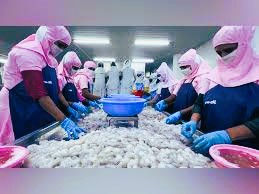
Andhra Pradesh: The Aquatic Wonderland Ready to Dive into Industrial Stardom
Andhra Pradesh is undergoing an unprecedented transformation, turning its coastline into an economic powerhouse fuelled by the Blue Economy. Traditionally known for its agricultural productivity, the state has now pivoted to leverage its vast marine and inland water resources to drive a booming aquaculture industry. This shift is nothing short of a revolution, as Andhra Pradesh transitions from being a national leader in fish production to aiming for global recognition in aquaculture and food processing. The state is meticulously positioning itself at the forefront of a global movement toward sustainable and innovation-driven fisheries practices, making it a model for others to follow.
Stretching 974 kilometres along India’s eastern coast, Andhra Pradesh is home to 555 marine villages. For generations, these coastal communities have relied on fishing as a way of life, but today, they are seeing an economic surge like never before. Both government and private players are pooling their efforts to develop the fisheries sector into an industrial ecosystem, one that integrates traditional practices with cutting-edge technologies. This ambitious effort is part of a larger vision—the creation of a Blue Economy that capitalizes on the state’s natural aquatic resources to boost its economic growth.
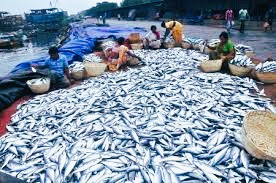
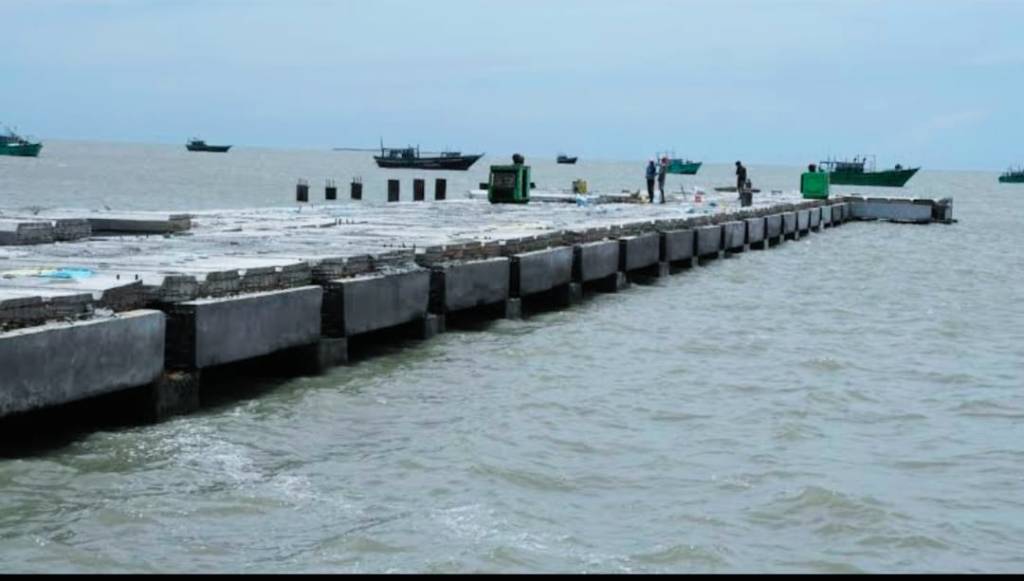
One of the state’s most bold initiatives is the development of port and fishing infrastructure along its vast coastline. Andhra Pradesh is planning to construct ports, fish landing centres, and fishing harbours at regular intervals—every 50 kilometres, to be precise. These developments are being backed by significant investments in several key locations, such as Machilipatnam, Uppada, and Vodarevu, with costs running into hundreds of crores. The result? More than 179,000 new jobs across these various facilities, providing livelihoods for thousands of families while modernizing the sector to increase efficiency and profitability.
Beyond port infrastructure, the state has made significant strides in modernization. For example, the Pulicat pond has been upgraded with an investment of nearly ₹94.75 crores, while 70 aqua hubs and 1,400 retail stores have been established to improve the supply chain. These efforts aim to boost fish production by an impressive 7.5 lakh tons, generating an estimated ₹18,000 crore in GDP. These figures are not merely economic statistics; they represent a massive leap in the living standards and opportunities for the state’s coastal communities.
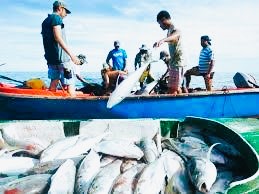
Andhra Pradesh’s inland water resources also play a pivotal role in its aquaculture boom. With an abundance of rivers, reservoirs, lakes, and ponds, the state is ideally suited for large-scale aquaculture activities. Already the national leader in fish production, Andhra Pradesh continues to scale new heights. In 2017-18 alone, the state produced 34.49 lakh metric tons of fish, growing at an annual rate of 19%. This kind of growth is not just an economic boon; it plays a crucial role in the state’s Gross State Domestic Product (GSDP), contributing a notable 7.40%. This level of economic contribution places the fisheries and aquaculture sector as one of the pillars of Andhra Pradesh’s economy.
The state’s rapid growth in fisheries can be attributed to its strategic planning and visionary policies. The state’s Gross Value Addition (GVA) from fisheries rose dramatically from ₹17,621 crores in 2014-15 to an astounding ₹50,000 crores in recent years. This meteoric rise was no accident—it’s the result of forward-thinking policies that focus on sustainable growth, innovation, and investment in infrastructure. By fostering an environment where new technologies and private investments can flourish, Andhra Pradesh is creating a template for long-term, scalable success.
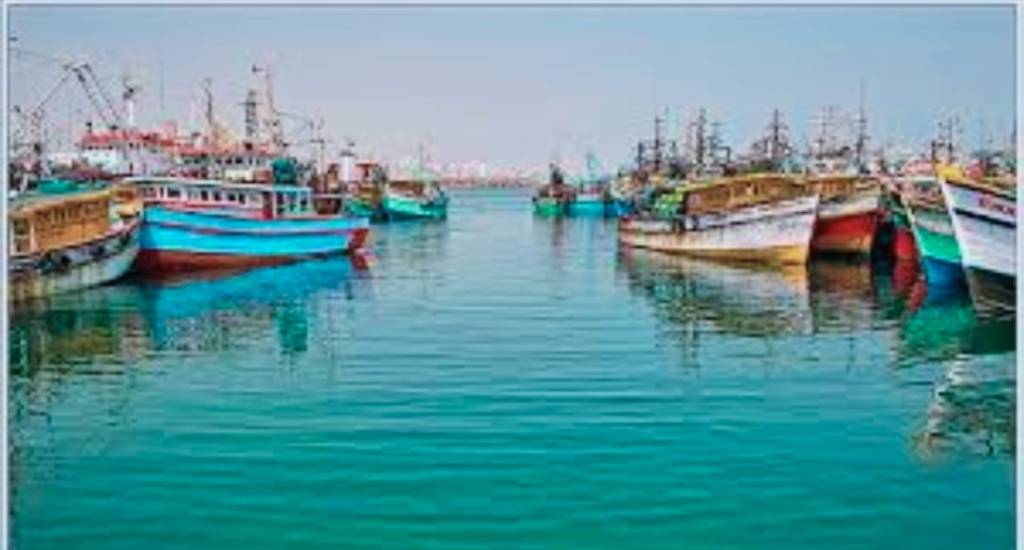
A crucial element in the state’s success has been its emphasis on technological innovations. Andhra Pradesh has adopted advanced technologies like bio floc farming, which dramatically increases the density of fish production while minimizing its environmental impact. In addition, on-farm demonstrations are being used to teach fish farmers about new technologies and best practices. These demonstrations are helping to modernize the industry, ensuring that the benefits of the Blue Economy are both sustainable and long-lasting.
The infrastructure supporting Andhra Pradesh’s fisheries sector is world-class. Over 31,000 fishing crafts ply the state’s waters, and they are supported by a robust network of 350 landing centres, 65 cold storage facilities, and 64 processing plants. This infrastructure ensures that fish caught along Andhra Pradesh’s coastline reach markets in the freshest possible condition, whether those markets are within India or abroad. With such comprehensive logistical support, the state is poised to further extend its dominance in the global seafood market.
The numbers speak for themselves. Between 2018-19 and 2022-23, fish production in Andhra Pradesh skyrocketed from 39.91 lakh metric tons to 51.06 lakh metric tons. Additionally, the area dedicated to aquaculture increased from 1.96 lakh hectares to 2.09 lakh hectares, reflecting the state’s aggressive expansion strategy. These figures not only highlight the growth but also the commitment to making the fisheries sector a sustainable long-term contributor to the state’s economy.
With a 40.9% contribution to India’s total fish output, Andhra Pradesh stands as the undisputed leader in the country’s fisheries sector. The state’s contribution far surpasses that of other states like West Bengal, Odisha, and Bihar, making it the “crown jewel” of India’s fisheries industry. And the state isn’t content with national dominance—it has its sights set on becoming a global leader. The ongoing expansion and investment in the sector will only solidify this position further, making Andhra Pradesh a key player in the international aquaculture market.
To bolster its aquaculture and food processing industries, Andhra Pradesh is establishing 100 industrial parks, each covering 100 acres, dedicated to fisheries, food processing, and horticulture. These parks will serve as innovation hubs, creating jobs, fostering research and development, and revitalizing rural economies. By promoting public-private partnerships, the state ensures that these industrial parks not only benefit large corporations but also local farmers, fishermen, and small business owners.
A shining example of this strategy is the revitalization of the Mallavalli Industrial Park in Vijayawada. Once plagued by mismanagement, the park is now undergoing a renaissance. Infrastructure is being upgraded, businesses are being incentivized with tax breaks, and local workers are being trained in modern food processing techniques. The state government’s commitment to transforming Mallavalli into a centre of excellence in food processing and aquaculture is symbolic of its broader mission to modernize and expand its industrial base.

Andhra Pradesh’s investment in its fisheries infrastructure doesn’t stop at Mallavalli. Plans are in place to restore and upgrade 53 additional industrial parks across the state, each of which will focus on different aspects of the Blue Economy. By improving infrastructure, enhancing skill development programs, and fostering public-private partnerships, these parks will become engines of economic growth. Importantly, they will also act as incubators for new ideas and technologies that will shape the future of aquaculture.
The state’s strategic location is another key advantage. Positioned along India’s eastern coast, Andhra Pradesh has easy access to international markets in Asia, Europe, and the Middle East. The state’s well-connected network of ports, highways, and airports facilitates efficient transportation and distribution of its aquaculture products. To further capitalize on this, the state government has launched the “Food Processing Hub” scheme, offering a range of incentives for companies that set up operations in Andhra Pradesh.
Sustainability is another cornerstone of the state’s strategy. Recognizing the potential environmental impacts of large-scale aquaculture, Andhra Pradesh is leading the way in promoting eco-friendly practices. From energy-efficient fish farming techniques to the adoption of renewable energy sources, the state is ensuring that its growth in the sector is both economically viable and environmentally sustainable. By embracing green technologies, Andhra Pradesh is positioning itself as a leader in the global movement toward sustainable aquaculture.
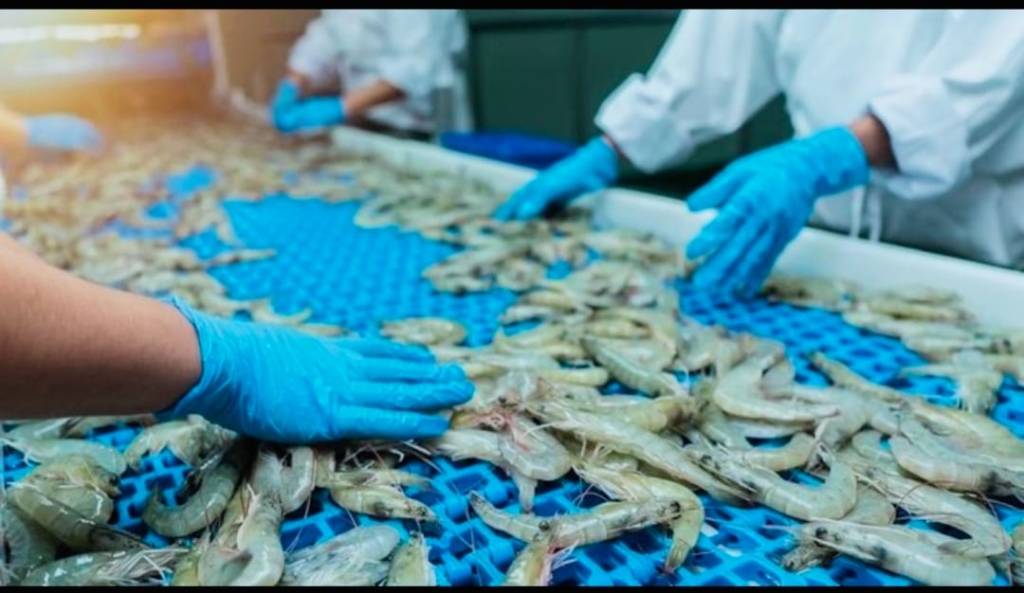
Quality control is also a top priority. Andhra Pradesh adheres to stringent international standards, ensuring that all seafood products meet the highest levels of quality and safety. The state’s compliance with FSSAI regulations and adherence to Hazard Analysis and Critical Control Points (HACCP) protocols guarantees that its products are safe, healthy, and in demand worldwide. Regular inspections and quality checks ensure that Andhra Pradesh’s seafood is of the highest quality, further enhancing its reputation in the global market.
Skill development plays a vital role in sustaining the state’s growth in aquaculture and food processing. The Andhra Pradesh State Skill Development Corporation (APSSDC) is spearheading efforts to train workers in the latest aquaculture techniques, quality control measures, and food safety protocols. This focus on workforce development ensures that the state’s rapid industrialization is supported by a skilled labour force, making Andhra Pradesh even more attractive to investors.
Perhaps one of the most significant aspects of Andhra Pradesh’s strategy is its emphasis on community engagement. The state government actively involves local communities in the planning and development of industrial parks, ensuring that their concerns are addressed and that they benefit from the growth. Workshops, social welfare schemes, and community centres foster a sense of ownership among residents, making the Blue Economy not just a government initiative, but a community-driven movement.
In conclusion, Andhra Pradesh is not merely growing its aquaculture industry—it is redefining it. By embracing modern technologies, prioritizing sustainability, and creating an enabling environment for innovation, the state is positioning itself as a global leader in aquaculture and food processing. The Blue Economy is set to become one of the most powerful engines driving Andhra Pradesh’s economic growth, and the benefits will be felt not only by the state’s coastal communities but by the world at large. This revolution is not just about fish production; it’s about building a future where prosperity and sustainability go hand in hand, ensuring that Andhra Pradesh remains a beacon of innovation, resilience, and economic strength for generations to come.
VISIT ARJASRIKANTH.IN FOR MORE INSIGHTS
 SOCIAL PERSPECTIVES